 +965 2292 4888


Economic Insight
28.07.2026
Bahrain’s economy has come under significant pressure in 2026 as the regional conflict and the closure of the Strait of Hormuz disrupt energy production, trade flows and business activity over the last five months. While higher global oil prices may offer partial revenue support, the sharp decline in hydrocarbon output and weaker non-oil activity are likely to widen fiscal deficits and push public debt to even more elevated levels. Limited fiscal space constrains the government’s ability to provide large-scale economic stimulus, compelling the authorities to rely mainly on liquidity support and targeted financial relief measures. At the same time, the conflict is expected to slow the pace of fiscal consolidation and delay parts of the December 2025 reform package. Despite these challenges, Bahrain is likely to continue benefiting from GCC financial backing, particularly from Saudi Arabia, while maintaining its longer-term focus on economic diversification under Vision 2030 and the Economic Recovery Plan.
Economy faces a sharp slowdown amid regional conflict
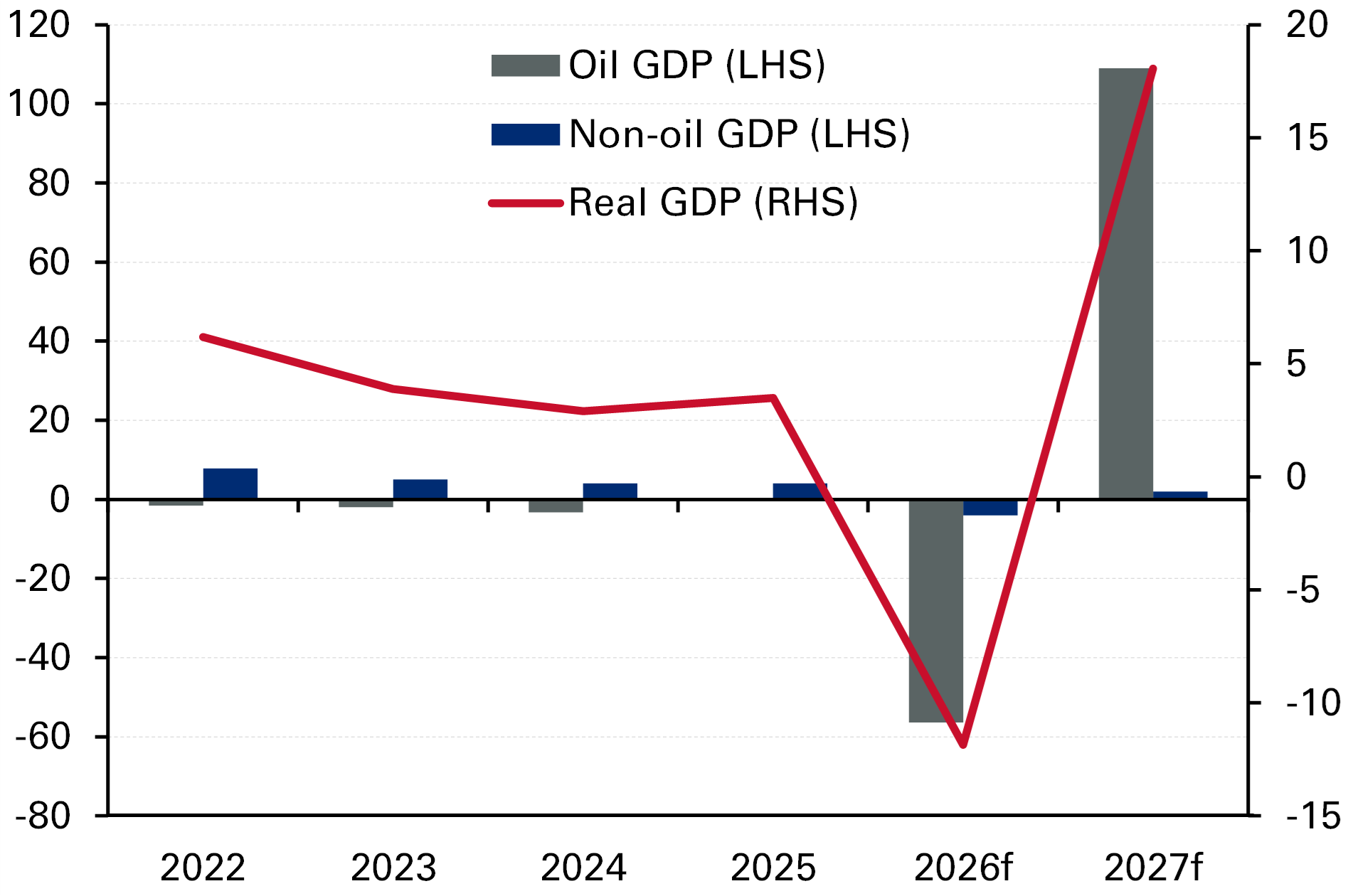
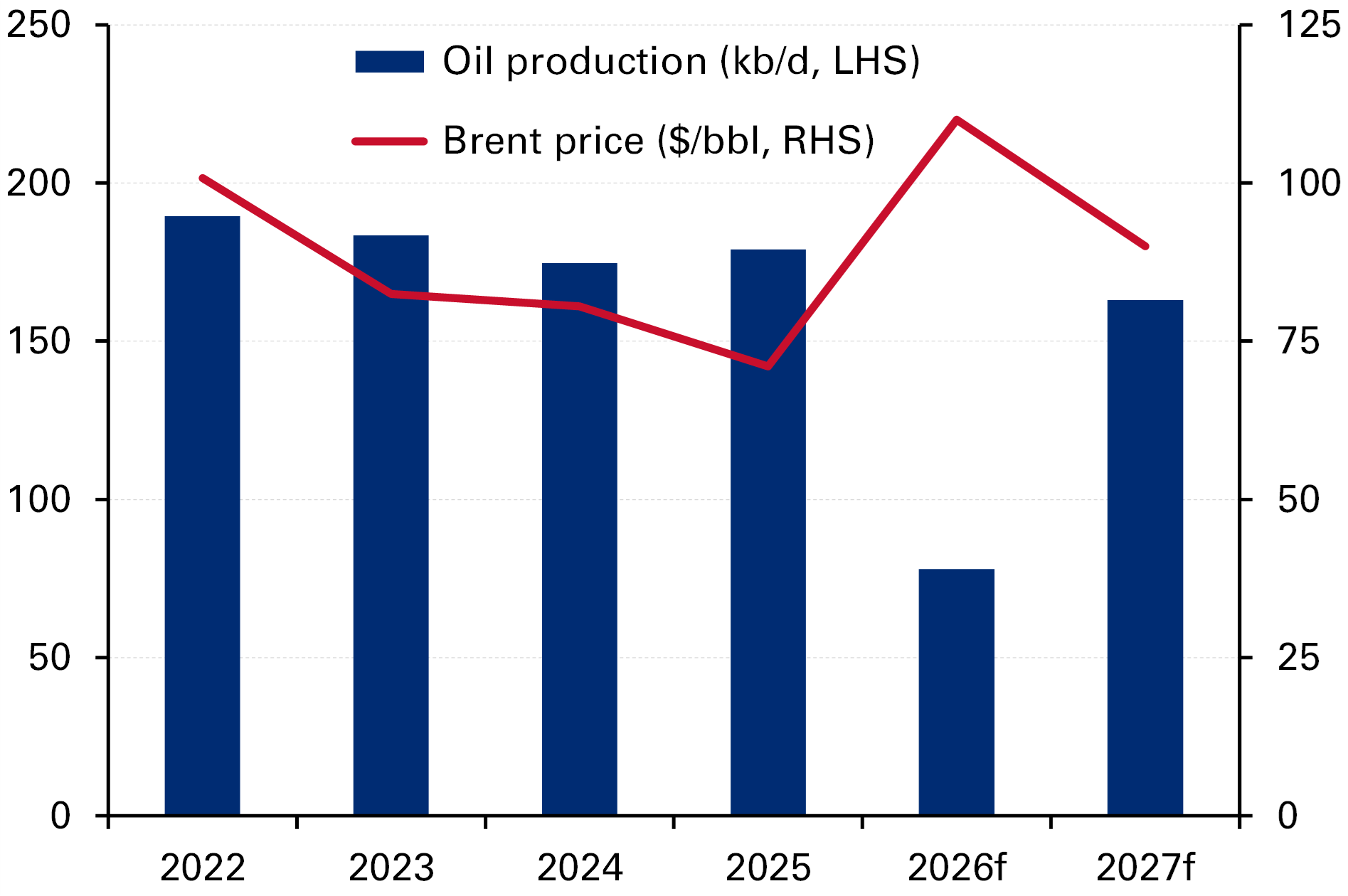
Bahrain’s economy is expected to feel the full impact of the regional conflict in 2026, with real GDP projected to contract by around 12% in our alternative scenario amid the continued regional conflict. The downturn is primarily driven by a steep decline in oil production following the closure of the Strait of Hormuz, alongside weaker investment activity, lower export volumes and broader regional uncertainty. The oil sector is expected to bear the brunt of the shock, with oil-related activity projected to contract by around 56% y/y in 2026 due to field shut-ins caused by disruptions at the Strait of Hormuz. (Chart 1.) The non-oil sector, meanwhile, should fare better but also contract, by around 4% y/y, amid weaker tourism, manufacturing, logistics, trade and financial activity. At the same time, higher global energy prices are expected to generate renewed inflationary pressures. Average annual inflation is projected to rise to 1.7% in 2026 from a mild deflation rate of 0.1% in 2025, driven mainly by higher fuel and imported goods costs.
Fiscal pressures intensify despite higher oil prices
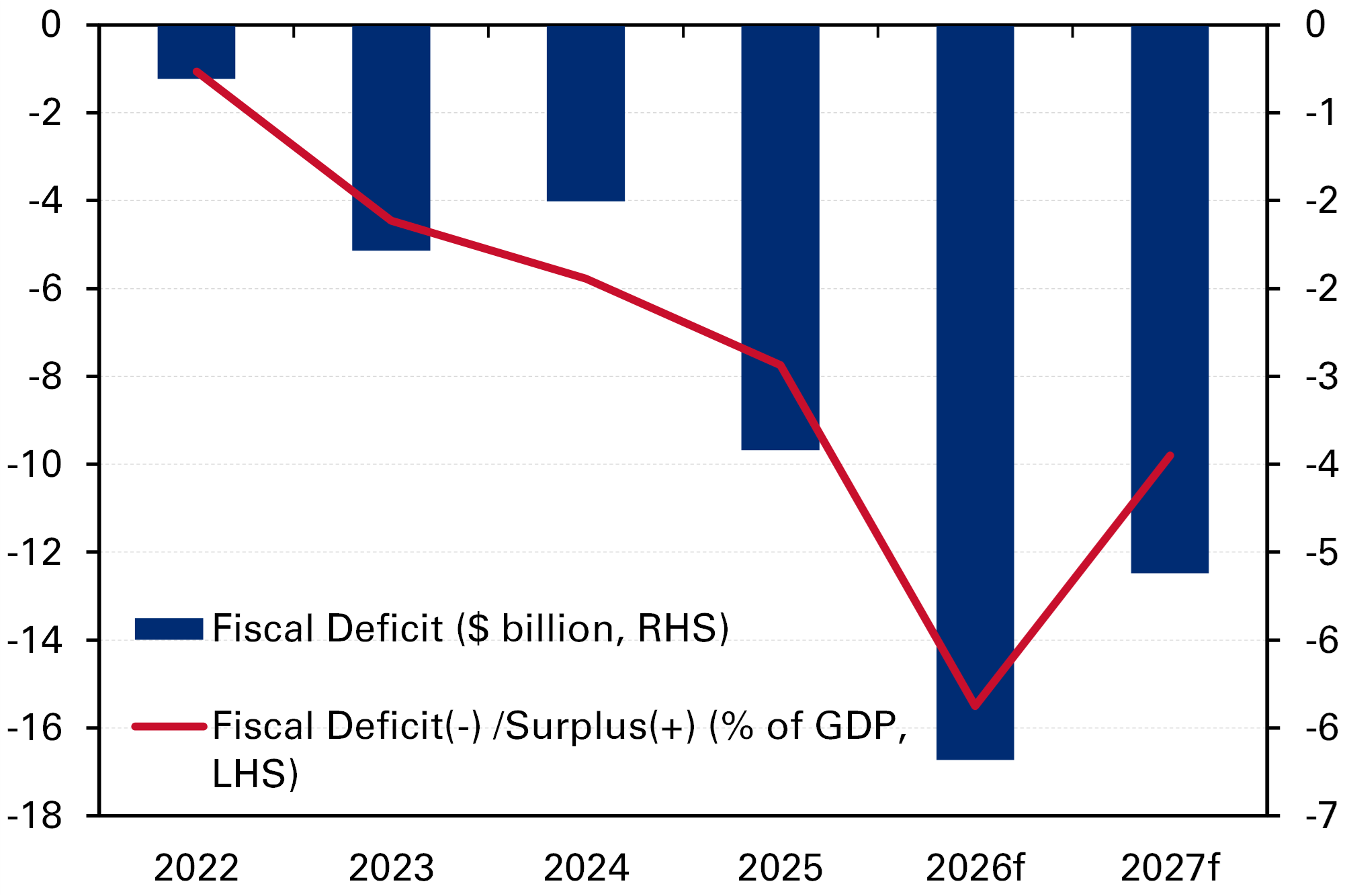
The conflict is expected to significantly worsen Bahrain’s fiscal position—elevated oil prices provide little benefit given Bahrain’s inability to export oil—highlighting the kingdom’s continued vulnerability to external shocks and oil market volatility. We now project the fiscal deficit to widen to 15.5% of GDP in 2026, compared with a pre-conflict estimate of 8.5% and an estimated 7.7% in 2025. (Chart 2.) Fiscal deficits are expected to remain elevated in 2027 despite easing to 9.8% of GDP, reflecting persistent pressure on both hydrocarbon and non-hydrocarbon revenues. The deterioration in public finances is mainly linked to disruptions in hydrocarbon exports and refined petroleum products, which together account for roughly 63% of government revenues. Ongoing security risks and the closure of the Strait of Hormuz have led to temporary field shutdowns and lower production volumes. As a result, Bahrain’s crude oil output is now expected to decline by 56% y/y in 2026, compared with pre-conflict expectations of nearly 10% growth. Higher oil prices—Brent is projected to average $90 in 2026 compared to our previous assumption of $65/bbl—could partially offset some of the revenue losses resulting from lower production and exports. (Chart 3.)
Non-oil revenues have come under pressure
Government non-oil revenues are likely to have weakened materially as the conflict has disrupted tourism, aviation, trade and financial services activity. Non-hydrocarbon revenues are projected to decline by 36% y/y in 2026, a sharp reversal from pre-conflict expectations of 28% growth. The aluminum sector, which represents nearly 40% of Bahrain’s non-oil exports, has struggled amid the closure of 3 smelting lines constituting 19% of ALBA’s capacity. These pressures have necessitated stricter government fiscal discipline, a challenge without amplifying social and economic stress. In fact, authorities have already delayed parts of the December 2025 fiscal reform package, particularly the monthly fuel price increases that had been planned to reduce subsidy spending. Elevated global energy prices have made further subsidy reforms more difficult in the near term.
Limited fiscal space restricts government support measures
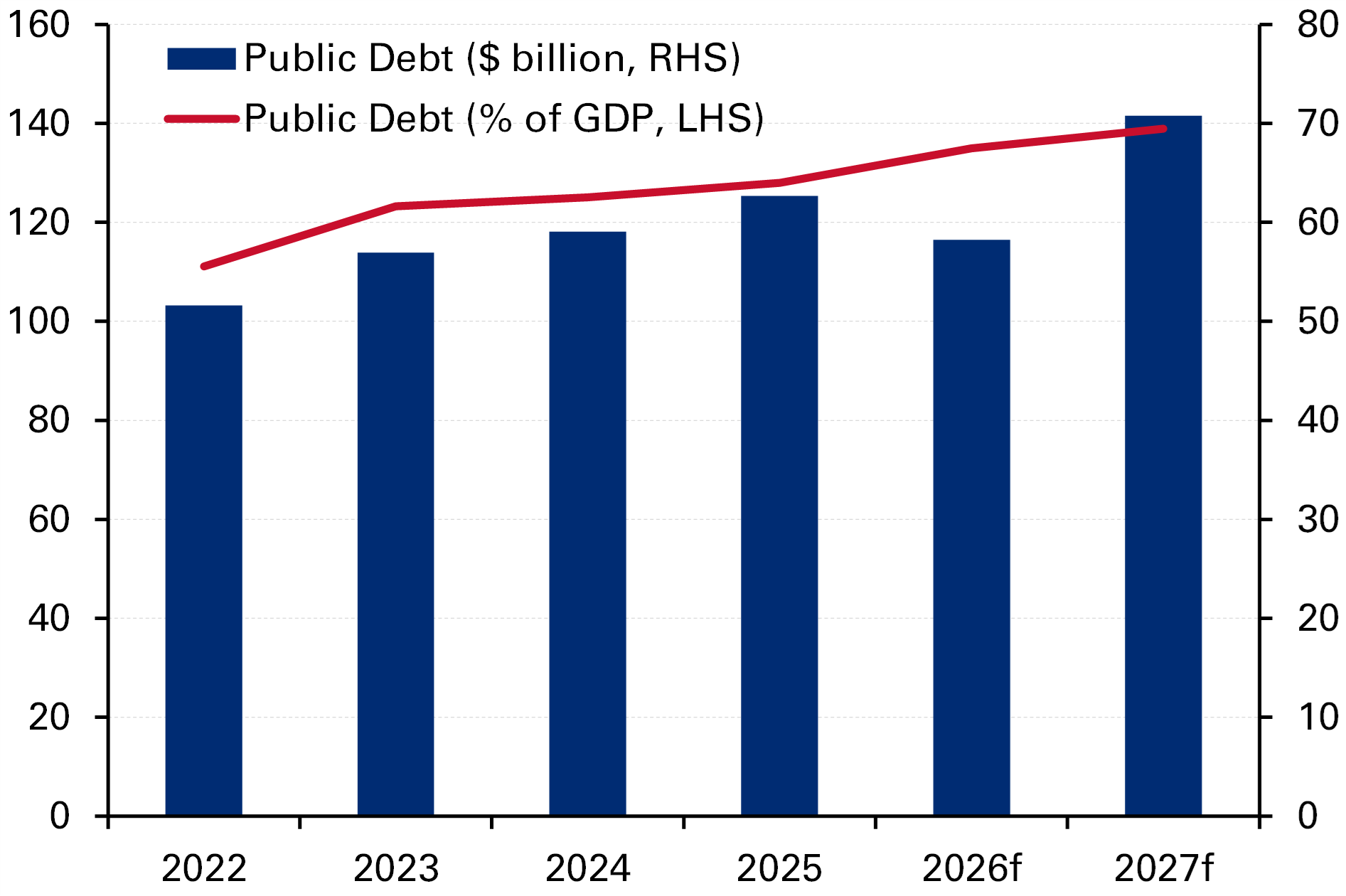
The government had limited fiscal flexibility coming into the conflict, which restricted its ability to deploy large-scale fiscal stimulus measures to support economic activity. Public debt already stood at around 128% of GDP in 2025, the highest level in the GCC region and among the highest in the world, and foreign currency reserves remained relatively low at $5 billion as of April 2026. (Chart 4.) Against this backdrop, the authorities are expected to avoid any meaningful expansionary fiscal spending but slow the implementation of some planned fiscal consolidation measures. Instead, policymakers are likely to rely more heavily on non-fiscal support tools to cushion the economic fallout and preserve financial stability. On April 13, the Central Bank of Bahrain introduced a temporary package of loan relief and liquidity support measures, including repayment deferrals, temporary easing of capital adequacy requirements and additional liquidity support for banks. These measures are likely to be extended or expanded further. If households and businesses remain unable to service debt obligations over time, banks could face rising non-performing loans.
The banking sector started to show early signs of stress in March at the height of the conflict, particularly evident in the decline in private sector foreign currency deposits, which fell by $189 million (-2% m/m) and the drop in non-resident foreign currency deposits by $1.3 billion (-9% m/m). The latter, though, eased somewhat in April while private sector foreign currency deposits reversed course and increased by $740 million (+9% m/m). In both March and April, the government stepped in to offset outflows with deposit placements of about $1.2 billion in commercial banks, which helped to stabilize the overall banking system deposit base. As a result, total deposits remained broadly stable despite mounting financial stress.
Rising debt servicing costs add to fiscal vulnerabilities
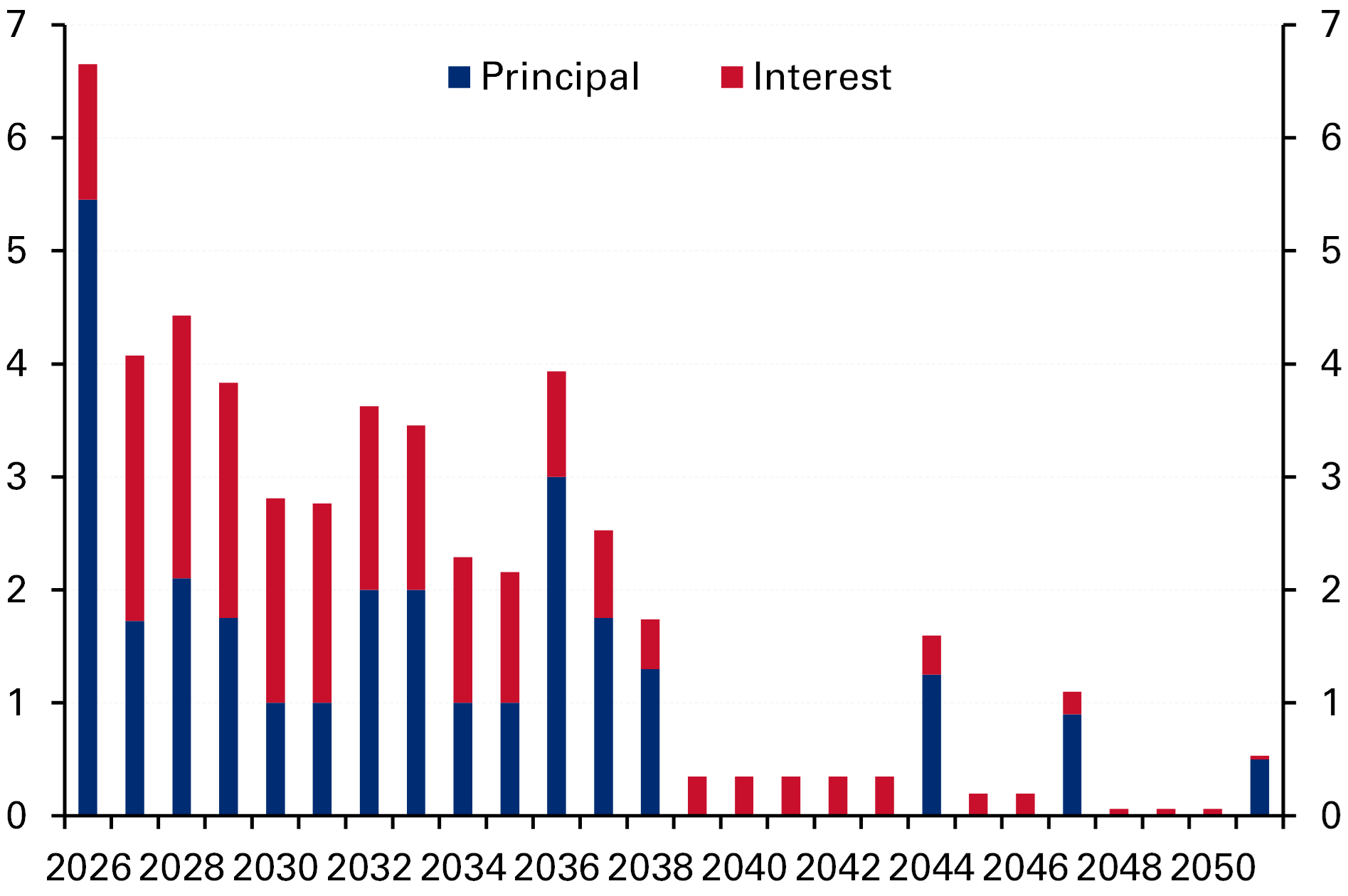
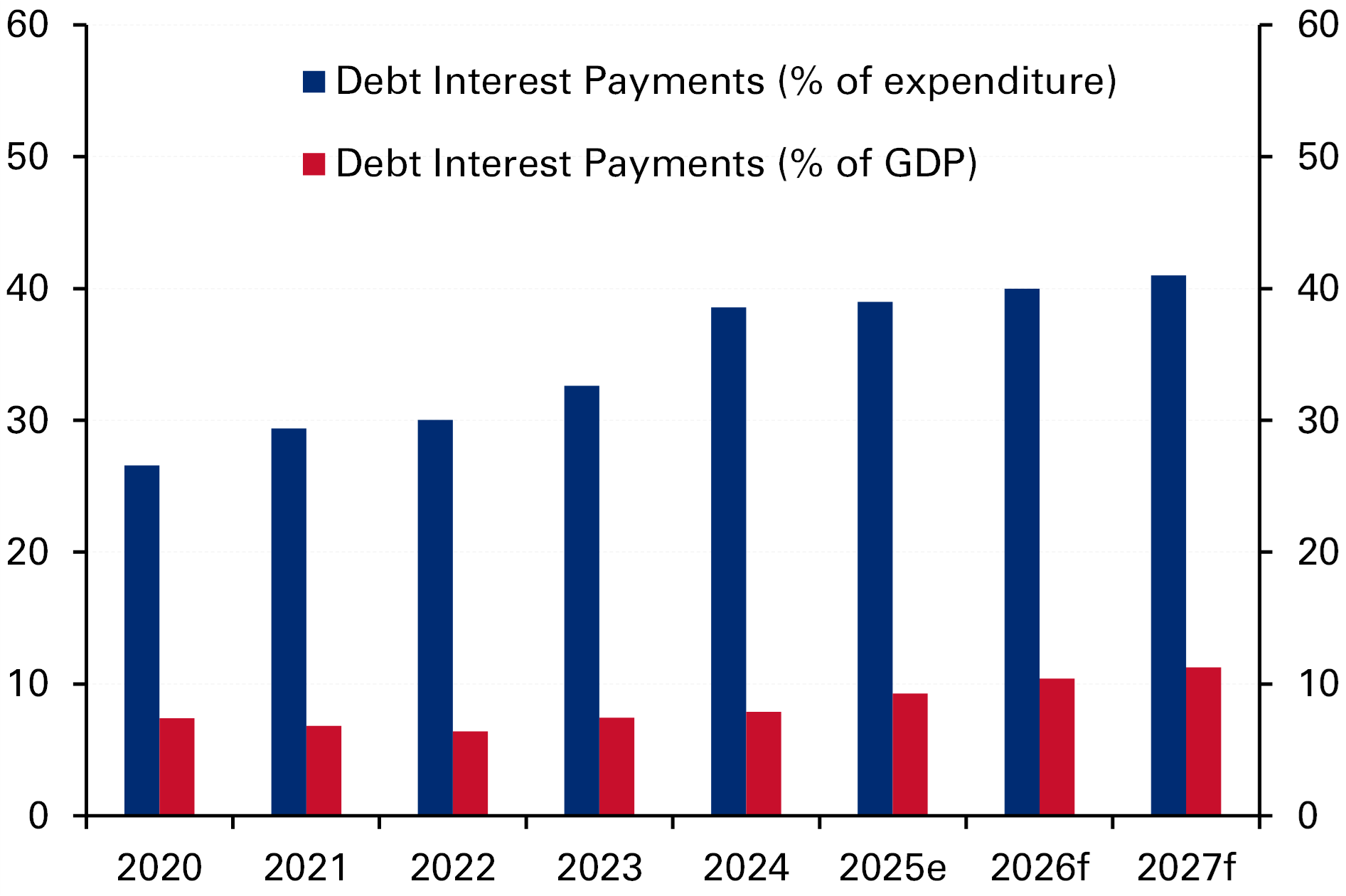
The government’s already elevated debt burden is expected to continue rising over the coming years as larger fiscal deficits and higher borrowing costs place additional pressure on public finances. Interest payments alone already account for nearly 24% of total government expenditure and are projected to rise from 5.6% of GDP in 2025 to 6.6% in 2026. (Chart 6.) High debt servicing costs are expected to absorb a growing share of fiscal resources, limiting the government’s ability to redirect spending toward growth-supportive initiatives.