
 +965 2292 4888


Daily Economic Update
13.10.2026
Global: IMF slightly upgrades 2026 global growth but warns that global economy could soon test the limits of resilience. In its just-published World Economic Outlook report, the IMF upgraded its global growth forecast for 2026 to 3.1% (from 3% seen in July), with 2027 growth unchanged at 3.4%. The IMF mentioned that AI-related demand, inventory drawdowns, fiscal support measures, and lower energy intensity than in previous decades have helped contain the hit to activity from the Middle East war. The IMF added that the global economy has been resilient in terms of activity levels, but “could soon test the limits of resilience”, and while uneven, the strong investment in artificial intelligence has provided a demand impulse, and that global growth has become more concentrated; 32 economies now account for 95% of global growth, compared with 54 economies back in April. The global inflation forecast for 2026 was left unchanged at 4.7% before easing to 4.1% in 2027, in line with the 4.1% recorded in 2025. Among the major economies, the IMF forecasts 2.3% growth in the US in 2026 (unchanged from the July forecast) and 2.3% in 2027. In the Eurozone, growth is seen at 1.1% in 2026 (from 0.9% expected before) and 1.2% in 2027. In the UK, 2026 growth was upgraded to 1.3% (from 1%) and seen at 1.2% in 2027. In Japan, growth was slightly upgraded to 0.7% in 2026 and seen unchanged at that pace in 2027. Finally in China, growth was downgraded by 0.1 percentage points in both 2026 and 2027, to stand at 4.5% and 4.0%, respectively.
US: Fed’s Hammack favors smaller rate adjustments and highlights the responsibility of explaining the Fed’s reaction function. Cleveland Fed President Beth Hammack (an FOMC voting member in 2026) said that “it’s preferable to make smaller adjustments, and to do so relatively quickly, rather than to wait and risk needing a larger course correction”. She highlighted that inflationary pressures were broad-based amid supply shocks, such as higher energy prices and tariffs as well as demand from AI-related spending, with risks skewed to the upside. She noted “financial conditions as neutral rather than holding demand back,” after the recent rise in bond yields. Importantly, Hammack emphasized that she has “a responsibility to the public to explain” her reaction function and policy decisions as it “helps the public and financial markets anticipate policy actions, albeit with conditionality”. She clarified that it is not forward guidance or “an explicit commitment about the future path of policy”. Her take on describing the Fed’s reaction function or decisions mirrors views from other FOMC members, who have explicitly advocated the need to explain them better in the public domain. This is particularly significant as a growing cohort of Fed officials are stepping in to fill the void left by Fed Chair Warsh, who has a preference for keeping communication limited. It could also imply that disagreements within the FOMC beyond typical dissents on monetary policy decisions may widen.
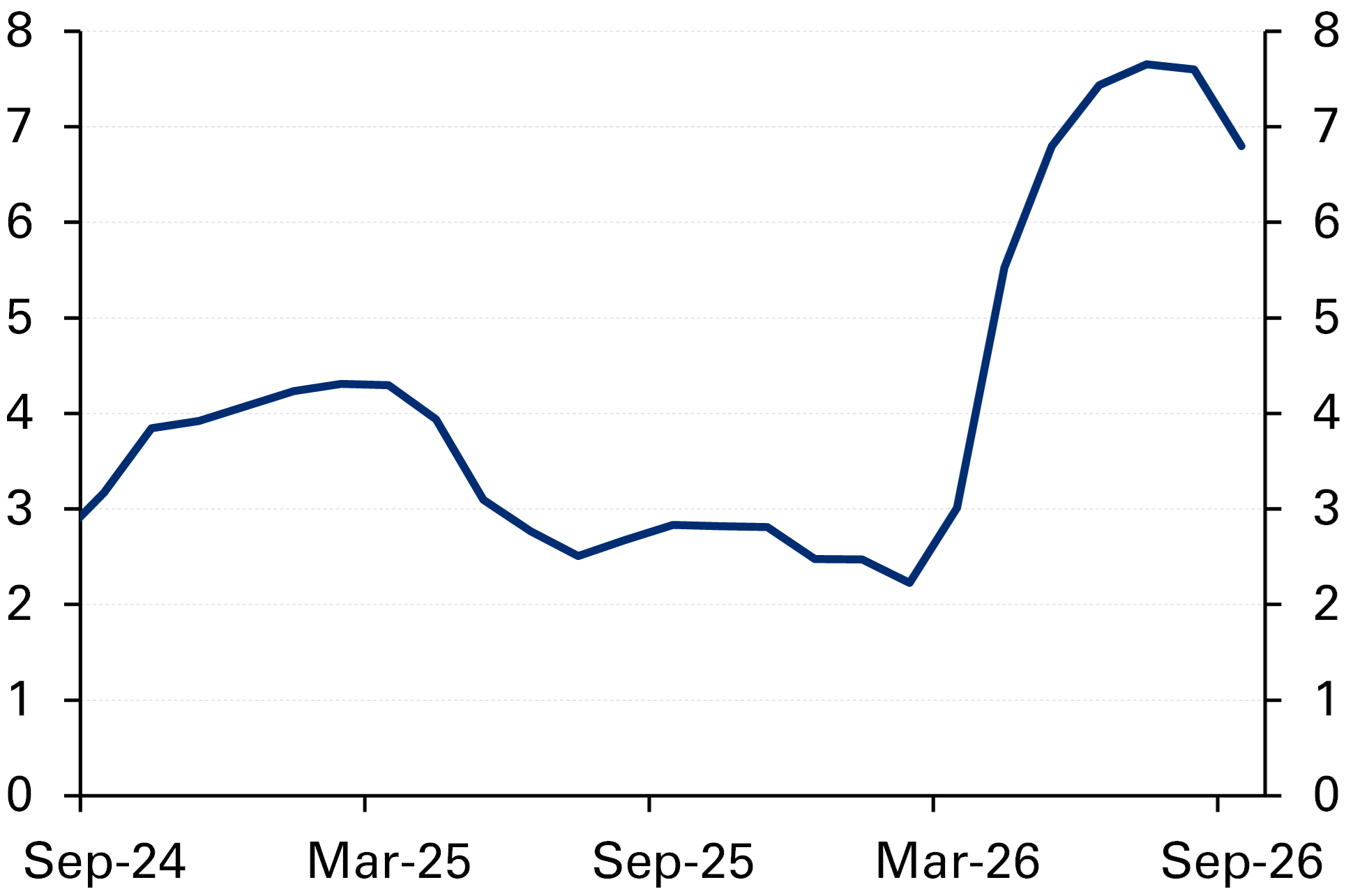
Japan: Producer price inflation eases in September suggesting upstream price pressures may be moderating. Japan's producer price inflation cooled to 6.8% y/y in September from 7.6% in August, coming in much below market expectations and marking the slowest pace since May. The moderation was driven in part by softer price increases for petroleum and coal products (11.5% y/y in September from 14.7% in August), transport equipment, food and beverages, and production machinery, suggesting some easing in upstream cost pressures. However, producer inflation remains elevated by historical standards, and prices continued to accelerate across several categories, including chemicals (13.3% y/y in September from 13.0% previously), iron and steel, electrical machinery and electronic components. On a monthly basis, producer prices fell 0.3%, matching August's decline and marking a second consecutive monthly contraction. The data suggest that input-cost inflation may have peaked for now, potentially slightly reducing the urgency for the Bank of Japan to tighten policy in its next meeting after last month's rate hike.
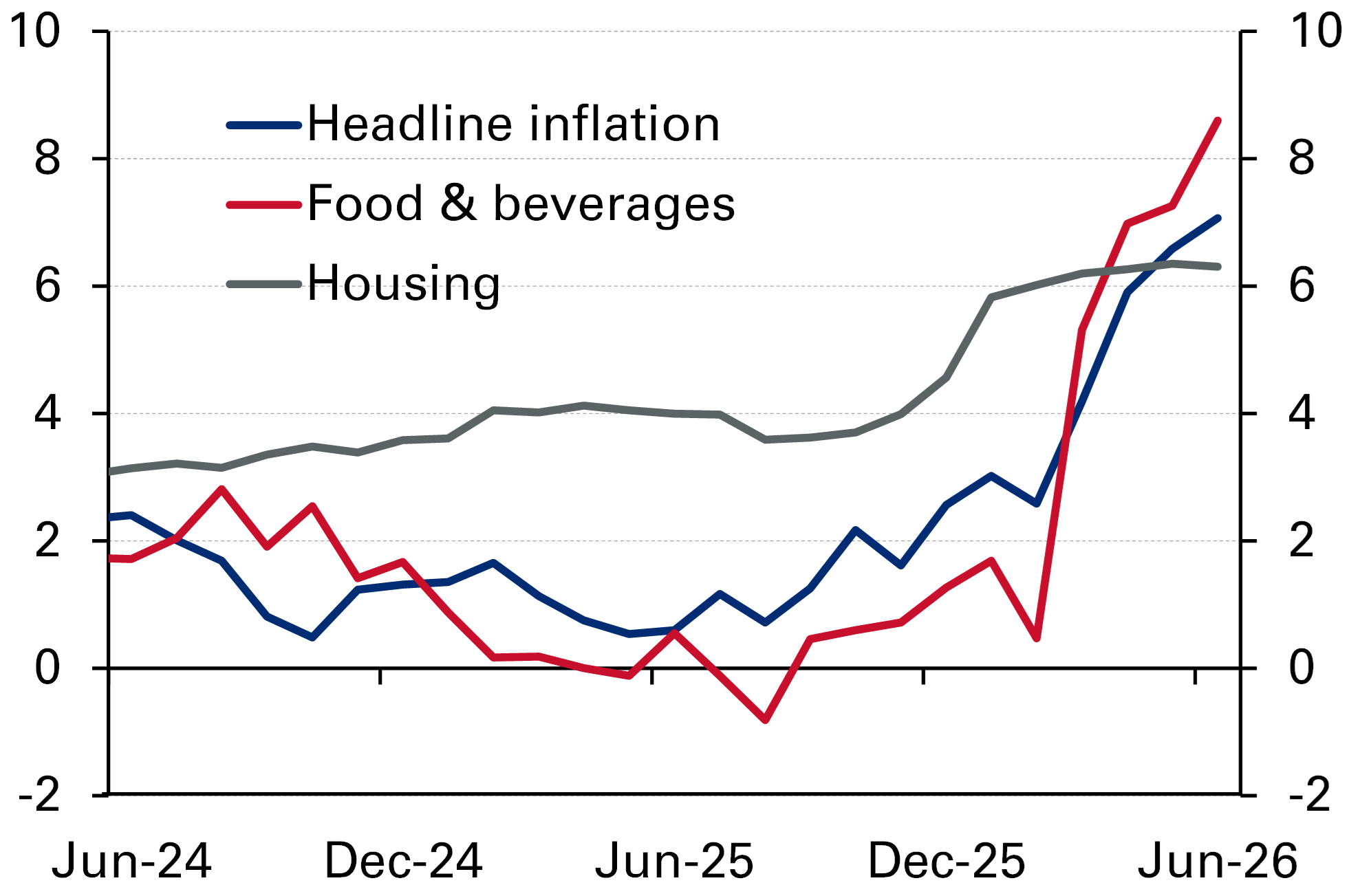
UAE: Inflation accelerates to a four-month high of 7.1% in June as conflict-related disruptions weigh on prices. The Federal Competitiveness and Statistics Centre (FCSC), in a new CPI series (rebased to 2024 from 2021), reported inflation in the UAE rising to 7.1% y/y in June from 6.6% in May. This is the highest reading since the outbreak of the US-Iran conflict in February and the highest inflation by some margin in the GCC. The acceleration in price growth was primarily driven by higher fuel prices and costs in the transportation segment, which increased by 19.8% y/y from 18.0% in May. In addition, inflation in the food and non-alcoholic beverages category increased for the fourth straight month to 8.6% y/y, reflecting the pass-through of higher import and logistics costs to customers. Meanwhile, housing, water, electricity & gas, the largest component of the CPI basket (35.1%), remained elevated at 6.3% y/y despite easing slightly from May’s rate, supported by the increase in the population and demand over the past few years. Other segments also logged strong increases in prices, including household furnishings and equipment (+7.9% y/y) and recreation and culture (+8.7%). In contrast, inflation remained relatively moderate in the education (+3.3% y/y), restaurants & hotels (+2.5%), and insurance & financial services (+2.7%) categories, while prices in the medical (-0.4%) and textiles, clothing & footwear (-0.2%) subcomponents fell. The release of this rebased CPI series for the UAE as a whole after an absence of six months has helped corroborate the increases recorded in the output price readings of the monthly PMI surveys and brings the UAE’s CPI dataset up to speed with other reporting authorities in the region. Inflation is expected to remain elevated while disruptions at the Strait of Hormuz continue and energy prices high. But any easing in tensions and disruptions to shipping and energy infrastructure will help moderate price pressures.
Saudi Arabia: Industrial production declines for the sixth consecutive month. Industrial production fell sharply in August (-24% y/y), following July’s upwardly revised reading of -8.3%, according to GASTAT. The downturn was driven by a deeper contraction in the oil sector, where output fell 34% y/y compared with 11.4% in July. This reflected steeper drops in crude oil and natural gas extraction (-36% vs. -10.9%) and coke and refined petroleum products (-24% vs. -13.6%). In contrast, non-oil activity returned to growth, rising 1.2% y/y after contracting 0.3% in July, although manufacturing output growth edged down to 0.3%. Other economic activities also grew faster, up 5.1% compared with 3.4% in July, supported by stronger growth in electricity, gas, steam, and air-conditioning supply (+9.4% vs. +4.5%). Growth in water supply, sewerage, waste management, and remediation activities eased slightly to 7.4% y/y from 7.8%. On a monthly basis, production fell 14% in August, reversing a downwardly revised 10% m/m increase in July.
Oman: International Financial Center Set for 2027 Launch. The planned International Financial Center of Oman (IFC Oman) is scheduled to launch in 2027, with company registrations expected to begin later in 2026 as the center finalizes its legal, regulatory, and digital infrastructure. The project authorities are preparing a new package of laws covering business registration, licensing, financial services regulation, and independent dispute resolution, alongside a digital registry that will allow businesses to apply online. According to the IFC Oman authority board, the center aims to provide a stable and competitive business environment for global investors and firms, leveraging Oman’s strategic location and international connections. Operating under a proposed common-law framework, IFC Oman is intended to attract international capital, support economic diversification and private investment, and contribute to the goals of Oman Vision 2040. The center has also stepped-up international outreach through participation in major global financial forums and engagement with prospective investors and businesses worldwide.