
 +965 2292 4888


Daily Economic Update
28.07.2026
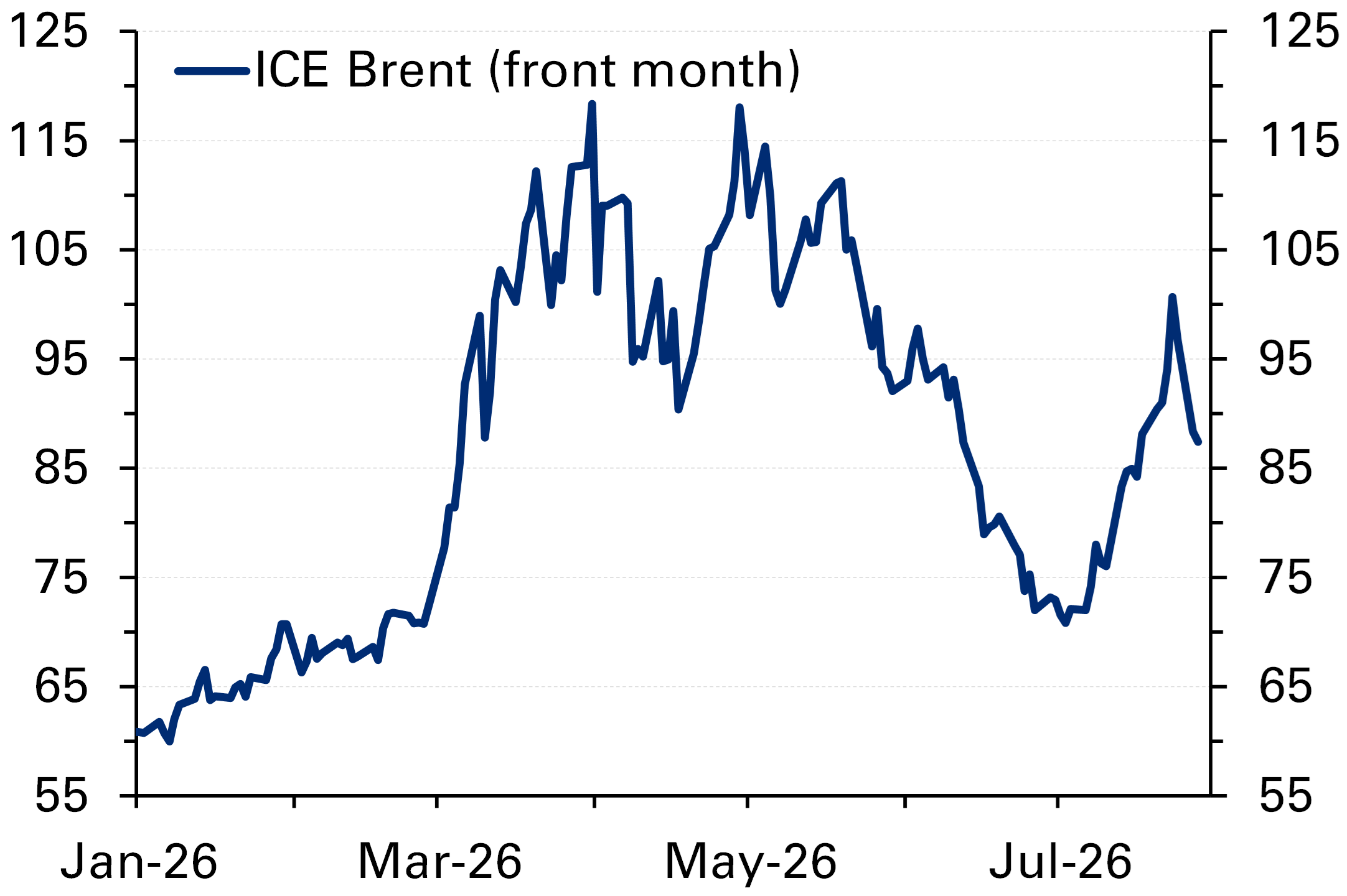
Oil: Prices slide as progress on diplomacy to resolve the US-Iran conflict advances. Brent crude futures extended their losses in early trading today, falling a further 1% to $87.4/bbl after plunging 8.7% yesterday, its steepest one-day decline since mid-April. The selloff reflects a continued unwinding of the geopolitical risk premium that had driven prices above $100/bbl last week amid escalating tensions across the Middle East. The latest leg lower was driven by growing optimism around a potential diplomatic resolution between the US and Iran, with US President Trump stating that Washington was having “good talks” with Tehran, raising expectations that the recent pause in hostilities could evolve into a broader negotiating process. That said, Trump warned that military action could resume should negotiations fail, underscoring the fragility of the current diplomatic opening. Media reports also highlighted talks between the Omani and Iranian authorities on the Strait of Hormuz situation. Meanwhile, supply concerns outside the Middle East have also eased as reports indicate that oil loadings at the Caspian Pipeline Consortium (CPC) terminal on the Black Sea have resumed following a roughly one-week disruption caused by Ukrainian drone attacks. The restart at the CPC terminal restores access to a key export route and should help alleviate some of the current tightness in market supply.
UAE: Q1’s fiscal balance records first deficit in four years. The UAE's consolidated fiscal balance logged a deficit of AED10.4 billion ($2.8 billion) or -1.7% of GDP in Q126, marking the first deficit in four years and versus a AED21.2 billion surplus in Q4 25 (3.6% of GDP). Revenues declined by 22% q/q to AED122 billion while remaining broadly stable on an annual basis. The q/q decline was partly driven by a 14.5% q/q drop in crude oil production to an average of 2.88 mb/d, despite Brent oil prices rising by 24% q/q, largely reflecting heightened geopolitical tensions in the region in March. On the expenditure side, spending reached AED132 billion, down 1.2% q/q, but up 23% y/y. The annual increase was primarily driven by a 26% q/q and 850% y/y surge in capital expenditure, hitting AED18.6 billion (3.1% of GDP), highlighting higher capex outlays on infrastructure projects, including offshore oil and gas development and the expansion of the Etihad Rail network. Meanwhile, current expenditure declined by 4.6% q/q but remained 7.4% higher than a year earlier, supported by social benefits spending. Looking ahead, fiscal performance is expected to remain closely linked to developments in the region. While uncertain, it should continue to benefit from ADNOC’s flexible logistics network, including the ADCOP pipeline, Fujairah export facilities, and ship-to-ship transfer operations, which have helped sustain crude exports despite disruptions in the Strait of Hormuz. As a result, higher oil prices (if sustained) and continued export resilience could provide support to government revenues during the remainder of 2026.
US: Core durable goods orders and shipments strong, supported by AI investment boom. Durable goods orders in June rose 0.3% m/m following a drop of 4% in May. A core measure of capital goods orders (excluding aircraft and defense) remained strong, increasing 0.9% m/m (9.3% y/y) after an upwardly revised rise of 1.9% in May. Shipments of such core goods were even stronger, rising at the fastest pace in over four years at 1.9% (7.5% y/y), accelerating from a 0.2% increase in May, supported by a continued AI-related spending surge. We note that AI investments have been a key driver of robust underlying US economic growth in recent quarters. The AI boom has also helped equity markets post strong gains, driving the ‘wealth-effect’ and supporting aggregate household spending.