
 +965 2292 4888


Daily Economic Update
15.10.2026
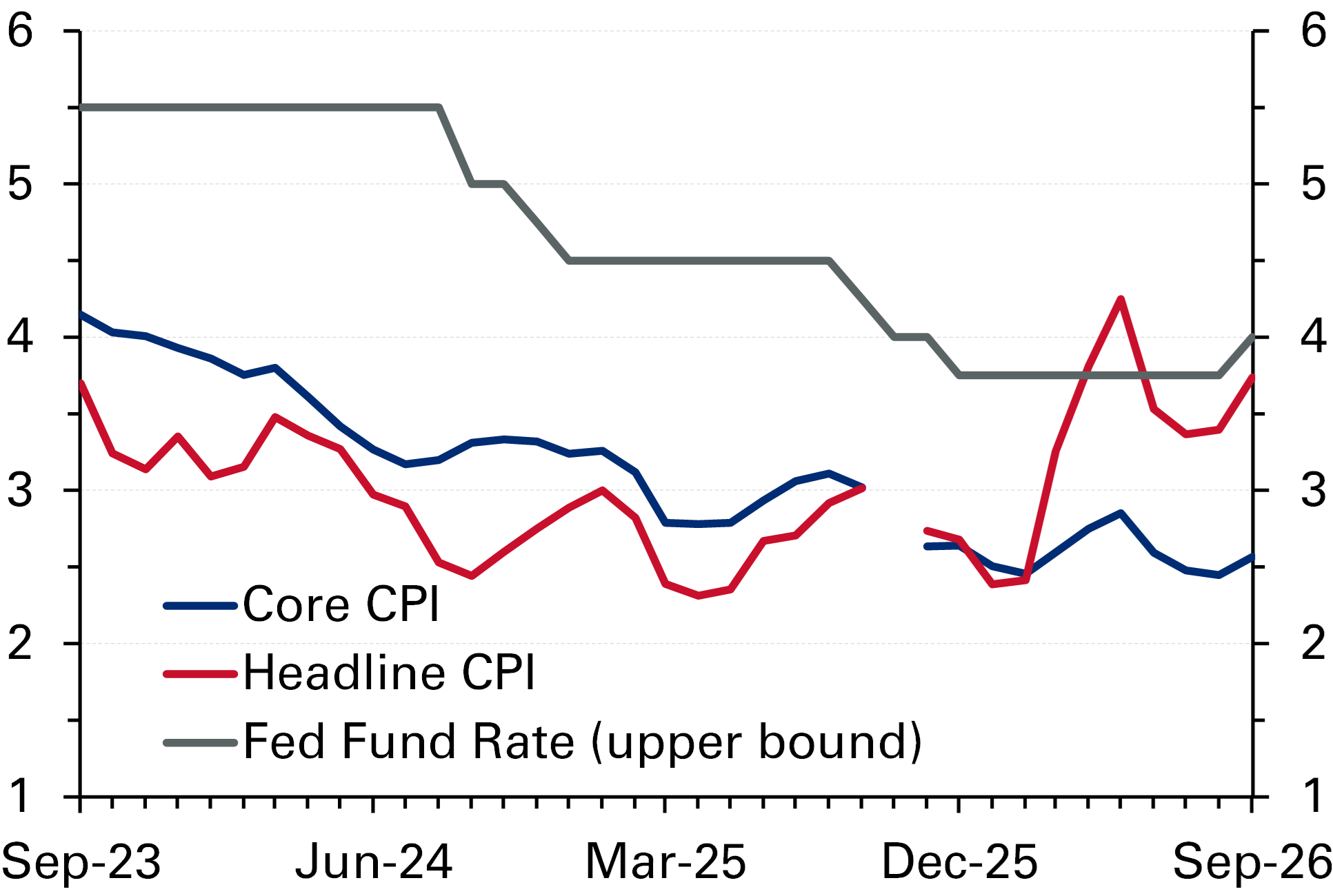
US: CPI inflation rises more than expected; probability of a hike in October inches up following an intra-day jump. CPI inflation in September rose to 3.7% y/y from August’s 3.4%, driven by higher energy goods prices which were up a whopping 9.3% m/m (35% y/y), with the core rate also increasing to 2.6% from 2.4%. On a monthly basis, headline inflation accelerated to 0.65% from 0.4% the previous month, while the core rate unexpectedly ticked up to a five-month high of 0.33% from 0.29%, ahead of the 0.2% consensus forecast. Core goods increased by 0.3% m/m and core services by 0.4% m/m, the highest pace in several months for both. Within underlying inflation categories, many subcomponents showed significantly faster m/m price increases, including durables (0.9%), non-durables less food and beverages (3%), shelter (0.4%) and airfares (1.2%). An important super core services measure (excluding energy and housing) stood at 0.4% m/m following August’s large 0.5%, suggesting price pressures are becoming stickier and broadening beyond energy. Sharp increases in motor fuel prices, particularly diesel, in recent months have raised the risk of greater pass-through to core inflation along with the ongoing AI-linked spending boom. Following the CPI release, the probability of a Fed rate hike in October initially jumped, touching 50%, but then dropped again to settle at around 27% currently, but the expectations of a Fed hike by the year end remain intact. Meanwhile, amid rising inflation and growing worries about AI boom sustainability, the S&P 500 index fell 1.1% yesterday, while UST 10Y bond yields gave up initial hot CPI data-driven 10-bps gains and closed slightly down. Similarly, the key two-year yield jumped by around 15 bps intraday following the CPI release but ended the day up a limited 3 bps.
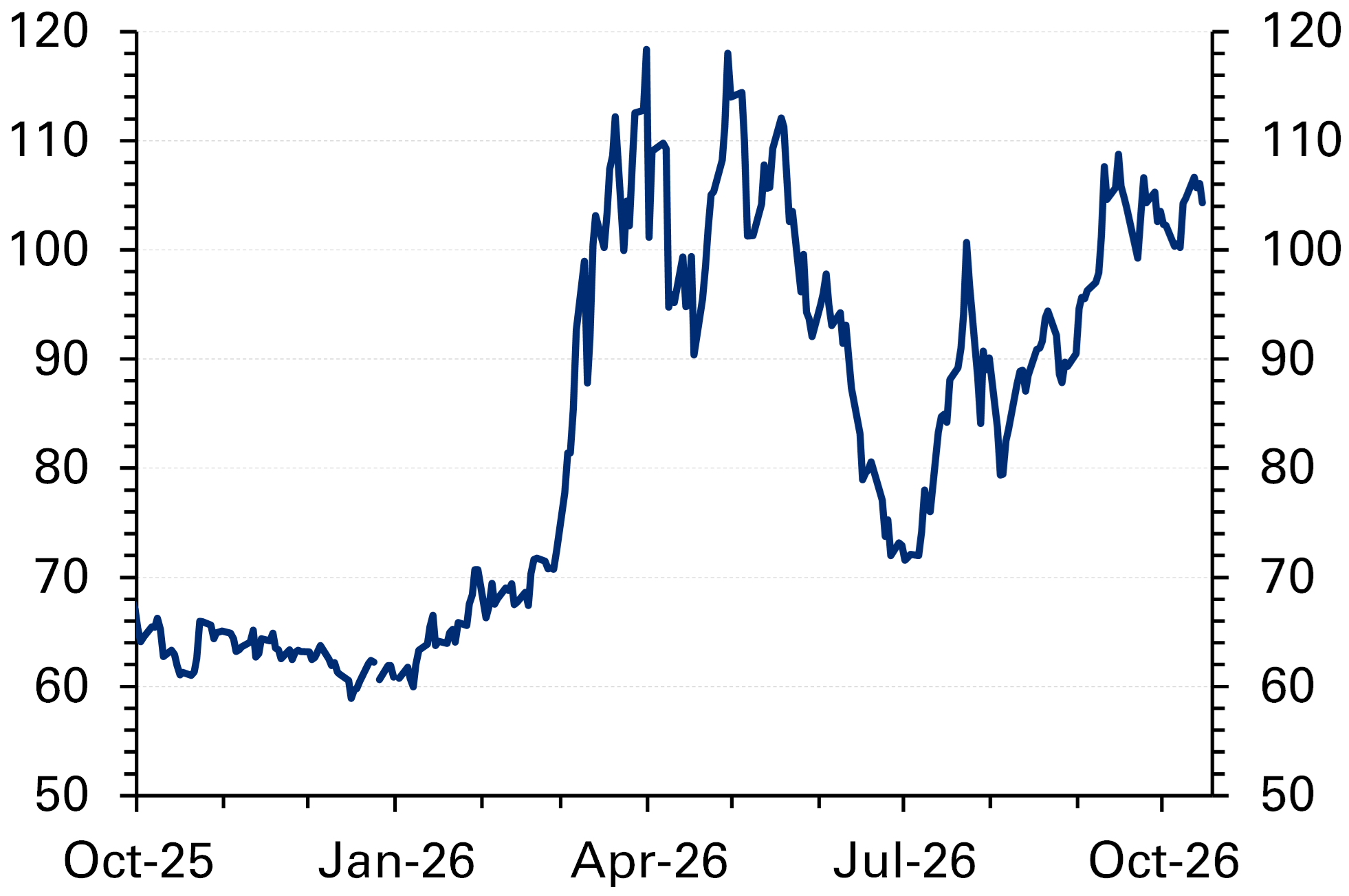
Oil: IEA lowers 2026 global oil demand growth estimate again amid higher energy prices and weaker economic growth. The IEA, in its closely watched monthly oil market report, again revised down its forecast for global oil demand in 2026, this time by 100 kb/d to 102.4 mb/d, bringing the estimated annual contraction this year to 2.6 mb/d on average. The agency expects the annual decline this quarter to be 2.6 mb/d, easing from 3.7 mb/d in Q3 and 5.0 mb/d in Q2, amid higher prices and a weaker economic outlook. The demand for diesel is expected to account for 25% of the annual decline this quarter, due to supply shortages stemming from a combination of refinery outages, export disruptions and export restrictions in Russia, the Gulf and China; prices of this crucial industrial and transportation fuel hit record highs of more than $200/bbl last month, roughly twice the price of crude oil. The IEA’s demand growth forecast contrasts sharply with OPEC’s estimate, published on Tuesday, which sees oil consumption increasing by 200 kb/d in 2026. For 2027, the IEA, like OPEC, sees growth rebounding, by 2 mb/d to 104.4 mb/d. On the supply side, while acknowledging the increase in supplies of late (+2.5 mb/d m/m to 102.3 mb/d in September), especially by Saudi Arabia and the UAE (as reported by OPEC), the IEA expects oil flows to decline by an average of 5.8 mb/d to 100.7 mb/d this year. Global oil supply is expected to increase in 2027 by 7.7 mb/d, assuming a cessation of hostilities and more freely flowing oil through the Strait of Hormuz. The market balance is expected to remain in deficit through into 2027, with middle distillate supplies lagging well into the year. The IEA reported that observed global oil stocks remained 509 mb (-2.4 mb/d) below end-February levels, with on-land stocks at their lowest level in at least 10 years. Oil prices in Far East markets opened lower this morning, with Brent futures dropping 1.6% to $104.3/bbl at the time of writing, partly in response to the IEA’s lower oil demand growth estimate and partly on a lower perception of risk, with supplies still making their way to oil markets from the region despite the spike in attacks by Iran and allied groups.
Saudi Arabia: Moody’s sees shift toward projects with faster returns. Saudi Arabia could delay or restructure some giga-projects and move money toward developments that generate liquidity sooner, rating agency Moody’s said. PIF spending over 2026-2030 is forecast at SAR 600-800 billion, against around SAR 750 billion in 2021-2025, with tourism, housing, mining, manufacturing, logistics, AI, and digital infrastructure the priority sectors. The Kingdom raised its projected budget deficit in 2027 to SAR 245 billion, or 4.9% of GDP, from SAR 165 billion in 2026, or 3.3% of GDP. Government spending is forecast at SAR 1.4 trillion in 2027, against revenue of SAR 1.2 trillion. Moody’s has cut its Saudi oil production forecasts for 2026 and 2027 to 7.7 mb/d and 9.9 mb/d from 8.4 mb/d and 10.3 mb/d, respectively. Moody’s is more conservative than the government in its GDP growth forecasts, seeing a contraction of 3.3% y/y this year (vs. 3.6% by the government) and an expansion of 8.5% (vs. 12.8%) in 2027. Liquid government financial assets, net of direct debt owed by the PIF, run to around 18% of GDP, with deposits at the Saudi Central Bank exceeding 9% of GDP. Alternative oil export routes and financial reserves provide additional protection against disruptions. However, prolonged disruption to shipping through the Strait of Hormuz or the Red Sea could weaken these buffers. Moody’s expects government debt to rise to around 40% of GDP by 2030.
Egypt: Remittances reach record $33.9 billion in the first eight months of 2026. Remittances from Egyptians working abroad rose by 27% y/y to a record $33.9 billion during January-August 2026, up from $26.6 billion in the same period last year, according to the Central Bank of Egypt. In August, remittances increased by 22% y/y to $4.2 billion (vs. $3.5bn a year earlier), although they eased slightly from $4.5 billion in July. Continued growth in remittances provides an important source of foreign currency, helping support Egypt’s external position and meet its import and foreign currency financing needs.