
 +965 2292 4888


Daily Economic Update
26.07.2026
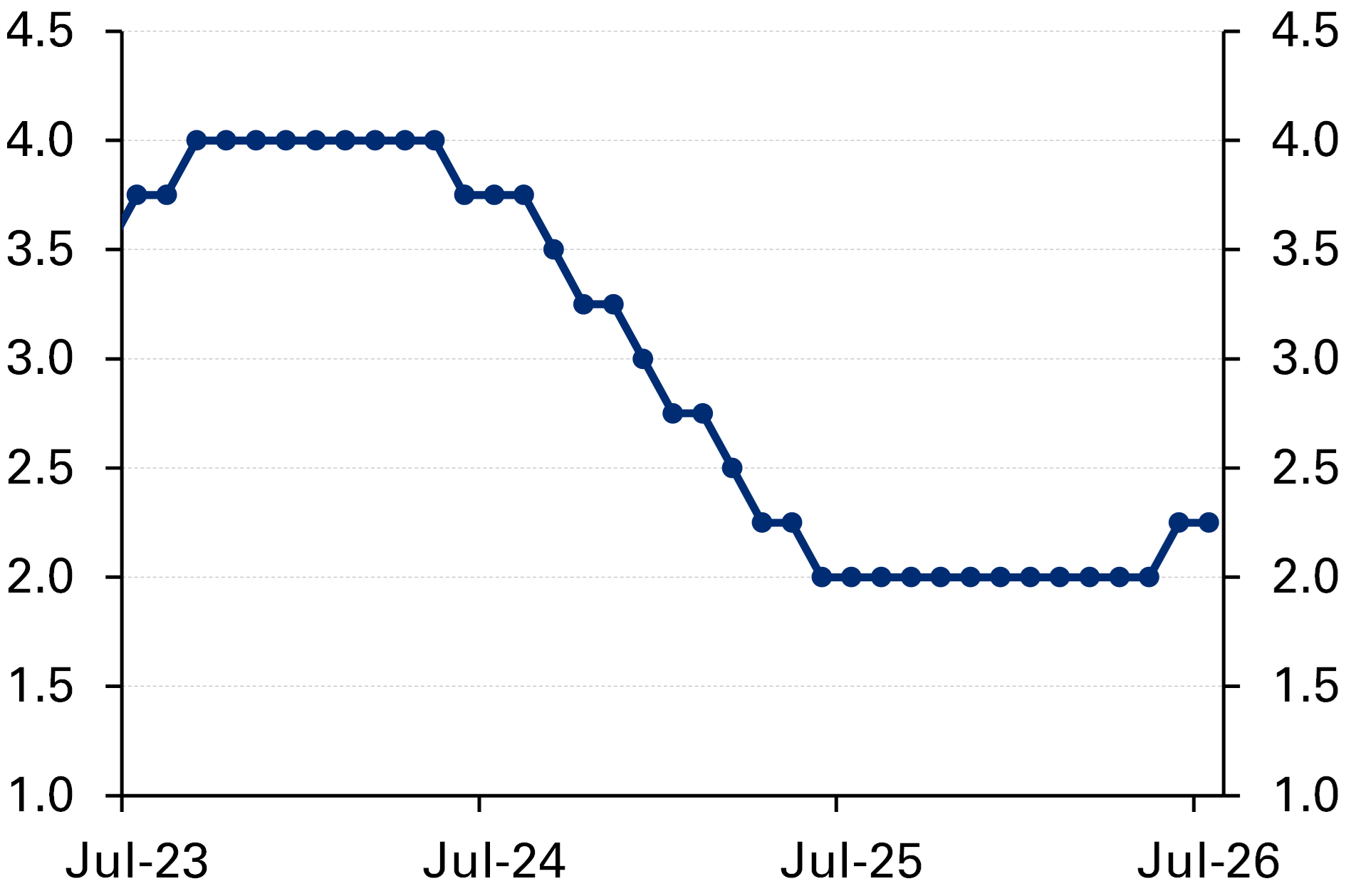
Eurozone: ECB leaves policy rates unchanged in July seeing uncertain inflation outlook; flash PMIs stronger than expected. The ECB left key policy interest rates unchanged at its July meeting, maintaining the deposit rate at 2.25%, following June’s 25bps hike. The decision was widely expected and reflected policymakers’ cautious stance in assessing the economic impact of the recent energy shock before taking further action. In its statement, the Governing Council noted that energy prices were elevated relative to pre-conflict levels and that uncertainty surrounding the inflation outlook remains high. While growth indicators suggest some improvement in activity, the ECB cautioned that the full inflationary impact of the energy shock may not yet have materialized. ECB President Lagarde emphasized the bank’s commitment to a data-dependent and meeting-by-meeting approach, stressing that policymakers are not pre-committing to a specific policy path. That said, attention will immediately shift to the September meeting, when updated staff projections are expected to provide greater clarity on the bank’s policy outlook. Separately, July flash PMI data suggested the euro area economy may have started Q3 on a stronger footing than expected. The manufacturing PMI rose to 52.0 from 51.4 in June, marking a three-month high and higher than expectations, while the services PMI increased to 51.6 from 49.4, returning to expansion territory. It is worth noting that the stronger PMI readings suggest that, despite lingering uncertainty surrounding energy markets and the Middle East conflict, economic activity has remained more robust than previously feared.
US: Sweeping tariffs restored on most trading partners, while Trump threatens additional levies on the EU. The Trump administration imposed 10-12.5% blanket tariff rates on 60 countries, including all major trade partners, under section 301 of the trade act, effective immediately, replacing temporarily enacted and expiring 10% global tariffs imposed under section 122 after the Supreme Court cancelled reciprocal duties. The latest levies were imposed following the administration’s investigation into forced labor practices—essentially a pretext to recreate the tariff wall. While separate sectoral duties would remain in place, several exemptions have been provided to goods such as certain foods, energy products, and fertilizers. However, two small businesses immediately filed an appeal in the US Court of International Trade in New York against the latest 301 tariffs, arguing the administration’s investigation lacked detailed country-specific findings. Meanwhile, US Trade Representative Jamieson Greer highlighted that a separate 301 investigation into 16 trade partners related to excess manufacturing capacity was ongoing and taking time. Separately, President Trump threatened to impose additional duties on the EU in retaliation to the bloc’s fine on US tech companies. Finally, the S&P Global flash composite PMI in July rose to an eight-month high of 53.6 from June’s 51.9, driven by stronger expansion in services (53.6 versus June’s 51.2) amid a boost from the FIFA World Cup, while manufacturing activity slightly eased to 53.8 from 53.9. However, details were mixed as price pressures remained significantly elevated and output price inflation accelerated to the highest level since August 2022.
UK: Business activity returns to expansion in July and June’s retail sales beat forecast, helped by FIFA World Cup and warmer weather. The S&P Global flash composite PMI for July rose more than forecast to 52.1 from June’s 49.3, hitting a three-month high, driven by across-the-board improvements. Manufacturing strengthened to 52.8 from 52.5 in June and services rebounded to 51.8 from 48.8, mainly helped by the FIFA World Cup and warmer weather conditions during the month. Price pressures moderated further but were still elevated. The employment situation remained weak as services firms trimmed headcounts, but manufacturing businesses added jobs marginally. Confidence levels also recovered strongly, though geopolitical risks and concerns about the broader UK economic outlook weighed on expectations. Meanwhile, retail sales (volume) in June unexpectedly rose 1% m/m (4.2% y/y), versus the consensus forecast of a drop of 0.3%, following an increase of 1.2% (3.5% y/y) in May, again supported by favorable weather. The latest positive economic data point to a tentative recovery in the economic landscape following the Middle East war related supply-chain shocks and higher oil prices. However, the fresh surge in energy costs and further trade disruptions may derail the nascent progress as inflation concerns renew.
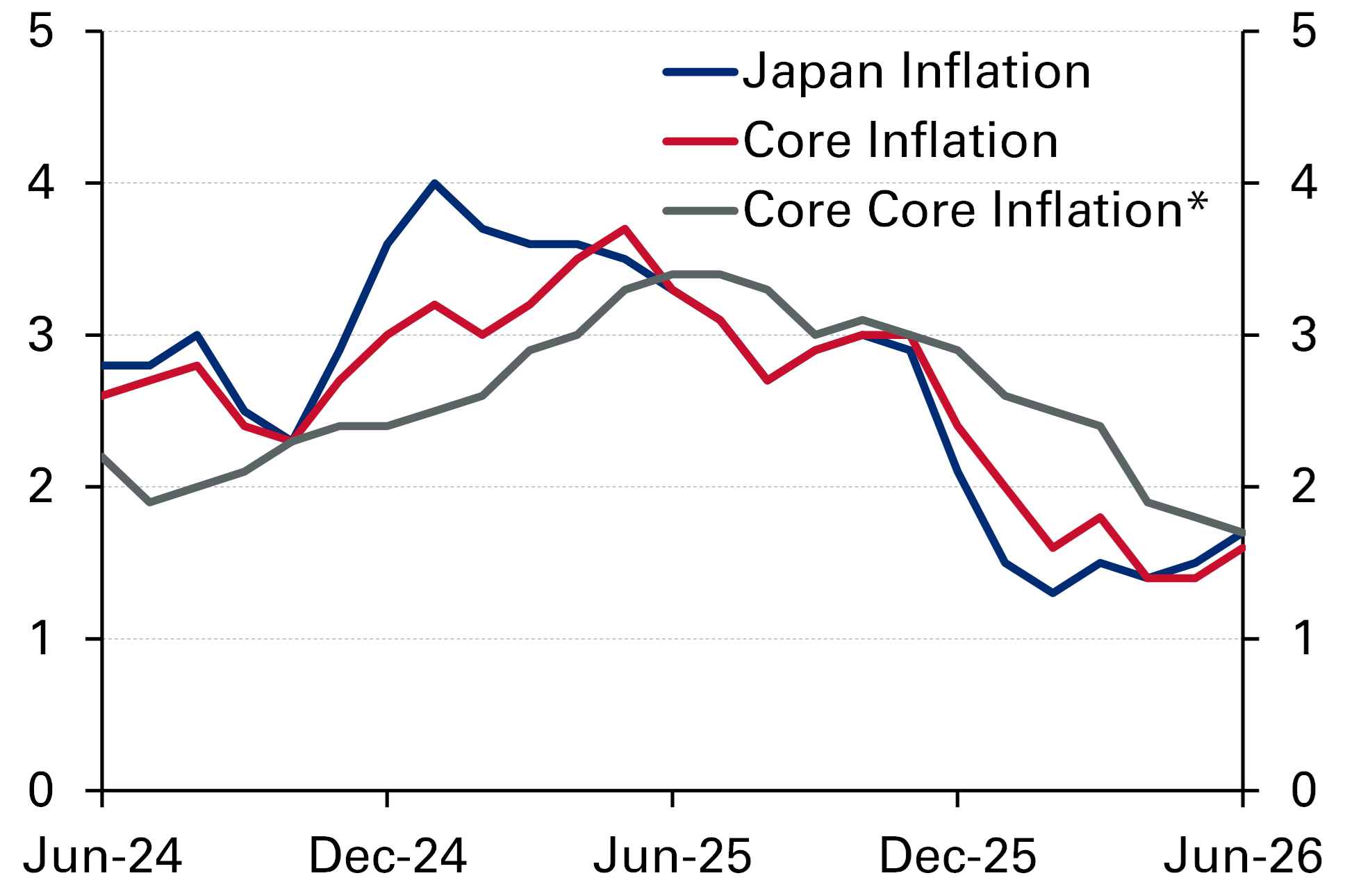
Japan: June’s CPI inflation at 1.7% remains under target; PMIs resilient for now. CPI inflation edged up to 1.7% y/y in June from 1.5% in May but remained below the BoJ's 2% target for a sixth consecutive month. Government subsidies continued to offset upward price pressures stemming from the Middle East conflict, with electricity and gas inflation remaining negative at -1.7% and -0.7%, respectively. Similarly, core inflation (excluding fresh food) accelerated to 1.6% y/y in June from 1.4% in the previous two months, in line with market expectations and rebounding from a four-year low. The pickup in core inflation will be closely monitored by BoJ policymakers, but the bank is still widely expected to keep interest rates unchanged at its policy meeting this Friday. Separately, flash estimates for Japan’s S&P Global composite PMI rose to 53.1 in July (52.8 in June), marking a five-month high and the 16th consecutive month in the above-50 expansion zone. However, underneath the headline, details at the sector level were relatively downbeat as the services and manufacturing PMIs edged down to 51.9 (from 52.2) and 54.7 (from 54.8), respectively. Despite the modest declines, both indicators remained firmly in expansionary territory, although rising input costs and broader price pressures may be beginning to weigh on business activity and sentiment.
Kuwait: KPC signs record pipeline deal, boosting FDI. Kuwait Petroleum Corporation (KPC) announced that its subsidiary, Kuwait Oil Company (KOC), has signed a record $16bn lease and leaseback agreement covering its domestic crude oil export pipeline network. The transaction represents one of the largest energy infrastructure monetization deals in the region and highlights growing investor appetite for long-term Gulf energy assets. The agreement was signed with a consortium comprising Blackstone, Brookfield, and KKR. Under the structure, a new joint venture company will be established in which KOC will retain a 51% controlling stake. KOC will also maintain full ownership and operational control of the 13 pipelines, which span approximately 320km across its domestic network. In return, the consortium will receive payments linked to oil flow volumes over a 20.5-year period. The transaction is expected to generate upfront proceeds of $7.9bn for KOC upon completion, which will help support KPC's broader investment program, including ongoing efforts to expand Kuwait's crude oil production capacity to 4 mb/d and strengthen upstream infrastructure. The deal follows a broader trend across the GCC, where national oil companies have increasingly sought to unlock value from mature infrastructure assets through lease and leaseback and pipeline monetization transactions. Similar agreements have previously been executed in Saudi Arabia and the UAE, reflecting strong investor demand for stable, long-duration cash flow-generating energy assets. More broadly, the transaction, alongside Kuwait's recent international bond issuance (see here), suggests that investor appetite for Kuwaiti assets remains robust despite the challenging geopolitical backdrop.