
 +965 2292 4888


Daily Economic Update
28.01.2026
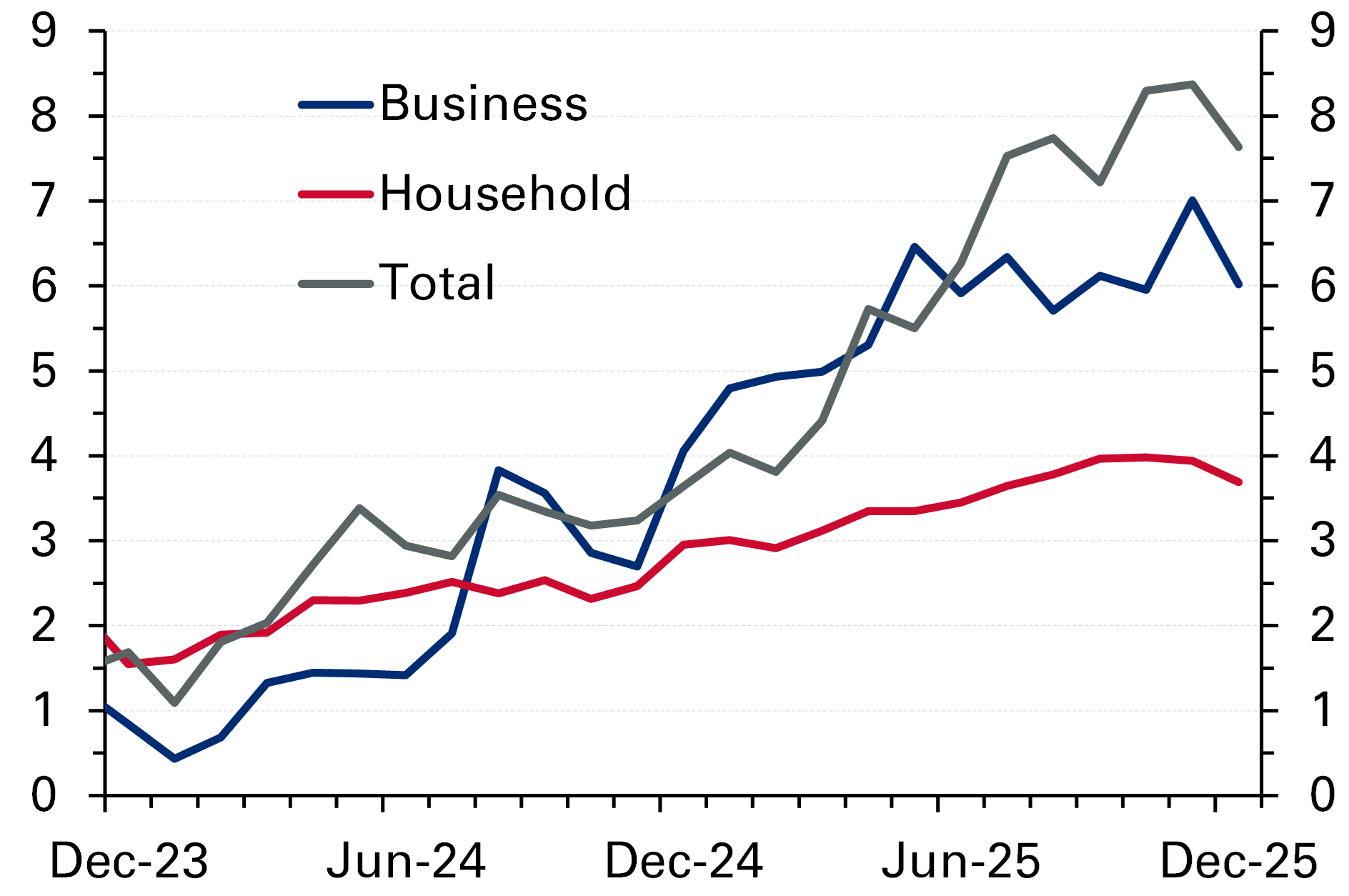
Kuwait: Domestic credit growth logs a three year high in 2025. According to the Central Bank of Kuwait’s (CBK) December monetary release, bank domestic credit growth ended 2025 at a strong 7.6% y/y, the highest since 2022, and more than double the growth rate seen in 2024 (3.6% y/y). Compared to November, resident credit did tick lower, however (-0.2% m/m). Business credit growth, the driving force for gains in 2025, moderated in December to 6.0% y/y (7.0% y/y in November), logging a rare decline month-on-month (-0.5%). Business credit was supported mainly by the increase in credit to the oil & gas (13.2% y/y) and ‘other services’ sectors (16.1%). Meanwhile, credit to households remained stable in December, with the full year growth reading coming in at 3.7% y/y, up from 3.0% in 2024. On the liabilities side, resident deposits increased by 4.7% y/y in December (+0.4% m/m), driven mainly by a 3.8% growth in private sector deposits, which constitute around 77% of total deposits, and almost 29% y/y growth in public-sector deposits.
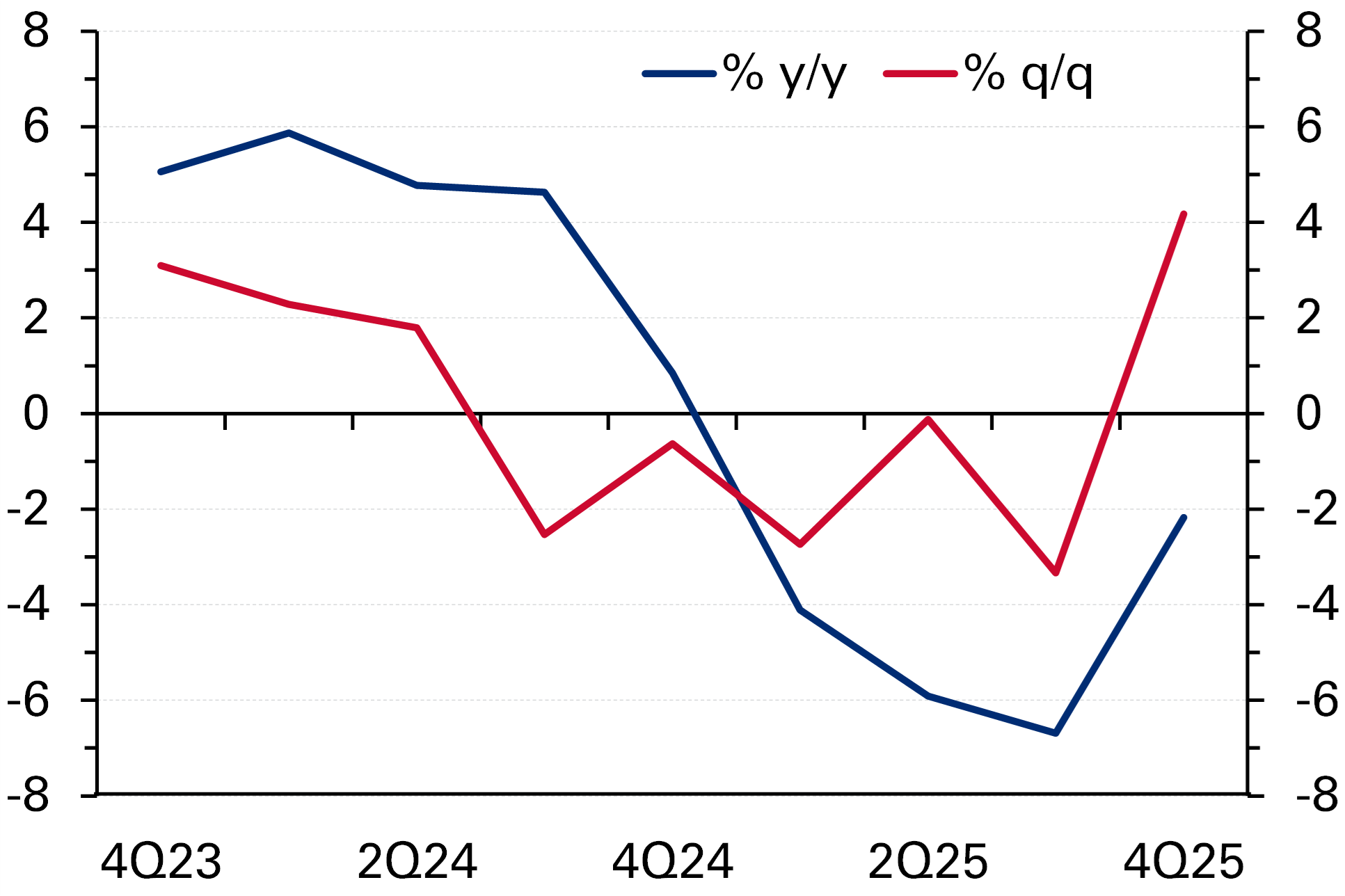
Kuwait: Local bank card spending increases in Q4, suggests sector is normalizing. CBK figures show bank card spending (local) increasing in Q4, by 4.2% q/q to KD10.8 billion, which would be the first quarter of growth since Q2 2024 and the fastest one in three years. Seasonality is a factor, with the final quarter of the year typically outperforming Q3, but in annual growth terms, the trend is unmistakably one of improvement (less negative), with the contraction in annual card spending easing to -2.2% from -6.7% in the previous quarter. The figures suggest that 2026 could see consumer spending, as measured by cards spending, finally normalize after a year in negative growth territory, which would chime with other indicators of consumer activity, such as the purchasing managers’ index and bank credit growth, which have been robust and suggestive of a strengthening non-oil economy.
Egypt: Non-oil trade deficit narrows in 2025 as exports record strong double-digit growth. Egypt’s non-oil trade deficit narrowed by 9% y/y in 2025, supported by a sharp pickup in exports. Non-oil exports rose by 17% y/y to $48.6 billion, while imports increased at a much slower pace of 5% y/y to $83 billion, bringing the non-oil trade deficit down to $34.4 billion, according to the Investment Ministry. The export surge was largely driven by a strong rise in gold exports, which more than doubled to $7.6 billion from $3.2 billion in 2024. Building materials remained the largest export category at nearly $14.9 billion, followed by chemicals & fertilizers at $9.4 billion and food industries at $6.8 billion. The UAE, Turkey, Saudi Arabia, Italy, and the United States continued to be the main destinations for Egyptian exports. The near-20% growth in exports is a positive signal, highlighting improving competitiveness and stronger external demand. That said, the gap with Egypt’s long-term export ambitions remains wide, with the government targeting $145 billion in annual exports by 2030. To sustain this momentum, authorities are stepping up support measures, including higher allocations for export subsidies and industrial localization in the upcoming budget, clearing EGP60 billion in export arrears, unifying investment fees, and shortening port clearance times. These steps should help deepen the export base and further reduce the structural trade gap over the coming years.
Saudi Arabia: Aramco issues $4 billion in bonds. Saudi Aramco completed a $4 billion four tranche bond issuance, its first offering of the year, with maturities ranging between 3-30 years. The offering attracted strong investor demand, with over $14 billion in orders and allowing the 30-year tranche to price at 130 bps over U.S. Treasuries, according to media sources, which was tighter than initial guidance. The company is increasingly turning to debt issuance to maintain its $21 billion base dividend and finance over $50 billion in planned upstream oil projects this year alone. Meanwhile, the kingdom’s public finances see persistent fiscal deficits amid lower oil prices (fiscal breakeven oil price is estimated at $90/bbl) and large-scale Vision 2030 spending requirements, increasing the importance of Aramco’s dividend flow to public revenues. Despite issuing $17 billion in debt over the past two years, Aramco’s gearing (a measure of debt/equity) remains low relative to global peers, and management is pursuing a deliberate strategy to raise leverage gradually, signaling that further bond sales are expected as the company balances capital spending, shareholder distributions, and the kingdom’s fiscal needs.
Europe/India: EU–India trade deal marks major strategic pivot and a global trend amid US trade policies. The European Union (EU) and India finalized a landmark free trade agreement after nearly two decades of intermittent negotiations, reflecting a broader global shift as both sides seek to diversify trade exposures in the wake of President Trump’s steep tariff regime. Total bilateral goods trade between the EU and India stood at $137 billion in FY2025 (ending March), including Indian exports worth $76 billion and imports worth $61 billion. The two major economic forces represent around 25% of global GDP, said Indian Prime Minister Narendra Modi. The pact will cut tariffs on most industrial and consumer goods but will exclude many agricultural products. It would also grant the EU greater access to India’s large car market under a capped and phased arrangement and is expected to undergo several months of legal vetting before formal signing and then approval by the European Parliament. Similarly, after having previously signed trade agreements with the UK, Oman and New Zealand, India has sought greater trade cooperation with Canada and discussions are already at advanced stages. Earlier, Canada and China agreed on a limited trade deal, which would also help in reducing their respective trade dependences on the US, and the UK is looking to do the same when PM Starmer visits China this week. The US administration’s trade policies have unsettled the global trade order and accelerated the shift by several countries to build new, more reliable partnerships, partly as a way of reducing dependency on an increasingly fickle US. The Canada-China trade deal, in particular, drew the ire of President Trump, who threatened to impose 100% tariffs on Canada, and the EU’s trade deal with India was slammed by US Treasury Secretary Bessent, who lamented India’s continued purchase of Russian crude oil which, he accused, is then sold as refined products in European markets.
US: Conference Board consumer confidence sinks to the lowest since 2014 on jobs and economy concerns; USD falls to a four-year low as Trump downplays currency decline. The Conference Board consumer confidence index plummeted to its lowest reading since 2014, at 84.5, from December’s upwardly revised 94.2, as consumers grew pessimistic about job market conditions and the broader economy. Both present situation and expectations gauges fell sharply from the previous month. An increased number of respondents—the highest since February 2021—saw jobs as being “hard to get,” with fewer saying jobs were “plentiful,” which reflects deepening worries about a weakening employment landscape. Consumers also expressed concerns about rising gas and grocery prices and mentioned issues related to tariffs and trade, politics as well as health/insurance. Despite sentiment remaining subdued, aggregate consumer spending has remained solid in recent quarters, mainly driven by wealthier households due to the ongoing positive wealth-effect amid record high equity markets and elevated house prices. Meanwhile, the S&P Case Shiller house price index (20-city) rose by 1.4% y/y in November, accelerating from October’s 1.3%, and extending the m/m gains to four straight months (0.5% versus 0.4% in October). Finally, President Trump seemed unconcerned about a weaker USD, saying “the dollar’s doing great” and that its decline is “great for US businesses”. Following his remarks, the greenback extended its recent decline, with the DXY index falling below the 96-mark earlier this morning and hitting the lowest since early 2022. Throughout the years, Trump has sent mixed signals about his views on the USD, often mentioning that he supports a strong USD, and at other times indicating that he does not mind a weaker USD because it is good for businesses.
Japan: BoJ December meeting minutes show increased likelihood of rate hikes if outlook holds. Minutes of the Bank of Japan’s (BoJ) meeting in December, at which members voted to raise interest rates to 0.75%, show that the BoJ is likely to keep raising rates if their growth and price outlooks continue to materialize. They also highlighted inflation and a weaker yen as persistent risks, highlighting the need to monitor them before making future interest rate decisions. The BoJ also highlighted the threat of US tariffs and slowing overseas economies as significant downside risks to their outlook, with US tariffs causing exports to remain flat over the previous quarter. Following that, the BoJ’s updated forecasts from their January meeting put FY2026 GDP growth at 1%, while core CPI inflation is seen at 1.9%. Markets are currently expecting 1-2 interest rate hikes in 2026, with the earliest being in the middle of the year.