
 +965 2292 4888


Daily Economic Update
20.01.2026
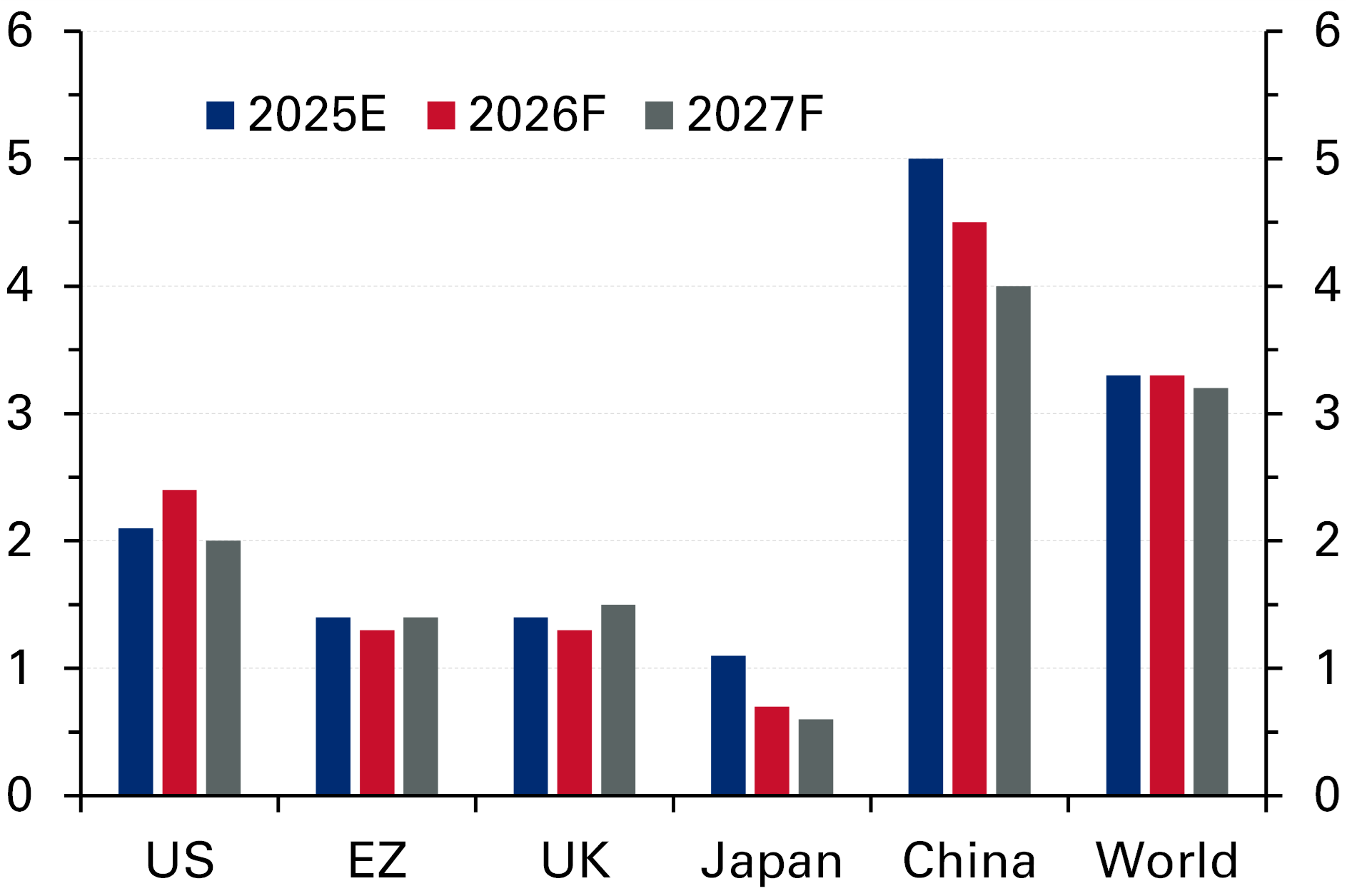
Global: IMF upgrades 2026 global economic growth to 3.3% from 3.1%, led by the US and China. The IMF, in its latest World Economic Outlook update, lifted its forecast for 2026 global GDP growth to 3.3% from 3.1% previously, as technology/AI investment, support from fiscal and monetary policies, accommodative financial conditions, and private sector adaptability help offset trade policy shifts. Estimated growth in 2025 was also inched up to 3.3% from 3.2%, while growth in 2027 was left unchanged at 3.2%. The IMF noted that risks remained tilted to the downside with the main ones being a reevaluation of technology-related productivity growth expectations, trade frictions, and an escalation of geopolitical tensions. In terms of key economies, US GDP is expected to grow by 2.4% (+0.3% versus October’s projections) in 2026 and 2% in 2027 (2.1% in 2025), the Eurozone by 1.3% (+0.1% versus October) and 1.4% in 2026 and 2027, respectively. Forecasts for the UK (1.3% and 1.5%) and Japan (0.7% and 0.6%) were mostly unchanged, while China’s growth was raised to 4.5% (+0.3%) in 2026 but lowered in 2027 to 4% (-0.2%).
Japan: PM Takaichi calls snap elections on February 8, JGB yields sharply higher on fiscal worries. Japan PM Takaichi called for snap parliamentary elections on February 8 and is set to dissolve parliament on Friday, aiming for a better tally in the lower house by leveraging her current high approval ratings. A stronger majority in parliament would give her more flexibility in rolling out expansionary fiscal policies. The ruling Liberal Democratic Party is promising to exempt the 8% sales tax on food for two years as per the previous agreement with its coalition partner, Ishin; it is estimated that this would reduce general government receipts by around ¥5 trillion (5-6% of total revenues). Japan’s public finances are already stretched, with a general government gross debt-to-GDP of almost 250% and weakening fiscal metrics in general. Therefore, plans for further fiscal expansion have rattled the Japanese government bond (JGB) markets. Yields on 10Y JGBs hit a fresh 27-year high of around 2.35% this morning and those on 30Y reached 3.75%. The yen was trading slightly higher versus the US dollar (¥158/USD), recovering from last week’s 18-month low of ¥159.45 on the government’s pledge to intervene in the forex market and the possibility an early interest rate hike by the Bank of Japan.
Egypt: IMF upgrades Egypt’s growth outlook as reform gains become more visible. The International Monetary Fund revised up its GDP growth forecast for Egypt in its latest Outlook update, signaling growing confidence in the economy’s recovery path. The Fund now expects GDP growth to reach 4.7% in FY25/26, up by 0.2 percentage point from its October projection. More notably, growth for FY26/27 was revised higher by 0.7 percentage point to 5.4%. These upward revisions reflect increasing confidence that Egypt’s reform agenda is gaining traction, particularly on the macro-stabilization front. Improving inflation dynamics, a more flexible exchange rate regime, and stronger foreign currency inflows have helped reduce key vulnerabilities that weighed on growth in recent years. At the same time, the IMF appears to be factoring in a more contained economic impact from regional geopolitical tensions than previously anticipated. Overall, the IMF’s upgrades reinforce the view that Egypt is moving from a phase of stabilization toward a gradual recovery, with growth momentum expected to strengthen further as monetary easing continues and private sector activity gains traction.
Saudi Arabia: IMF also raises Saudi 2026 growth forecast. The IMF has also raised Saudi Arabia’s economic growth forecast for 2026 to 4.5% from its previous estimate of 4% in October, marking the third consecutive upward revision in six months. The Fund also upgraded its 2025 growth estimate to 4.3% (from 4%) and now expects 3.6% growth in 2027 (3.2% previously). The upgrade reflects stronger than expected momentum in the non-oil economy and a renewed pickup in oil sector growth following the easing of OPEC+ production restrictions. The revised forecast aligns closely with projections from the Saudi Ministry of Finance and international institutions. Earlier this week, Fitch Ratings affirmed Saudi Arabia’s credit rating at A+ with a stable outlook, citing the Kingdom’s strong fiscal and external balance sheets, including high reserves, low government debt relative to peers, and sizable sovereign net foreign assets. Ongoing Vision 2030 reforms are supporting economic diversification and robust non-oil activity. Fitch expects current account and fiscal deficits to narrow gradually as oil production rises and spending stabilizes. However, oil dependence, governance indicators, and geopolitical risks remain structural weaknesses, while rising government and GRE borrowing will increase debt ratios.
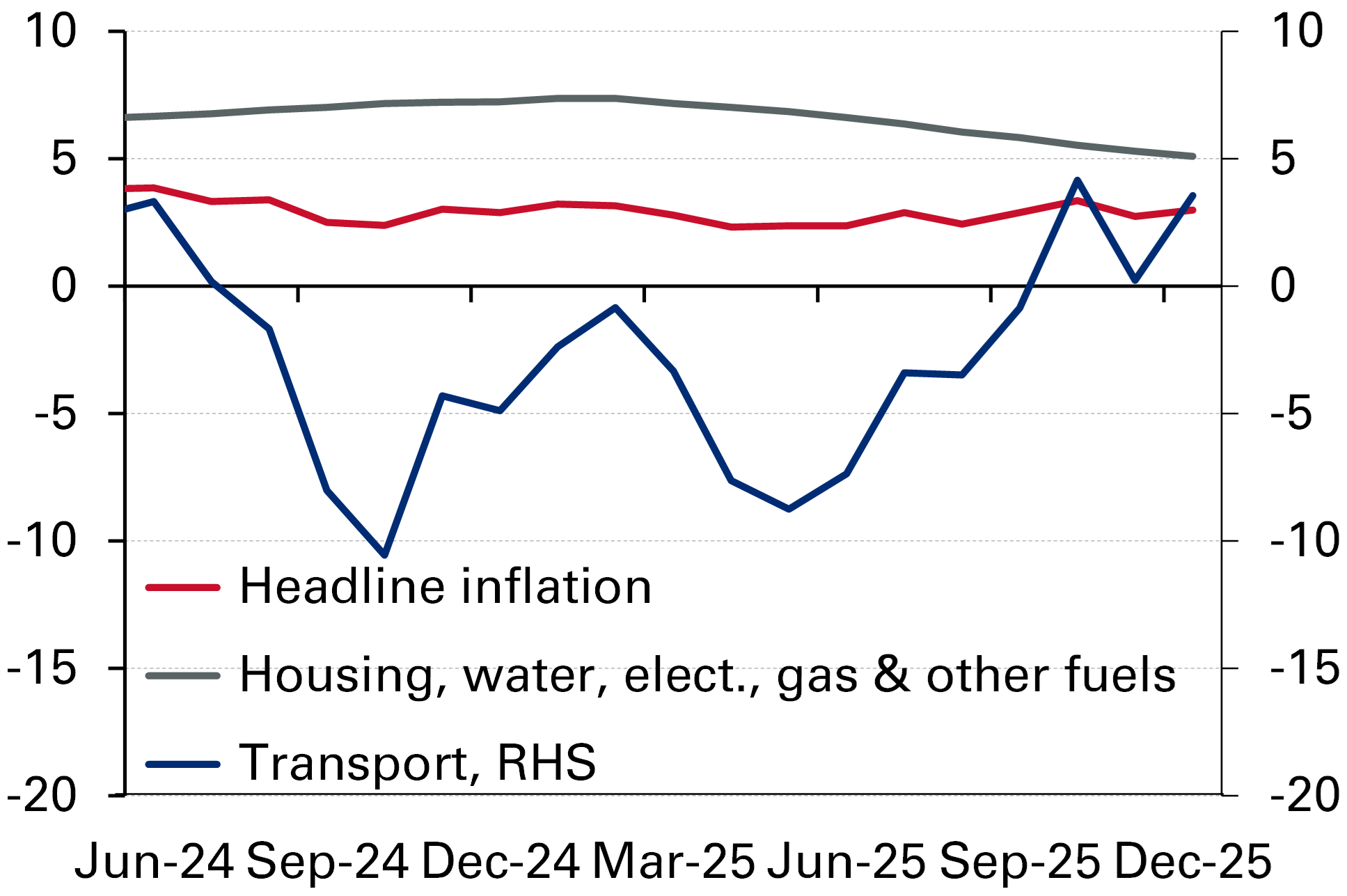
UAE: Consumer inflation in Dubai edged up in December on rising transport prices. CPI inflation in Dubai rose by 3% y/y in December, up from November’s 2.7% reading, mainly due to a rebound in transport prices (3.1% y/y versus -1.9% in November), which was in line with the increase in pump fuel prices in the same period (3.2% y/y versus -4.6%). Food & beverages price rises also quickened compared to November (1.2% versus 0.7% y/y). On the other hand, housing rents, which constitute about 41% of the standardized basket, continued to rise less quickly since the beginning of the year to 5.1% y/y in December. For the full year of 2025, inflation rose by 2.8%, easing from 3.3% increase seen in the previous year. Slower inflation came mainly due to softer increases in food & beverages (0.2% versus 2.3% in 2024), housing (6.4% versus 6.7%), and education (2.6% versus 3.2%). Inflation in Dubai could continue to soften this year on lower oil prices and the continued deceleration in rent price growth.