
 +965 2292 4888


Daily Economic Update
23.07.2026
Kuwait: $6 billion raised in fresh international bond sale. According to Bloomberg, Kuwait successfully raised $6 billion through a three-tranche US dollar bond issuance, tapping public international debt markets for the second time following its return to borrowing in 2025 after an eight-year absence. The sale attracted approximately $14.8 billion in orders according to the report, allowing Kuwait to tighten pricing by 25 basis points from initial guidance and issue 3-year, 5-year, and 10-year debt at spreads of 70 to 85 basis points over US Treasuries. While Iran's attacks have damaged some important infrastructure and contributed to a sharp increase in Kuwait's fiscal deficit (KD 7.1 billion in FY 25/26) following disruptions to oil exports through the Strait of Hormuz, investors continue to view Kuwait favorably due to its substantial oil wealth, large sovereign wealth fund, and strong credit rating. The latest issuance raises total outstanding debt (domestic and international) to KD 10.8 billion, equivalent to about 24% of 2026 GDP. Another sizeable fiscal deficit is projected for the current fiscal year amid the continued negative geopolitical backdrop, implying that financing needs will remain elevated. Debt issuance is set to continue at a solid pace especially with still ample borrowing room left given that debt levels remain well below the KD 30 billion debt ceiling specified by the liquidity and financing law. Additionally, the government may be inclined to maintain a regular presence in debt capital markets and adequate liquidity in the General Reserve Fund, serving as a fiscal buffer against future shocks.
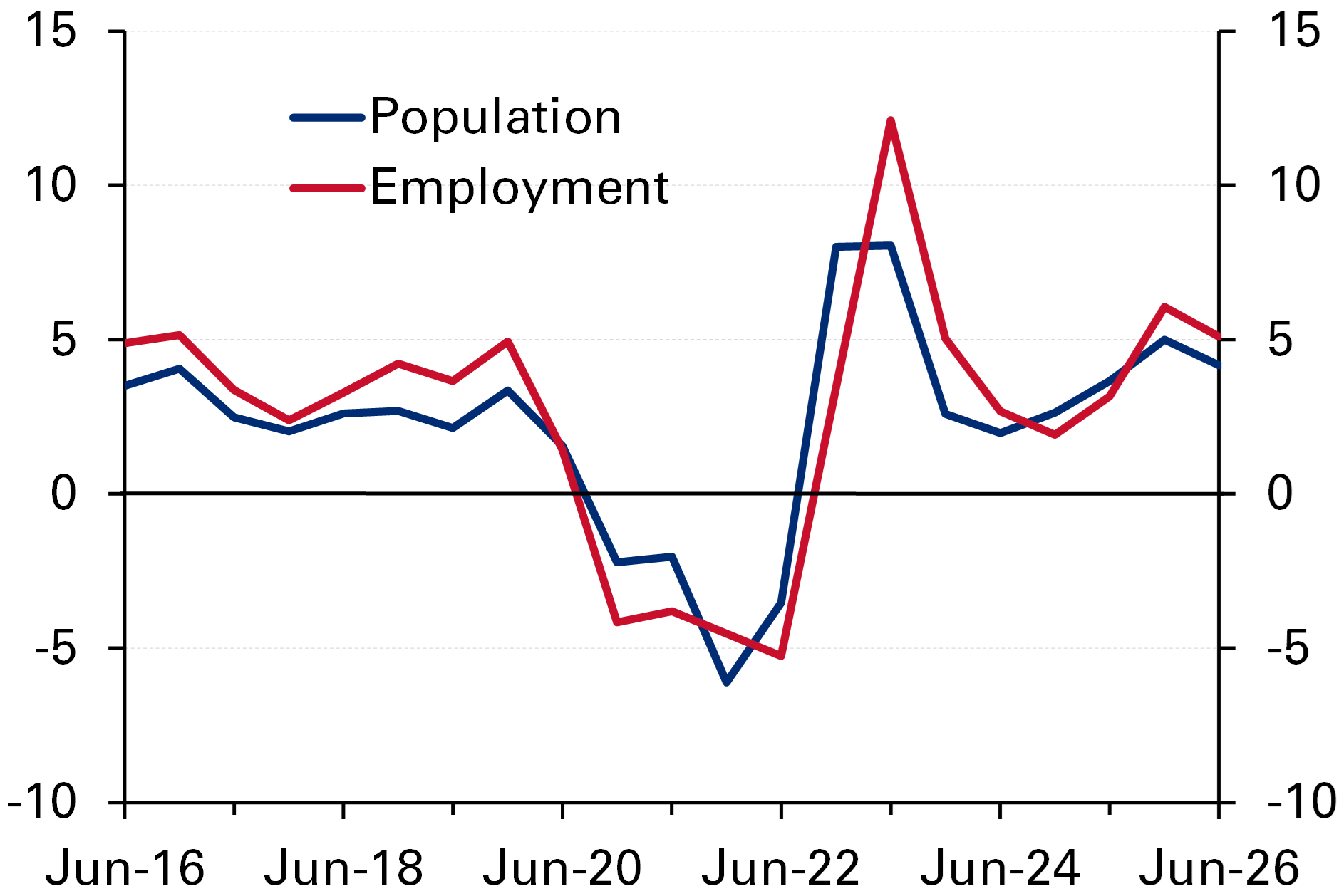
Kuwait: Population tops 5.3 million in June 2026 amid solid growth in non-Kuwaiti residents. According to the latest biannual figures from PACI, Kuwait's population grew by 4.2% y/y in June 2026, slowing from 5% in December 2025, to reach 5.3 million residents. Growth continued to be driven primarily by the expatriate population, which expanded by 5.5% y/y, albeit at a slower pace than the 7.4% recorded six months earlier, pushing the share of non-Kuwaitis to a recent high of 70.5% of the total population. By contrast, the Kuwaiti population grew by 1.1% y/y following a 0.3% decline in December, marking the first growth reading since December 2024. Labor market trends remained broadly similar. Total employment growth eased to 5.1% y/y in June from 6.1% in December, reflecting slower hiring among expatriates, whose employment growth moderated to 5.9% y/y from 7.5% previously. Kuwaiti employment also returned to growth, rising by 0.7% y/y, supported by a 1.1% increase in public sector employment. However, the number of Kuwaitis employed in the private sector fell by 1.2% y/y, its slowest pace of decline since 2023 but nevertheless an extension of the downward trend. Meanwhile, the Kuwaiti labor force expanded by 0.9% y/y following a year in contraction, helped by a return to growth among female labor force participants (+0.2% y/y) after three consecutive biannual declines, while the overall Kuwaiti unemployment rate edged up to 6.4% - its highest level since June 2021. Outside the labor force, the number of retirees increased by a record 13.5% y/y, with the sharp rise likely linked to recent pension-related policy measures passed in early 2025, including the implementation of full retirement benefits and minimum pension guarantees.
Oil: Price rally continues amid disruptions to Red Sea shipping. Brent crude futures have extended the recent rally, rising 3.4% yesterday and gaining a further 2% in early trading today to move above $96/bbl, pushing prices to their highest level in six weeks. The latest gains were driven by renewed disruptions in the Red Sea after Yemen’s Houthis attacked two Saudi oil tankers earlier today, reportedly setting one vessel ablaze. The incident raises the prospect of a more sustained disruption to Saudi crude shipments through the Bab El-Mandeb Strait, a route that has become increasingly important since the closure of the Strait of Hormuz at the onset of the US-Iran conflict. Saudi Arabia has relied on Red Sea export routes to maintain crude flows following the loss of direct access through Hormuz, with shipments through Bab El-Mandeb hovering around 4 mb/d in recent months. Any prolonged disruption would force Saudi cargoes destined for Asia onto longer routes via the Suez Canal and around the Cape of Good Hope, increasing transportation costs and potentially tightening effective supply to key consuming markets. Meanwhile, EIA data showed a mixed picture on the inventory front. US commercial crude stocks rose by 2 mb during the week ending July 17, marking the first inventory build since April and suggesting some easing in immediate supply tightness. However, inventories in the Strategic Petroleum Reserve (SPR) continued to decline, falling by a further 5 mb w/w to 311 mb, leaving SPR holdings near multi-decade lows.
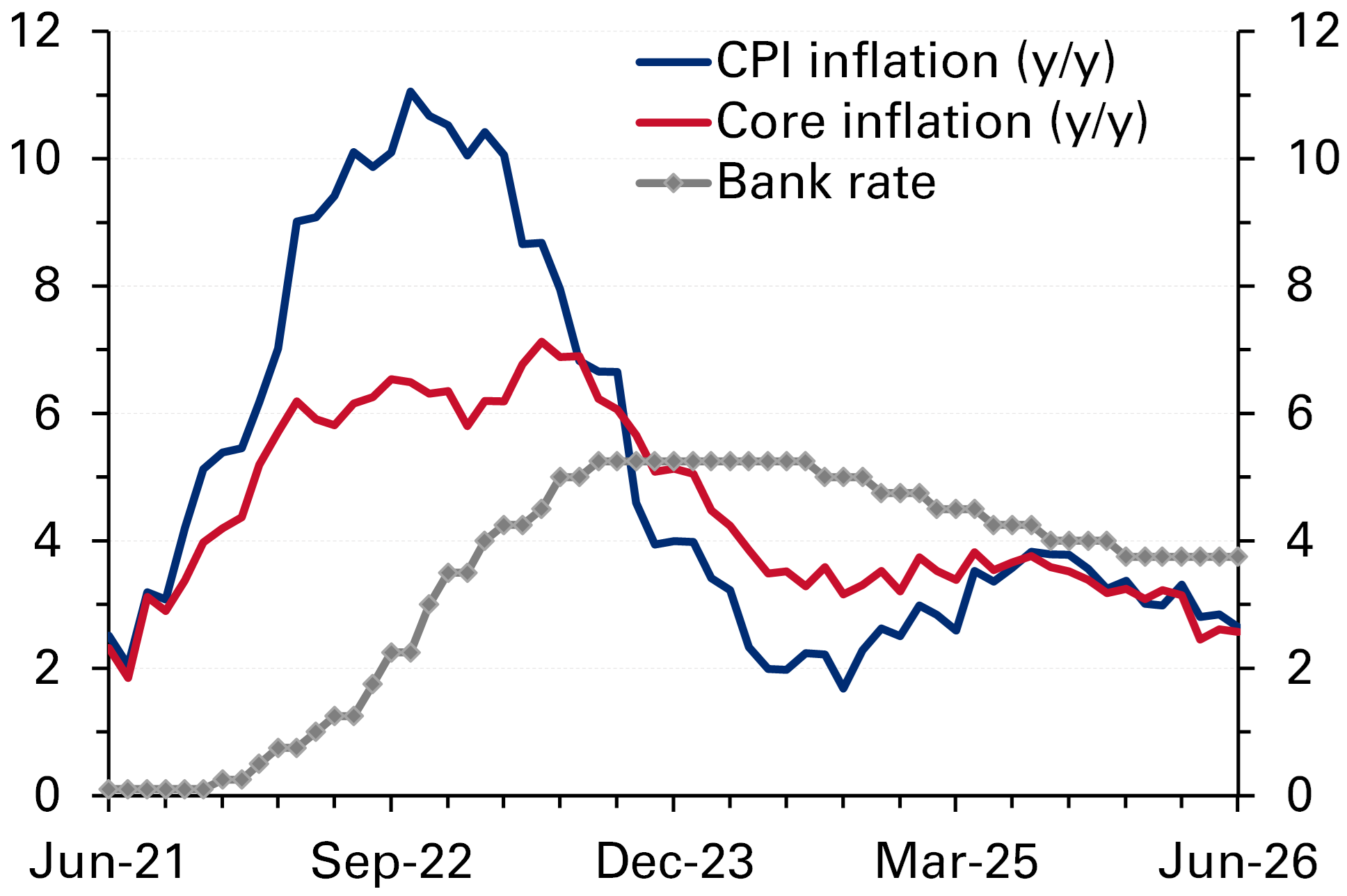
UK: CPI inflation in June slowed more than forecast but progress unlikely to sustain as energy prices have rebounded. June CPI inflation slowed to 2.6% y/y from 2.8% in May, below the consensus forecast of 2.7%. On a monthly basis, consumer prices increased 0.1%, the slowest pace in five months, helped by declining costs of motor fuel prices and food & non-alcoholic beverages. The core rate held steady at 2.6% y/y as the falling m/m prices of clothing & footwear were offset by higher airfares (+10% m/m) and restaurant & hotel costs. Overall goods inflation stood at 1.7% y/y versus 2% in May, while services ticked down to 3.6% from 3.7%. However, the inflation slowdown will likely prove temporary as energy prices have rebounded since June-end, while the regulator Ofgem has set household energy price cap 13% q/q higher for the period July through September. Moreover, if the current uptrend in European gas prices is sustained, the energy price cap for Q4 may be raised further: Ofgem will announce the cap for Q4 in late August. The BoE recently predicted CPI inflation of around 3% in Q3, rising to over 3.25% in Q4. Accordingly, the futures market pricing currently signals one to two 25 bps policy interest rate hikes by end 2026.