
 +965 2292 4888


Daily Economic Update
05.01.2026
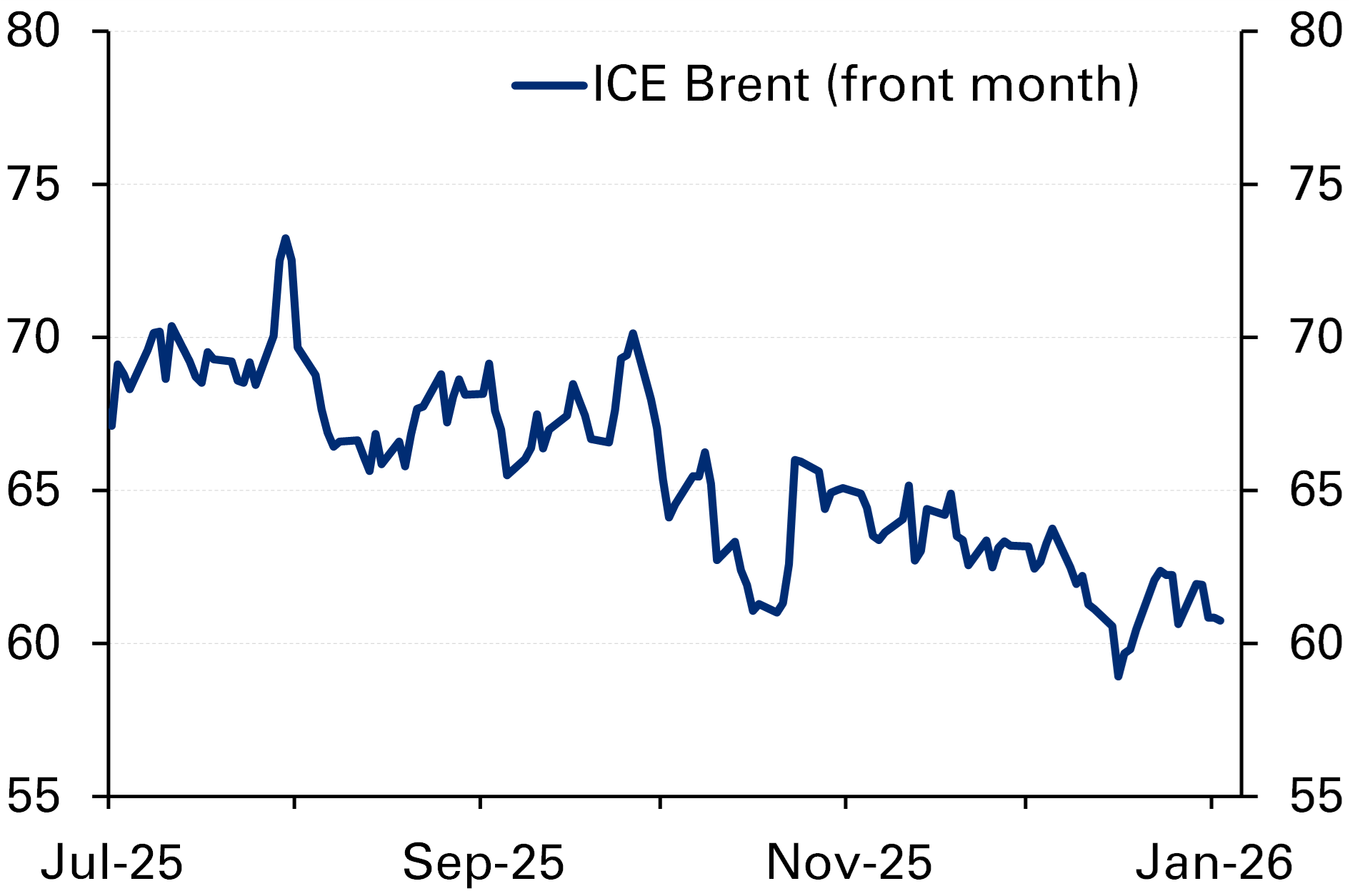
Oil: Prices log third year of declines in 2025; market participants weigh Venezuela-linked geopolitical risk. Brent ended the year at $60.85/bbl (averaging $68.2/bbl), dropping 19% y/y for a third consecutive annual decline and the steepest since 2020. Market oversupply concerns were the dominant theme in 2025, especially in the second half of the year, with ballooning oil-on-water inventories seen as reflecting the mismatch between burgeoning global oil supply and weaker global oil consumption, the latter partly a consequence of trade tariff frictions and partly due to softer Chinese macroeconomic activity. Brent’s performance in the final week of the year, eking out a minor weekly increase of 0.2% w/w, came amid escalating pressure on the Maduro regime in Venezuela, with the US striking drug trafficking targets in the country and tightening its blockade of shipping before Saturday’s audacious removal of President Maduro from the country. The impact on oil flows has been unclear, however, with conflicting reports coming out of the country. Following the military operation, President Trump said the US will “run” Venezuela and “fix [its] oil infrastructure”, claiming that Big Oil companies will undertake the task of raising Venezuelan production from the current ~950 kb/d. This should not compound the market’s current bearish bias as any new supply will require several years of substantial investment which, at current oil price levels, may not be economically viable. More important, it is very unclear what fate awaits the regime and the power, personnel and control structures that remain largely intact. Meanwhile, OPEC-8 yesterday reaffirmed their decision to pause their supply cut unwinding schedule in Q1 2026 by keeping production steady. Brent eased 0.3% to $60.6/bbl this morning in Asian trading.
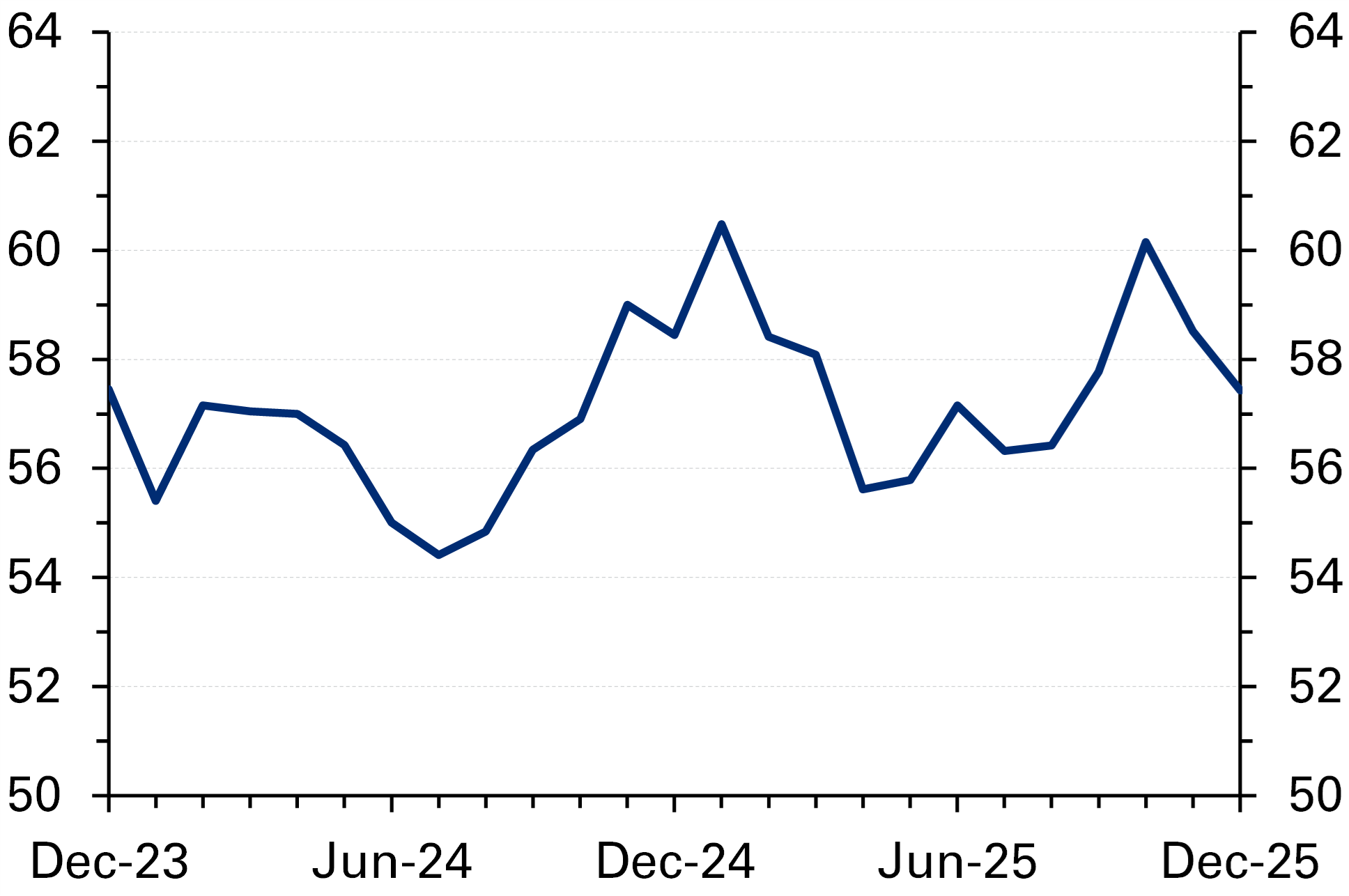
Saudi Arabia: PMI eased but remained strong in December. The non-oil private sector PMI eased to 57.4 in December from 58.5 in November, reflecting a still strong pace of expansion in business activity despite decelerating for the second consecutive month from a recent high of 60.2 in October. Output and new orders growth remained strong in December on sustained demand, the approval of new projects and ongoing business investments, although new orders slowed to a four-month low reportedly on softer sales likely due to market saturation, while new export orders saw a marginal increase. Employment growth remained robust, with companies continuing to expand their workforce amid rising demand and overall positive expectations for 2026, though confidence eased on competition concerns. Cost pressures increased on higher staffing and purchase costs, leading to a rise in output prices.
Saudi Arabia: Ministry of Finance approves the 2026 borrowing plan of $58bn. The Ministry of Finance and the National Debt Management Center approved the 2026 borrowing plan which sets financing needs at SAR 217 billion ($58 billion), primarily to cover a projected 2026 budget deficit of SAR 165 billion ($44 billion) and debt repayments of SAR 52 billion ($13.9 billion). Funding will be diversified: 20–30% from domestic debt markets, 25–30% from international markets, and up to 50% from private sector financing, including project finance and export credit agency tools. Instruments will include bonds, sukuk, and competitive loans, supported by a local sukuk issuance calendar. The strategy emphasizes risk management, debt sustainability, and expanding the investor base globally. Additionally, it promotes alternative financing tools and aims to attract private capital for infrastructure and strategic sectors like logistics and religious tourism, while reducing spending on large-scale real estate projects. This approach reflects Saudi Arabia’s commitment to fiscal discipline while driving economic diversification and long-term growth.
Egypt: Tourist arrivals hit a new all-time high in 2025. Egypt welcomed around 19.5 million tourists in 2025, marking a new record and a strong 21% increase compared to 2024, according to the Minister of Tourism and Antiquities. The sector’s momentum is expected to continue, with tourist arrivals projected to grow by 5–7% in 2026. Tourism remains one of Egypt’s most important and resilient sources of foreign currency inflows, despite having faced repeated external shocks over recent years, including global economic uncertainty and regional geopolitical tensions. The latest figures reflect a clear recovery phase, supported by improved security conditions, expanded hotel capacity, upgraded tourism infrastructure, and a broader diversification of tourism offerings. Authorities continue to focus on enhancing the overall visitor experience, aiming to extend average stays and increase per capita spending. These efforts are part of a longer-term strategy to raise tourist arrivals to 30 million by 2030, which would significantly strengthen Egypt’s external position and provide a more stable and sustainable source of FX inflows.
Global: December jobs report in the US and inflation in the Eurozone and China key data points this week. In the US, December’s non-farm payroll report is due on Friday, and the consensus forecast is for an increase of 57K jobs, down from 64K in November, and a slight decrease in the unemployment rate to 4.5% from 4.6%. Job openings in November (due on Wednesday) are seen staying broadly flat at 7.7 million. The ISM manufacturing PMI (today) is expected to remain in contraction at 48.3 in December (48.2 in November) with the services gauge (Wednesday) seen inching down to 52.3 from 52.6 in November. Finally, labor productivity growth in Q3 (Thursday) is forecast at a strong 3% q/q (annualized) following 3.3% in Q2. In the Eurozone, flash inflation data for December is due on Wednesday, and is seen steady at 2.1% and 2.4% y/y for the headline and core rates, respectively. Retail sales for November (Friday) are seen inching up by 0.1% m/m after being flat in October. In the UK, the Halifax house price index (Thursday) is expected to edge up by 0.1% m/m in December after being steady in November. In China, CPI inflation for December is due on Friday with the headline rate expected at 0.8% y/y (0.7% in November) while PPI prices are seen dropping by 1.5% y/y (-2.2% in November). Finally in Japan, November’s cash earnings are due on Thursday with consensus expecting growth to soften to 2.3% y/y from 2.6% in October. Meanwhile, November’s household spending (Friday) is projected to fall 1% y/y, though improving from October’s disappointing 3% drop.
UK: December house prices rise by the slowest annual rate since April 2024, as per Nationwide. The UK Nationwide house price index rose by 0.6% y/y in December (+1.8% in November), the slowest annual growth rate since April 2024. On a monthly basis, prices fell 0.4%, the first contraction in four months, after a rise of 0.3% in November. As we noted previously, moderating wage growth, high property prices and still-elevated mortgage rates are creating affordability challenges for many buyers, and will likely continue to weigh on the UK housing market in 2026. However, the possibility of further reductions in policy interest rates by the Bank of England should be somewhat supportive amid an overall cautious outlook for house prices.