
 +965 2292 4888


Daily Economic Update
03.09.2026
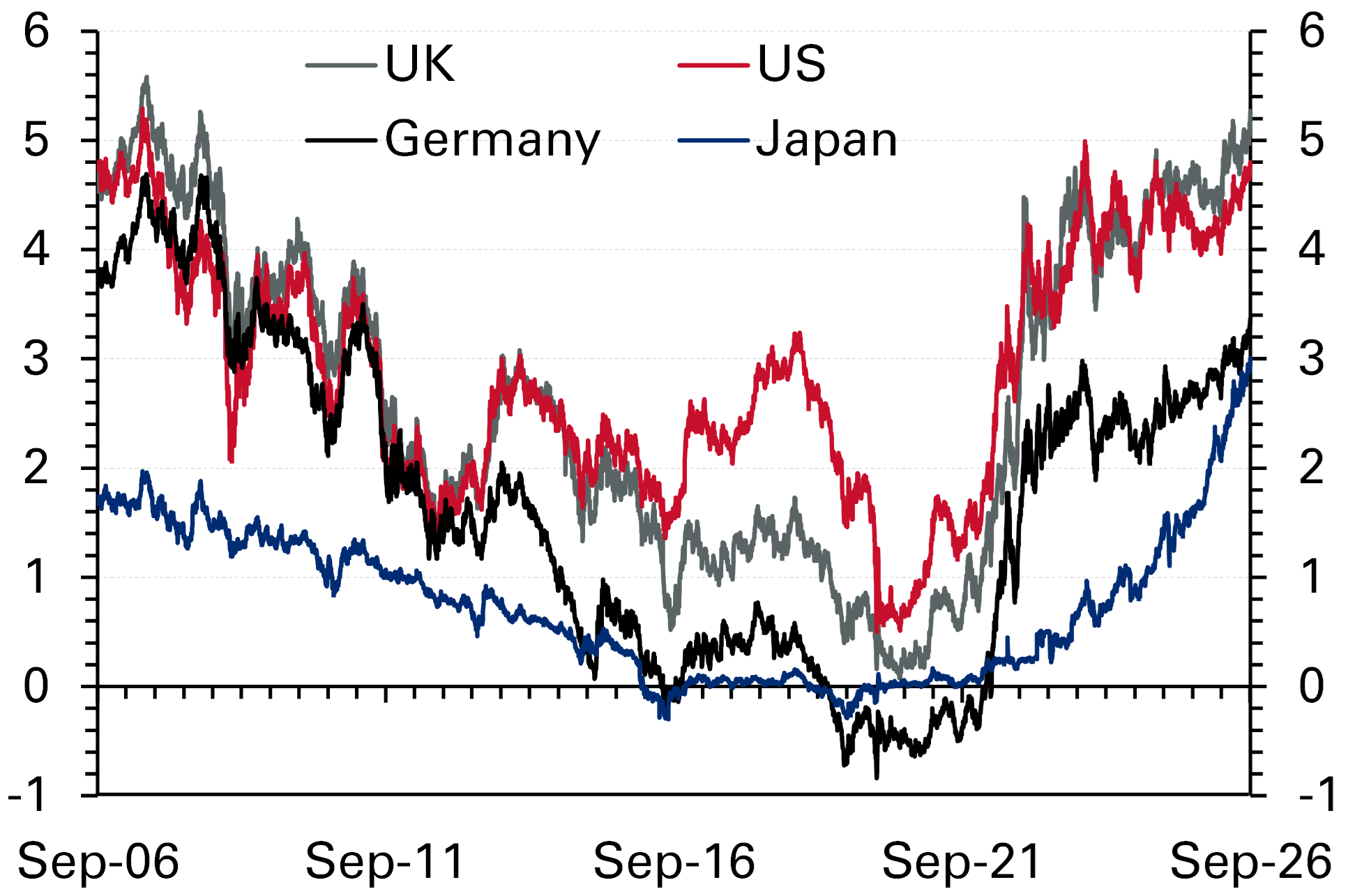
Global: Global bond sell-off deepens on concerns about mounting fiscal challenges and high inflation. The rout in global government bonds has deepened recently, reflecting higher inflation worries and worsening fiscal performances with rising interest expense compounding already existing concerns related to large fiscal deficits. UST 10Y bond yields have surged to around 4.8%, the highest closing level since January 2025, while the 30Y ones are trending near their pre-GFC level (2007). In the US, solid economic growth (Atlanta Fed’s GDPNow model has Q3 growth at a strong 4.8% annualized) is also a factor in pushing yields up. In the UK, 10Y gilt yields jumped by more than 20 bps over the last few days to around 5.25%, hitting the highest level since 2007, while Germany’s 10Y bund yield climbed to the highest since the euro crisis in 2011 and Japan’s 10Y went past 3%, a 30-year high. As per a Bloomberg measure, the average yield on G7 government debt currently stands at its highest since 2000. Current high energy prices are fueling worries about elevated inflation across most developed economies. Separately, massive debt raising by private players including US ‘hyperscalers’ is directly competing with government bond issuances, especially within the investment grade segment, where investors find spreads over benchmark yields attractive. Moreover, the futures market pricing signals fresh monetary policy tightening by the Fed and the BoE this year, and further hikes by the ECB and the BoJ as soon as in their upcoming September meetings. Aside from higher policy interest rates, rising government bond yields further worsen fiscal trajectories and risk dampening business and household credit appetite, weighing on the economy. Higher UST bond yields have prompted the US Treasury to announce surprise actions such as expanded bond buybacks and a joint intervention in the FX market to dissuade UST bond selling by the Japanese government. However, without a resolution of the underlying issues, such as high inflation and fiscal challenges, these stopgap actions are unlikely to drive meaningful results as seen in the US’s case; following Treasury’s announcement, long-dated UST bond yields fell abruptly but fully recouped losses over the subsequent trading days as structural issues outweighed the attempts to fix things temporarily.
US: Fed’s Williams reiterates relatively dovish stance and sees strong economy as reason for higher UST yields. John Williams, the New York Fed President (a permanent FOMC voting member) reiterated his relatively dovish stance, saying “I am actually seeing the trend in inflation moving slowly down as some of the effects of the tariffs move into the rearview mirror”, and that “interest rates are in a good place”. He also mentioned that bond yields, in large part, are being driven higher by “really a strong US economy and a strong economic outlook fueled by big investments in AI”, while emphasizing that Treasury’s recent action to bring yields down “doesn't complicate my job or our job making monetary policy”. Meanwhile, the Fed’s latest Biege Book (anecdotal survey of economic conditions, which is published eight times a year) showed that economic activity rose modestly in recent weeks, with consumer spending growing slightly and datacenters driving demand in the manufacturing and construction sectors. Price pressures were elevated, especially related to energy, transportation, and some raw materials, and employment also picked up very slightly. Overall, the trend witnessed in recent months continues, with robust household consumption and solid AI-related investments driving growth in the economy, while inflation remains high and the labor market stabilizes further. Finally, Congress has cleared a temporary funding bill (continuing resolution) to finance the federal government through December 11, averting a potential government shutdown on October 1. Neither party seems interested in enforcing another shutdown ahead of the mid-term elections in November that could jeopardize their poll prospects. The bill now moves to the President’s desk for signature. However, key sticking issues persist that will likely resurface later including higher defense and DHS-related funding demands from Republicans, while Democrats are seeking more outlays on health, education, and other social programs through offsets elsewhere. Therefore, depending on the composition of Congress after the November elections, political bickering may return, keeping uncertainty high before the December 11 deadline.
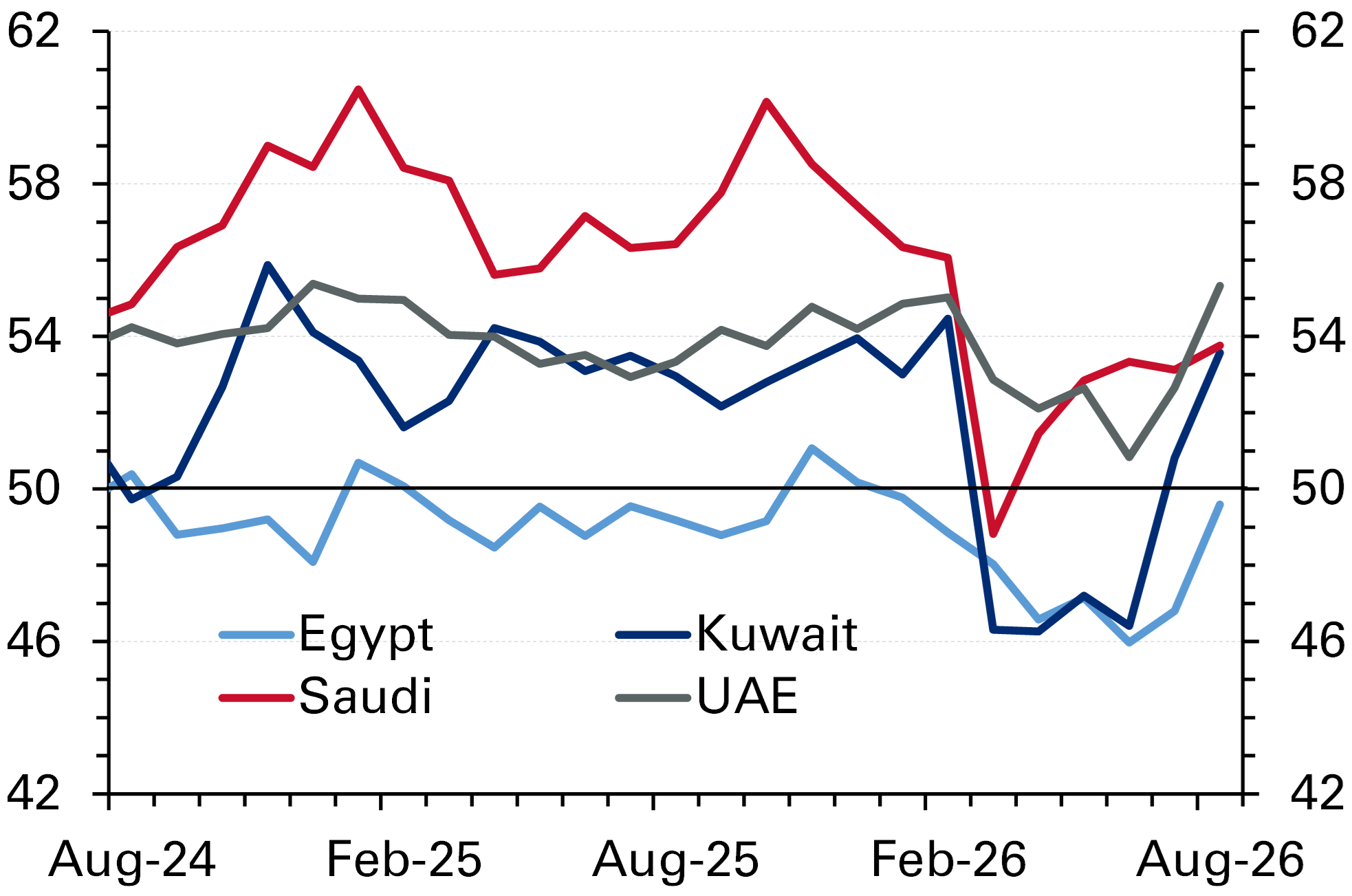
Kuwait: PMI highest since February on stronger output and new orders. The non-oil private sector expanded in August for the second consecutive month, according to the latest PMI data. August’s PMI reading was also a notable improvement on July’s figure, accelerating to 53.6 from 50.8. Growth was driven by sharp increases in output and new orders, supported by competitive pricing, effective marketing, quality products, and stronger export demand from neighboring countries. Improved business activity encouraged firms to hire staff for the first time in six months and significantly increase purchasing activity to replenish inventories, leading to one of the strongest rises in input buying since the survey began. Business confidence regarding the year-ahead outlook also strengthened. However, the surge in demand resulted in higher workloads and a further increase in backlogs. At the same time, inflationary pressures intensified, with input costs reaching a six-month high due to higher wages and increased expenses for maintenance, marketing, raw materials, and utilities, prompting firms to raise their selling prices despite some discounting efforts to support sales growth.
Saudi Arabia: Non-oil private sector growth strengthens in August. Saudi Arabia’s non-oil private sector saw a stronger improvement in business conditions in August, with the PMI rising to 53.8 from 53.1 in July. The reading, the highest in six months, marked a fifth consecutive month of expansion, and provides a positive base for growth through the remainder of 2026. The improvement was mainly driven by a stronger increase in output, as firms benefited from recovering demand and improving market activity. However, external conditions remained challenging, with new export orders declining again amid ongoing regional tensions. At the same time, firms continued to face cost pressures, although these showed some signs of easing. Employment also continued to improve, with workforce numbers increasing for a second consecutive month. Supply chain conditions improved further, supported by greater use of local suppliers and faster vendor responses, although the pace of improvement slowed to a three-month low. Staff costs rose at their fastest pace since February, reflecting efforts to retain employees and performance-related pay increases. Despite these cost pressures, market sentiment for the year ahead rebounded to a seven-month high, supported by expectations of resilient market activity, continued fiscal support and regional development projects.
UAE: PMI gains momentum as output growth reaches a six-month high. The headline PMI rose in August to 55.3, logging its strongest expansion since December 2024, up from 52.7 in July. Growth was driven by a surge in new orders, which expanded at their fastest pace in more than two years, supported by stronger domestic demand, improving customer confidence, and a recovery in export sales. Firms also reported faster output growth, aided by ongoing project execution and fewer logistics disruptions. Supply-side conditions continued to improve as businesses increasingly relied on local suppliers to mitigate geopolitical risks, resulting in a strong rebound in purchasing activity. Input inventories rose at the fastest rate in nearly three years, reflecting confidence in future demand. Meanwhile, cost pressures eased, with input price inflation slowing to a six-month low despite higher energy and raw material costs. Employment, however, declined marginally for the second time in three months as firms remained cautious amid lingering regional uncertainties. Business sentiment improved to its highest level since April, supported by stronger sales trends, expectations of continued construction activity, and hopes for reduced geopolitical tensions. Similarly, Dubai’s PMI rose to 54.1 from 51.7 in July, indicating solid business conditions with the upturn driven by a notable acceleration in both output and new orders.
Egypt: PMI jumps to a seven-month high, signaling a gradual recovery in activity. Egypt’s non-oil private sector showed clear signs of improvement in August, with the headline PMI rising sharply from 46.8 in July to 49.6, its highest level in seven months and only slightly below the 50-threshold that separates expansion from contraction. The latest reading points to a much softer deterioration in business conditions and suggests that the outlook for Q3 2026 is becoming more encouraging, with the latest PMI reading historically consistent with annual GDP growth of around 5%, however, we may still see a slowdown in GDP growth in the upcoming figures for Q2 2026. The improvement in August was broad-based, with both output and new orders declining at a slower pace as some firms reported signs of improving demand. Employment also increased for the first time since October 2025, with the pace of job creation the second strongest in the survey’s history. However, inflationary pressures picked up again after easing for three consecutive months. Input costs and selling prices rose at faster rates, driven by higher material, oil and transportation costs, while wage pressures remained elevated. Supply constraints and limited cash flow also continued to weigh on purchasing activity. Despite these challenges, market sentiment improved significantly, reaching its highest level in more than four years, pointing to growing optimism about the economic outlook.