
 +965 2292 4888


Daily Economic Update
29.07.2026
US: Fed seen leaving interest rates on hold today, though market sees hike chances at a non-negligible 30%. The FOMC will announce its key monetary policy decision later today. As Chair Warsh has clearly avoided giving any forward guidance on the expected policy rate path, investors have been increasingly combing through comments from other policymakers to gauge the FOMC mood, which has not been very straightforward. While many are inclined to wait for further clarity on the inflation outlook, several others argue for higher interest rates given elevated inflation and the AI-driven spending boom. The futures market is currently pricing in an almost 70% probability of no change in rates, but a still ‘non-negligible’ 30% chance of a hike indicates some uncertainty regarding the FOMC move tonight. A minority section of the market believes that the Warsh-led Fed may seek to deliver an early rate hike to re-establish credibility about the Fed’s resolve to combat inflation. Regardless of today’s decision, the street expectations remain firm for a hawkish stance by the Fed over the course of the year as inflation is not seen coming down to the Fed’s 2% goal anytime soon.
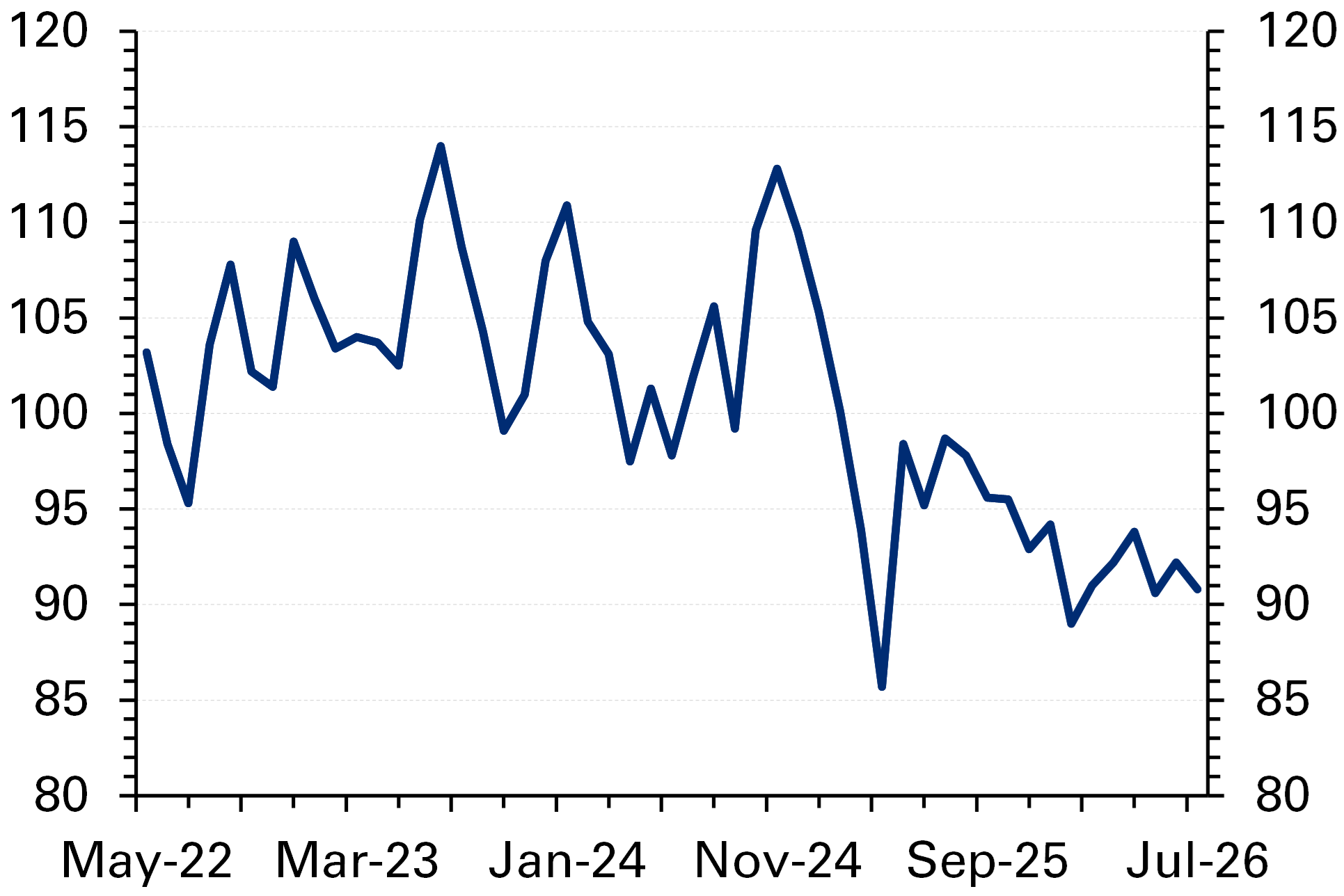
US: Consumer confidence eases in July as employment perceptions weaken. The Conference Board Consumer Confidence index fell to 90.8 in July from an upwardly revised but still subdued 92.2 in June as consumers’ perceptions about labor market conditions weakened slightly. A much smaller number of consumers viewed jobs were “plentiful” than a slight drop in respondents saying jobs were “hard to get”, driving a third successive easing in the present situation subindex. The expectations subindex was unchanged, albeit at already low levels. Meanwhile, house prices recovered somewhat in May, as the S&P Case Shiller 20-city index rose 0.1% m/m after falling by a total of 0.2% between January and April. On an annual basis, the house price rise hit a 10-month high of 1.6%, accelerating from 1.2% in April. Despite showing signs of stabilization, US housing market activity continues to be affected by softer inventory levels, elevated mortgage rates (30Y fixed at around 6.7%, up from 6.1% in February-end), and high inflation amid broadly slowing wage growth.
Oil: Prices surge amid reignition of Middle East hostilities. Brent crude futures rebounded sharply in early trading today, rising 4% to $87.4/bbl and recovering most of yesterday’s 4.8% decline. Driving the move were news of a surprise Iranian strike on US military bases in the region, alongside joint US-Saudi operations targeting militia groups in eastern Iraq. Latest developments on the latter follow two days of reported drone attacks launched from the area, with Saudi Arabia intercepting multiple drones aimed at energy infrastructure in the Kingdom’s Eastern Province. Renewed concerns over the security of regional oil assets, alongside the fragility of the current pause in hostilities between the US and Iran have helped shift market focus away from the recent diplomatic optimism that had weighed on prices earlier this week. Meanwhile, weekly US petroleum inventory data, due later today by the EIA, will provide an updated picture of supply conditions and are likely to show another decline in SPR stocks. Focus will also be on this Sunday's OPEC+ meeting, where the coalition is expected to approve a further increase in September output targets of around 188 kb/d, which would effectively complete the unwinding of the 1.65 mb/d voluntary production cuts first announced in April 2023.
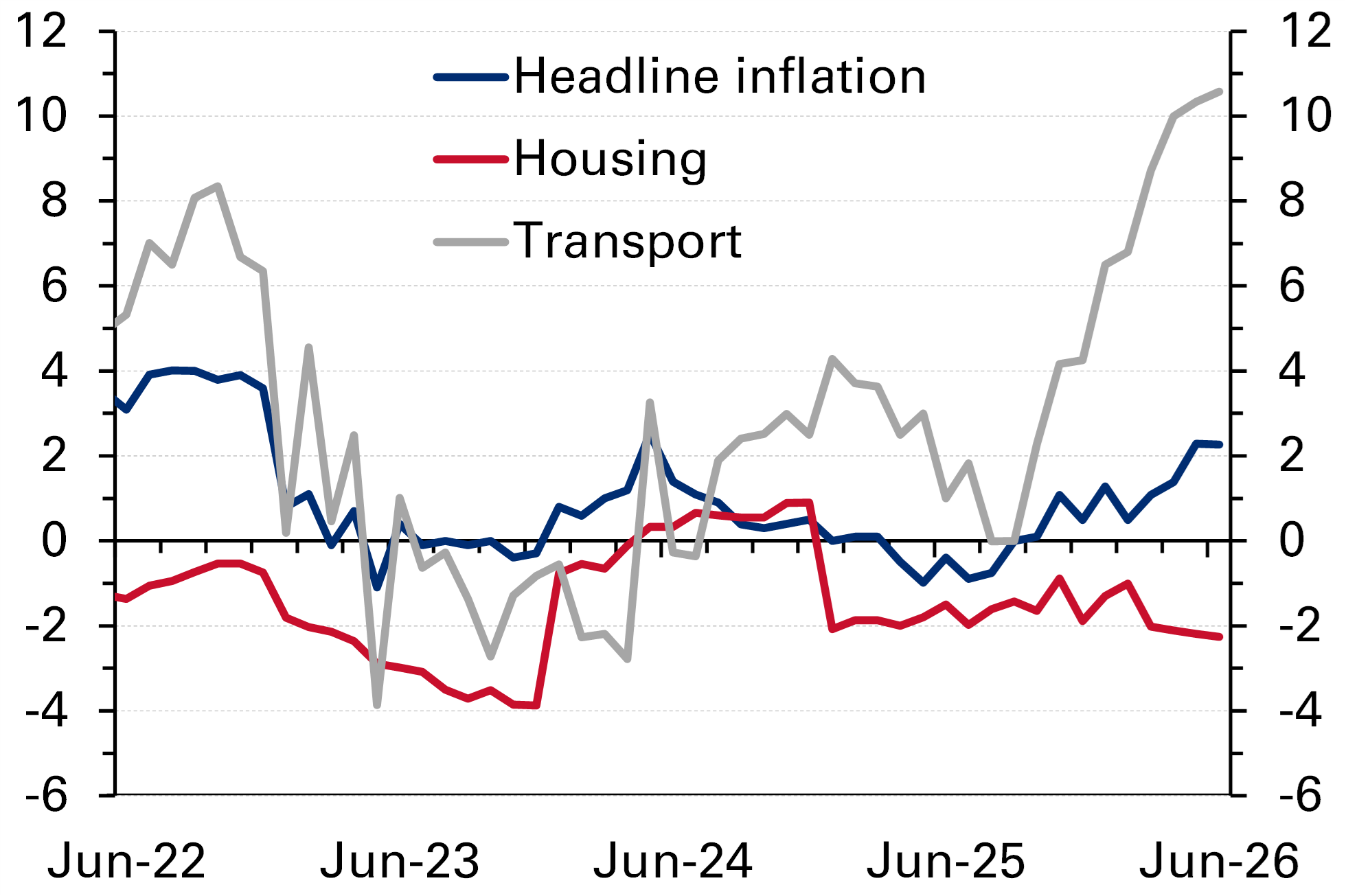
Bahrain: CPI inflation steady at 2.3% in June. Consumer price inflation was unchanged at 2.3% y/y in June, matching May’s reading as higher inflation in transport, food & beverages, miscellaneous goods & services, and education offset softer price pressures across most other categories. Still, inflation is up from a low of 0.5% y/y in February, before the US-Iran conflict. Transport inflation continued to accelerate, rising to 10.6% y/y and remaining one of the key drivers of the headline rate. The increase extends the upward trend observed since the revision to the fuel pricing mechanism earlier this year. Food & beverage inflation also edged higher, accelerating to 5.9% y/y from 5.7% in May, reflecting stronger price growth in meat, fruits, and vegetables. Meanwhile, price pressures within miscellaneous goods & services moderated further, easing to 3.3% y/y, the lowest reading since August 2025. The slowdown largely reflects favorable base effects as last year’s surge in precious metals prices, particularly gold and silver, continues to drop out of the annual comparison. Partly offsetting these increases was continued deflation in the heavyweight housing component, which contracted by 2.3% y/y, marking the steepest decline since the sector entered deflationary territory in January 2025. This occurred despite higher electricity and water charges within the housing basket, underscoring ongoing weakness in accommodation-related costs. Tourism-related categories also remained under pressure as recreation prices declined by 0.6% y/y, while restaurants & hotels fell by 0.4% y/y. Within the latter category, accommodation services prices dropped 20.3% y/y, representing the sharpest decline since the Covid-19 pandemic and pointing to continued softness in tourism demand. Elsewhere, broad-based deflationary trends persisted in clothing & footwear as well as household furnishings, helping contain overall inflation despite firm price growth in transport and food-related categories.