
 +965 2292 4888


Daily Economic Update
22.07.2026
US: Trump imposes 100% tariffs on generic pharma with a two-year delay as the US readies to recreate tariff wall once the temporary measures expire this week. President Trump announced 100% import tariffs on generic pharma drugs due to take effect in two years from 1 August 2026, aiming to “reshore generic pharmaceutical production into America, with a penalty to those companies” who don’t move production to the US. He also threatened that if companies fail to move production, tariffs will rise to 200%. Plans were previously announced to apply up to 100% tariffs on patented drugs that are set to take effect in August; however, countries that have struck a trade deal with the US will see lower 15% duties, and companies committing to moving some production to the US would be subject to up to 20% rates. Given generic drugs account for over 90% of US prescriptions (as per the FDA), the two-year window to keep tariffs at 0% signals that the administration doesn’t intend to immediately impose higher prices on US households amid affordability concerns. Besides, the latest tariff threats could be a tactic to gain leverage in further trade negotiations with countries such as India, which is a major exporter of generic drugs. Moreover, as the temporary 10% global import duties imposed under section 122 of the trade act (after the Supreme Court verdict that cancelled reciprocal tariffs) are set to expire this Friday, the US is readying new and more durable mechanisms to recreate the tariff wall. Among them proposed measures include 10-12.5% tariffs on 60 countries under section 301 related to forced labor practices as well as additional levies linked to excess manufacturing capacity that involves investigation into 16 trade partners, including the EU and China.
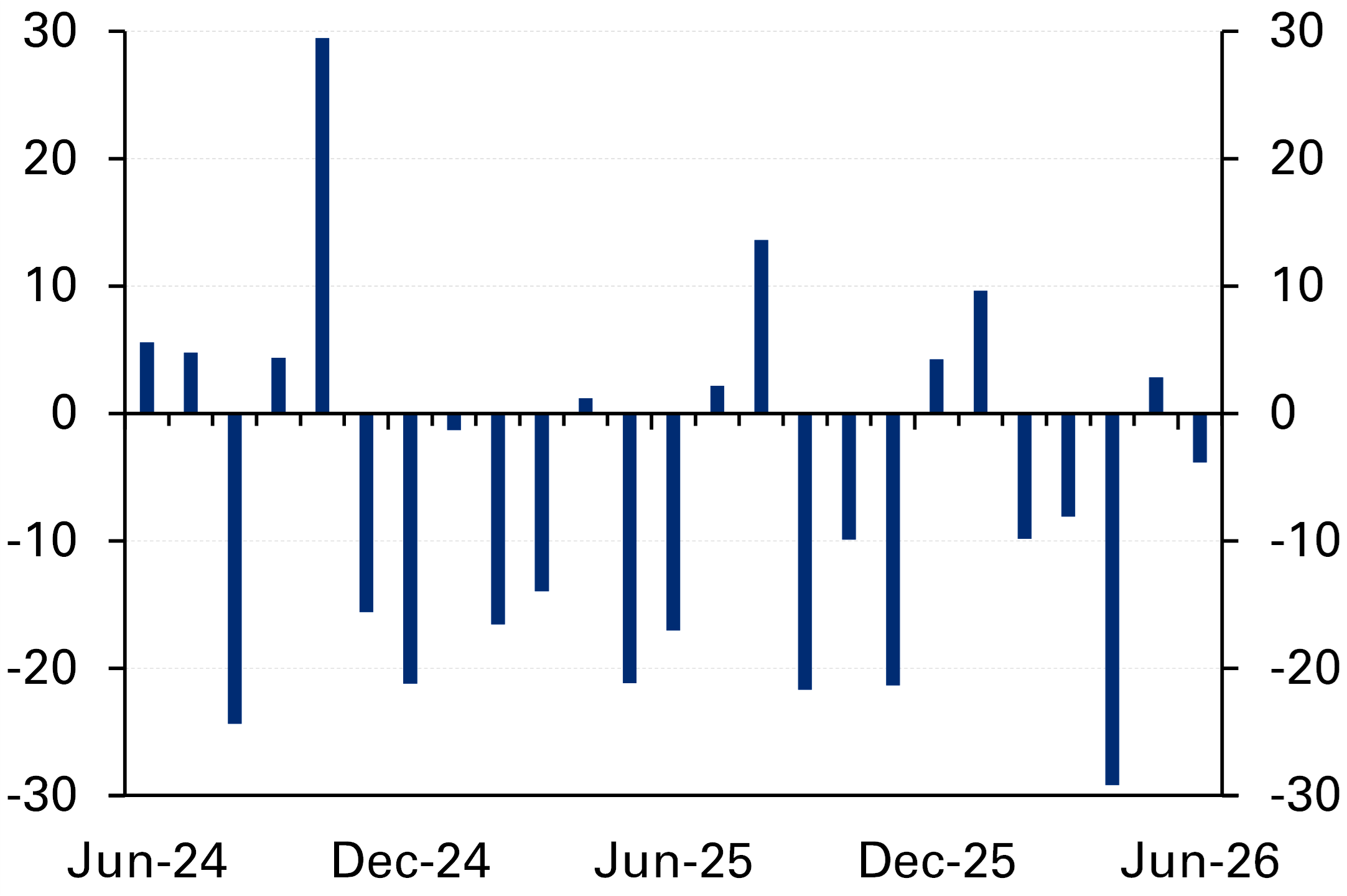
UK: Employment conditions remain soft, largely in line with street forecasts, latest data revisions see fewer job declines this year. UK payrolls fell by 4K (based on real-time payroll data) in June, following a brief rebound by 3K in May. We note that monthly payroll figures are usually subject to significant revisions over the subsequent months, as the latest revisions by the ONS narrowed the extent of net job declines seen during the Jan-May 2026 period to 35K versus 68K reported previously. However, despite these favorable revisions, the overall employment scene remains weak since the rollout of the higher National Insurance Contributions in the Autumn budget of 2024, leading to a cumulative 177K drop in total jobs since November 2024. The unemployment rate in Mar-May was unchanged at 4.9% from the preceding three months, but the labor participation rate ticked up to 63.9% from 63.8%. Regular pay growth held steady at 3.4% in the Mar-May period, matching the slowest pace since Aug-Oct 2020, but total pay growth (including bonuses) eased to 4.3% from 4.4% earlier. Finally, vacancies were little changed at 712K in Apr-Jun, near the lowest level in over five years. The latest job prints indicate continued soft employment conditions while the newly formed Burnham administration faces challenges in reviving growth amid a constrained fiscal situation.
Japan: Trade data beats estimate on soaring exports; cabinet approves economic blueprint. Exports surged 19.3% y/y in June, accelerating for the fourth consecutive month and significantly beating consensus estimates of 18.6%. Growth was mainly driven by exports to Asia (23%) and the EU (20%), while exports to the Middle East fell 4% amid ongoing geopolitical tensions. This marked the tenth consecutive month of positive export growth, buoyed by a weaker yen and ongoing AI-related shipments, with semiconductor exports soaring 54% y/y. Similarly, imports increased 25% y/y, the fastest pace in more than three years and well above consensus estimates of 21%. The rise was mainly driven by a surge in electrical machinery (+32% y/y) and petroleum products (+42%), aided by continued government support in both sectors. This comes after the Japanese cabinet approved prime minister Takaichi's economic blueprint yesterday, which places investment-led growth at the center of economic policy. The plan calls for large-scale public and private investment in strategic sectors such as AI, semiconductors, and space technology, with total investment targeted at more than ¥370 trillion ($2.3 trillion) through 2040.
UAE: ADNOC accelerates gas expansion with $6.2 billion Umm Shaif investment. The Abu Dhabi National Oil Company (ADNOC) has approved $6.2 billion in investment to develop the offshore Umm Shaif Gas Cap Project with production of 600mscf/d of natural and associated gas expected by 2030. ADNOC also awarded $5.1 billion in engineering, procurement, and construction contracts for major offshore infrastructure. The investment also includes a $365 million drilling program, managed by ADNOC Drilling, that includes 14 wells over the next 18 months. The Umm Shaif development complements several gas initiatives including the Bab Gas Cap Project (1.5 bscf/d), Ruwais LNG Project (LNG production capacity of 15 million tonnes per year by 2028), and the Abu Dhabi LNG marketing and trading platform that targets 47 million tonnes per year of marketable LNG capacity by 2035. The Umm Shaif Gas Cap Project is a major step in ADNOC's effort to expand gas production, support energy security, and position the country as a leading LNG exporter. Last November, ADNOC board approved capital investments of $150 billion for 2026-30 while ADNOC gas has also separately raised its own capital expenditure plan to $15 billion through 2029 to strengthen its position as a global LNG supplier.