
 +965 2292 4888


Daily Economic Update
05.04.2026
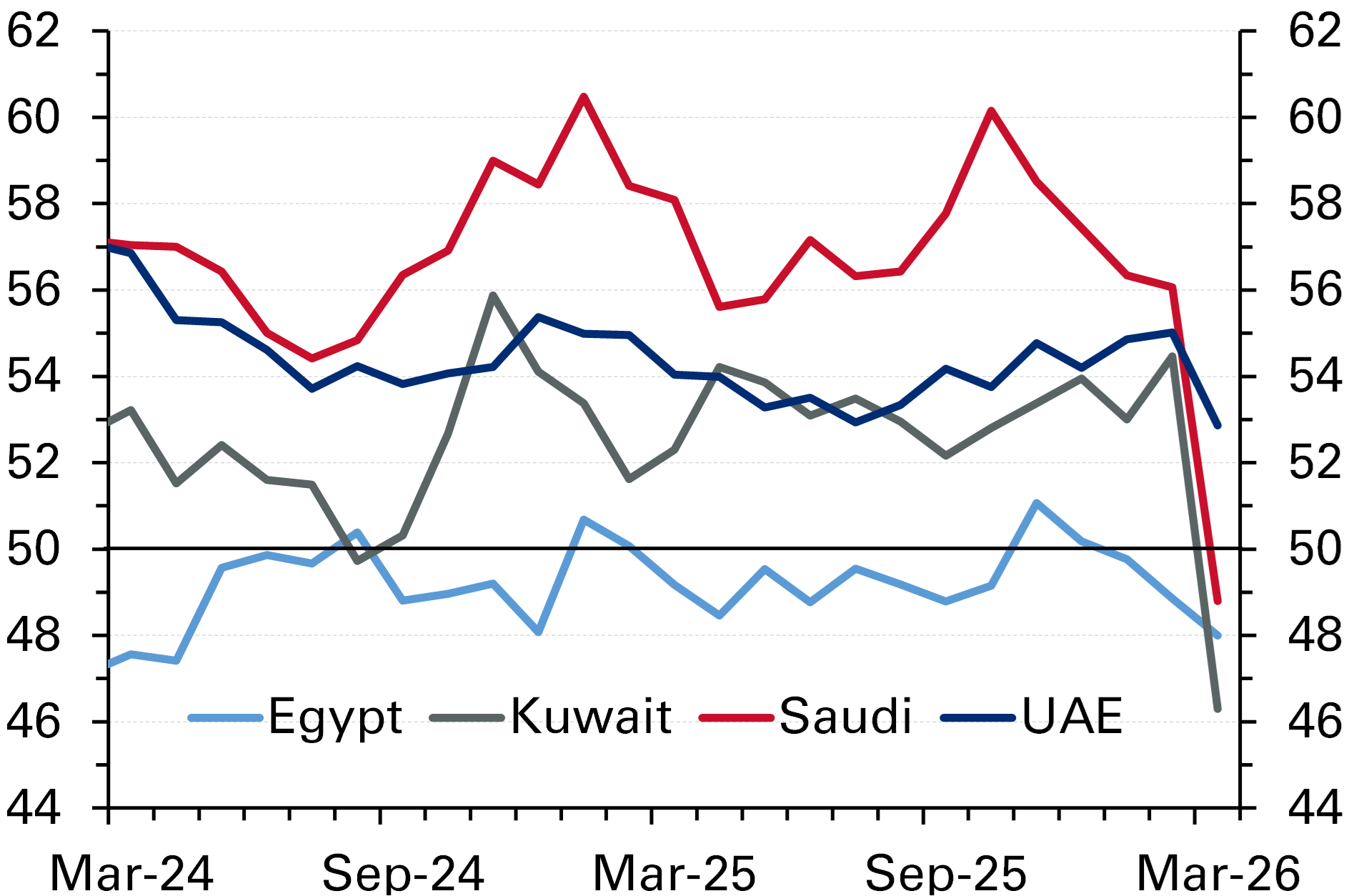
Kuwait: Non-oil business activity declined in March reflecting conflict fallout. The non-oil private sector PMI (Purchasing Manager Index) fell sharply to 46.3 in March from 54.5 in February, reflecting the first contraction in business activity in more than three years, and the sharpest decline since May 2021. The suspension of flights and shipping led to a drop in output and new orders (including exports). In response to the weaker demand, purchasing activity decreased after rising for 11 consecutive months and employment eased slightly for the first time in over a year, while work backlogs fell, and inventories witnessed the sharpest decline since the series began in 2018. In addition, supply chain disruptions and material shortages meant longer delivery times. Firms continued to raise prices in March (albeit at the slowest pace in 4 months) extending a 13-month sequence of inflation despite lower input (purchase and staff) costs due to the reduced workload. Business sentiment turned negative for the first time in two years, affected by concerns that a continuation of the conflict would impact activity over the coming year. The weak March figure means the PMI averaged 51.3 for Q1 overall (53.4 in Q4 25), consistent with modest non-oil GDP growth for the quarter.
Saudi Arabia: PMI shows sharp decline in March. The non-oil private sector saw a notable deterioration in March, as the regional conflict weighed on demand and disrupted supply chains. The PMI fell sharply to 48.8, down from 56.1 in February, slipping below the neutral 50 threshold for the first time since August 2020. The 7.3-point decline marks one of the steepest drops on record, signaling a clear shift from strong expansion earlier in the year to contraction. The downturn was driven by a sharp fall in new orders, particularly export demand, alongside weaker domestic sentiment as clients delayed spending decisions amid heightened uncertainty. Business activity was further affected by supply chain disruptions, with firms reporting freight delays and higher transport costs. This led to an accumulation of backlogs, as companies struggled to keep up with existing workloads while scaling back new output. Despite these pressures, inflationary trends remained subdued, with input costs rising at the slowest pace in a year, reflecting softer demand conditions. Looking ahead, business expectations weakened to their lowest level since mid-2020, although firms remain cautiously optimistic, supported by ongoing government spending, infrastructure projects, and longer-term demand prospects. Overall, March’s reading points to a temporary shock to non-oil momentum, with the pace of recovery likely tied to how quickly regional conditions stabilize.
UAE: PMI moderates but remains in growth territory in March. The PMI gauge of business activity in March dropped to 52.9 from 55 in February, revealing the adverse impact of the Iran-US/Israel conflict. March’s headline figure was the joint lowest in the series since June 2021, with the monthly decline the third steepest on record. That said, the headline figure still signaled expansion rather than contraction, supported by growth in output that, despite significantly easing in March (to 54.9 from 61.8 in February), remained above the 50 ‘no change’ threshold, and new orders that were still increasing (54.5) as well as employment that was still expanding (51.2). Firms reported difficulties in securing inputs amid closure of the Strait of Hormuz, with delivery times extending and backlogs of work increasing. Input prices rose, especially in logistics, insurance, energy and steel, which led to the sharpest increase in overall purchase prices since July 2024. As a result, firms resorted to raising their selling prices, and in terms of average selling charges, by the most in more than 11 years. Firms’ confidence about the business outlook dropped considerably, though remained positive in March.
Egypt: Non-oil activity contracts further as war weighs on demand and costs. Egypt’s non-oil private sector remained under pressure in March, with the PMI declining for the fourth consecutive month to 48, down from 48.9 in February, signaling a deeper contraction in business activity. The slowdown was primarily driven by sharper declines in output and new orders, both of which fell to their lowest levels in nearly two years. Survey evidence pointed to the regional conflict as a key drag on demand, as heightened uncertainty and rising prices weighed on client spending decisions. On the cost side, businesses faced intensifying input price pressures, with purchase price inflation accelerating to its fastest pace in around one and a half years. Firms largely attributed this to higher fuel and raw material costs, compounded by the strength of the US dollar. In response, companies raised their selling prices at the fastest rate since May 2025, attempting to partially pass through the cost increases. Against this backdrop, the Central Bank of Egypt kept policy rates unchanged at its Monetary Policy Committee meeting last Thursday, reflecting a more cautious stance amid rising inflation risks and external pressures. That decision underscores the shift from supporting growth through easing toward preserving macroeconomic stability in light of currency depreciation, elevated global energy prices, and ongoing geopolitical uncertainty. Despite the challenging environment, the PMI showed employment levels remained broadly stable in March, following a period of job cuts in recent months. Meanwhile, business expectations for future activity turned slightly negative, although the degree of pessimism remained limited, with only a small share of firms citing the war as a reason for weaker outlooks.
Oil: Prices rise sharply as Trump threatens escalation; Iran says Iraq exempt from SoH restrictions. In a shorter trading week, Brent futures jumped 7.8% d/d on Thursday to $109/bbl, supported by US President Trump’s threat to intensify military operations against Iran in his White House address on Wednesday. Brent was down 3.1% w/w, though this has more to do with futures contracts rollover than actual price drops as the announcement dashed earlier ceasefire hopes, following initial signs of a potential diplomatic off-ramp. Over the weekend, the US President repeated his April 6 deadline, which had previously been extended twice, to target Iran’s critical power infrastructure. The US–Israeli alliance has since escalated strikes on Iranian infrastructure, targeting several petrochemical facilities, including the country’s largest complex in Mahshahr, as well as key transport infrastructure. In response, the IRGC has pledged tit-for-tat retaliation, including potential attacks on energy assets across the Gulf. Indeed, Kuwait’s Mina Al-Ahmadi refinery (346 kb/d) was struck on Friday - the third such incident in just over two weeks - while the headquarters of Kuwait Petroleum Corporation, which houses the Ministry of Oil, was also targeted early today. One notable development is Iran’s indication that it may exempt Iraqi oil exports from Strait of Hormuz restrictions, potentially unlocking up to 3 mb/d of crude supply. However, the announcement lacks clarity on implementation. Iraqi crude is sold on a FOB basis at Basra terminals, with buyers responsible for shipping and insurance, and the country does not operate a national tanker fleet - leaving exports fully dependent on foreign vessels. As such, the key question is whether shipping companies will be willing to re-enter the Strait to collect Iraqi cargoes, which will ultimately determine the extent to which this exemption translates into actual supply returning to the market.
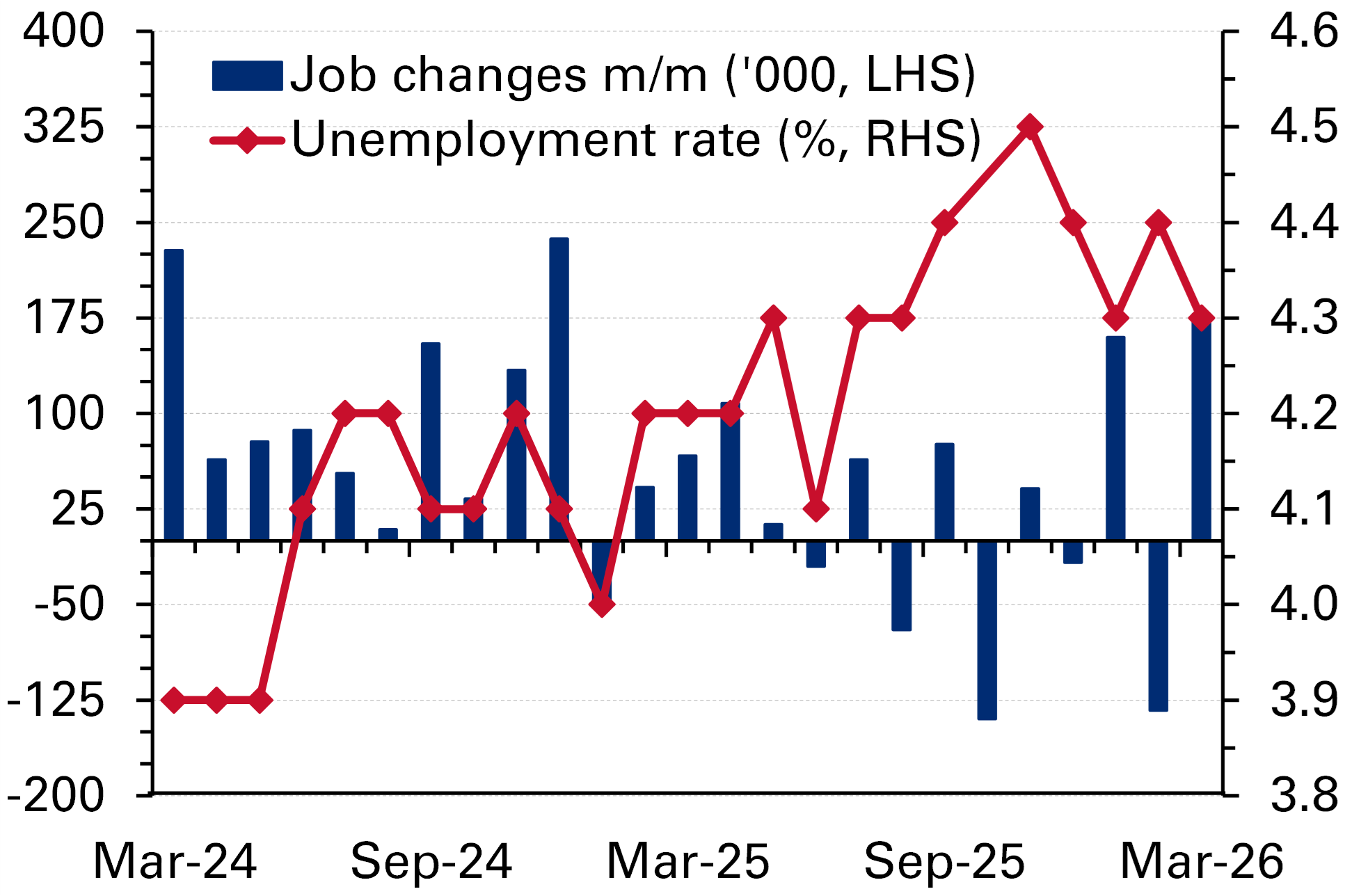
US: Jobs in March rebound more than forecast but an overall soft trend continues. Non-farm payrolls in March rose by a forecast-beating 178K following a larger-than-initially estimated drop of 133K jobs in February (previously estimated drop of 92K), helped by the ending of a strike by some healthcare workers and more favorable weather conditions. Monthly payroll data have become highly volatile in recent months, as since May 2025 m/m job changes have been alternating between increases and declines every month, posting an average monthly rise of just 14K jobs over the same period and underscoring a sustained and gradual easing in the US job market. The unemployment rate unexpectedly fell to 4.3% from 4.4% in February as the labor participation rate declined to 61.9% from 62%, the lowest reading since November 2021. Wage growth moderated to 3.5% y/y from 3.8% in February, hitting the slowest level since May 2021. Amid ongoing structural AI-related developments, weak labor supply and moderate demand, employment conditions over the coming months may remain uneven and are now being further impacted by the uncertainty surrounding the Middle East war and its impact on inflation and the wider US economy. Separately, President Trump imposed up to 100% tariffs on patented pharmaceutical drugs, to be effective in two phases, in 120 days for large companies and in 180 days for smaller companies under section 232. Some countries that previously signed trade deals with the US (including the UK, the EU, Japan, Korea, Switzerland, and Liechtenstein) will see lower duties of up to 15% and companies entering into Most Favored Nation pricing agreements or onshoring agreements will also be subjected to lower levies.