 +965 2292 4888


Daily Economic Update
07.01.2026
Egypt: Remittances surge and international reserves hit a record high, reinforcing foreign exchange buffers. Remittances increased by 43% y/y in the January-November 2025 period to hit a record-high of $37.5 billion, compared to $26.3 billion during the same period of 2024, as per the latest announcement from the Central Bank of Egypt. On a monthly basis, remittances increased by 40% y/y in November 2025, reaching $3.6 billion, compared to $2.6 billion in the same month of 2024. With this magnitude of remittances, our earlier projection that the total for 2025 will exceed the threshold of $40 billion becomes closer than ever. At the same time, net international reserves rose to a new all-time high of $51.5 billion at the end of 2025, marking the strongest reserve position in the country’s modern history. The increase was mainly driven by a $914 million rise in gold reserves, benefiting from a 5% m/m increase in global gold prices during December. Together, rising remittances and record-high reserves significantly strengthen Egypt’s external position, improve confidence in foreign currency liquidity, and provide an important buffer against potential volatility in capital flows in 2026.
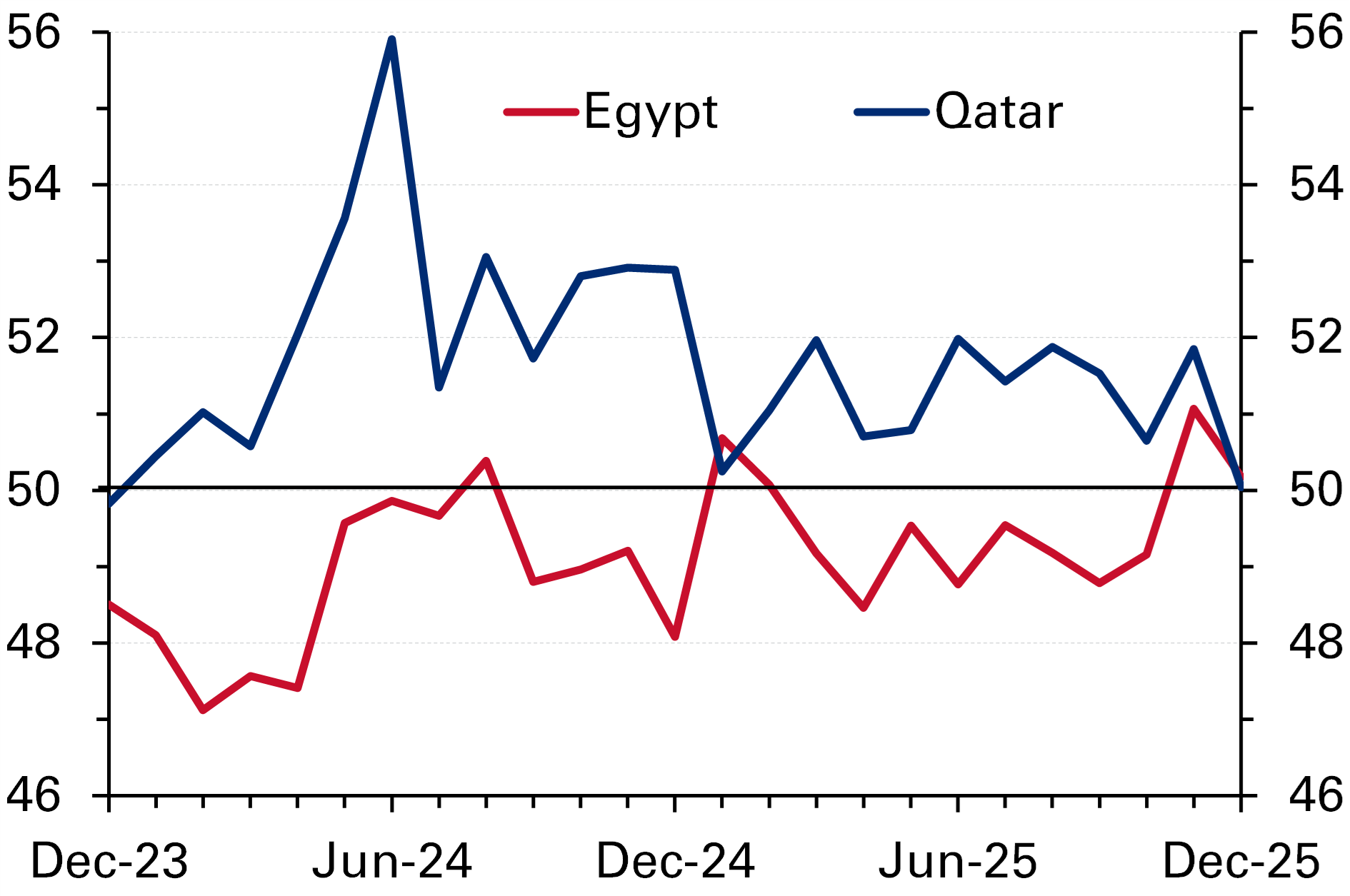
Egypt: Non-oil private sector remains in expansion despite a slowdown in December. The PMI eased slightly to 50.2 in December, down from the highest reading in more than five years in November (51.1). Despite the pullback, the PMI remained above the 50 threshold for the second consecutive month, confirming that private sector activity is still expanding and pointing to GDP growth of around 5% in Q4 2025. Importantly, the decline likely reflects a moderation in momentum rather than a reversal in trend. The expansion in December continued to be driven by growth in new orders and output, albeit at a slower pace than in November. Firms reported improved demand conditions and higher customer spending, leading to a second straight month of growth in new business. In response, non-oil companies increased purchasing activity for the first time in ten months, signaling a gradual shift away from the prolonged caution seen earlier in the year. That said, supply-side constraints persisted. Production input inventories declined for the third consecutive month, mainly due to supplier shortages. This divergence between rising purchases and falling inventories suggests firms are focused on meeting current demand while remaining cautious about building stock, reflecting uncertainty about how durable the recovery will be. On the labor front, employment continued to decline, with many firms citing difficulties in replacing departing workers. Meanwhile, input cost pressures remained relatively contained by historical standards. Although some cost components, including fuel, cement, and wages, recorded modest increases, their overall impact was limited. As a result, firms passed through only marginal price increases, helping to preserve demand conditions. Looking ahead, business expectations for the next 12 months remained broadly neutral. Confidence softened during the second half of 2025, indicating that firms are still waiting for clearer signals on the macro outlook before committing to expansion in investment, hiring, or inventories.
Saudi Arabia: Decision to fully open the equity market to foreign investors. The Capital Market Authority (CMA) announced a major liberalization of its equity market, removing all eligibility requirements that previously restricted foreign participation and allowing all foreign investors to invest directly in the Main Market effective 1 February 2026. The CMA ended the Qualified Foreign Investor (QFI) framework, which allowed limited access to large institutions meeting minimum asset size thresholds. The new policy aims to broaden the investor base, boost liquidity, and attract foreign capital after a weak year for Saudi equities. Additionally, the move is supportive of increased foreign participation and may help offset domestic funding constraints created by high public sector spending linked to large Vision 2030 projects. Furthermore, the decision reinforces the Kingdom’s long-term strategy to deepen capital markets, diversify the economy away from oil, and position Saudi Arabia as a regional financial hub.
Saudi Arabia: $11.5 billion raised from the first bond sale of 2026. The National Debt Management Center (NDMC) completed its debut dollar bond issuance of the year under the Global Medium Term Note issuance program, raising $11.5 billion via a four-tranche offering with maturities of three, five, 10, and 30 years. According to the NDMC, around $31 billion in orders were received representing an oversubscription of 2.7x, reflecting strong investor appetite for Saudi sovereign debt and confidence in the Kingdom’s economic prospects. The strong demand allowed favorable pricing at smaller spreads over US treasuries compared to initial discussions, with the 30-year bond yielding 110 bps above the respective US treasury bond. This follows a strong year of debt issuance by the Kingdom in 2025, which saw $20 billion of international bond sales. The NDMC recently disclosed the annual borrowing plan for 2026, which projects total financing needs of SAR 217bn ($58 bn), with only around 25-30% ($14-18 bn) expected to come from international issuances, suggesting a possible slowdown in that form of borrowing after several years of rapid growth. This aligns with official projections of a narrower fiscal deficit of around 3% of GDP in 2026 compared with an estimated 5% in 2025, though it is not unusual for actual borrowing to exceed initial estimates on spending overruns linked to capex-intensive economic diversification projects. We forecast a slightly higher deficit (compared to the budgeted one) of around 4% of GDP in 2026 on lower projected oil prices, despite expectations of spending restraint, rising non-oil revenue, and higher oil output.
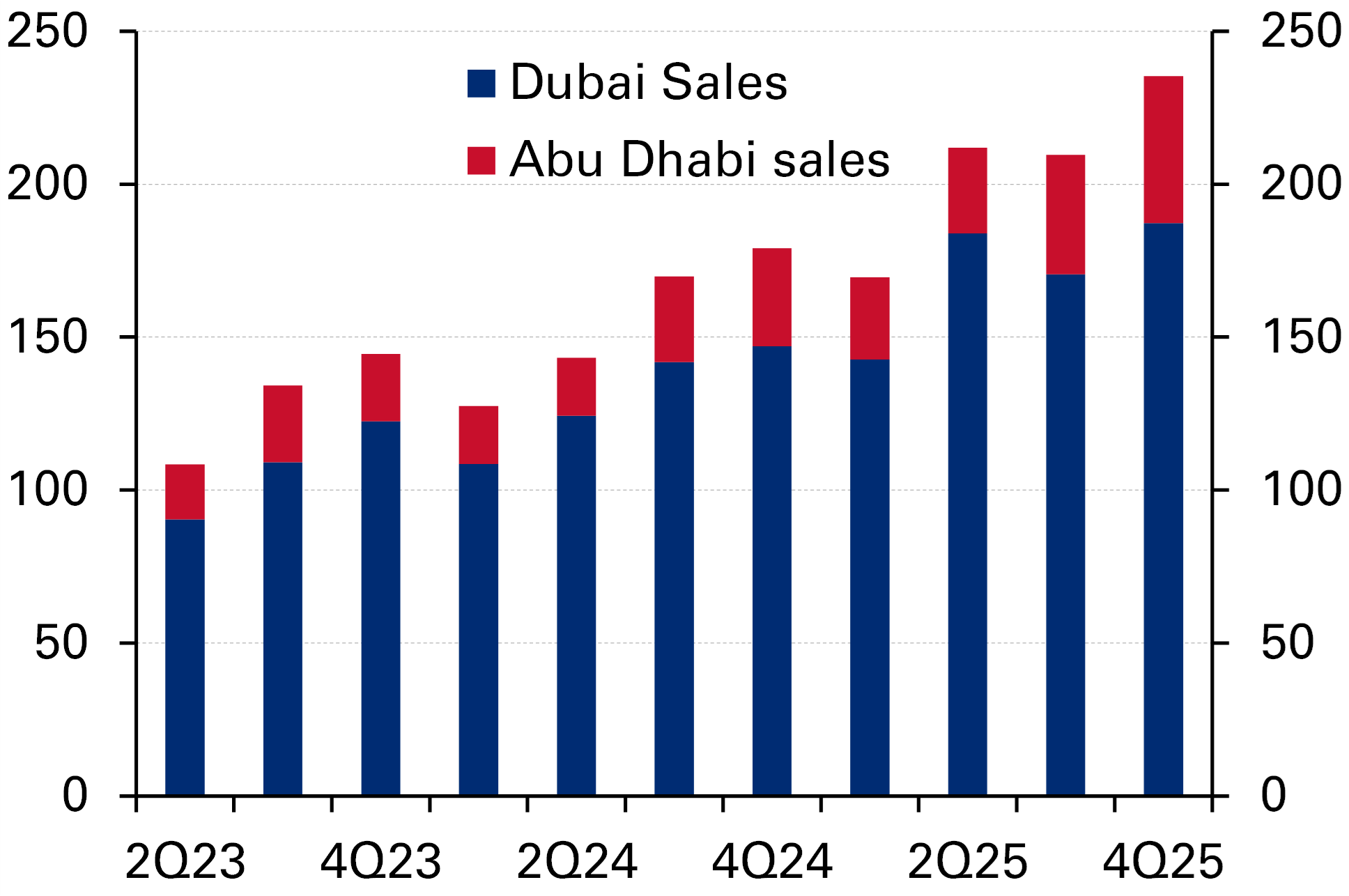
UAE: Dubai and Abu Dhabi real estate sales end the year on a high note. Dubai’s real estate market maintained strong momentum in December, with property sales rising 46% y/y to AED 63 billion ($17.2 billion), slightly below November’s six-month high of AED 65 billion. This growth was supported by a 21% increase in transaction volumes, according to DXB Interact data. First sales, including off-plan transactions (which account for roughly 70% of total sales), surged by 76% y/y to AED 44 billion, up from 65% in November. Apartment sales, which represent about half of first sales, rose 38% to AED 22 billion. Meanwhile, the resale segment grew by 6.6% y/y to AED 19.3 billion in December, down from AED 23.3 billion in November. Cash transactions continued to dominate, with mortgage-backed sales totaling AED 16.4 billion and comprising 26% of monthly sales. The top-performing areas in Dubai during December were Wadi Al Safa 3, Jumeirah Village Circle, and Dubai Investment Park. For the full year 2025, Dubai recorded a record high of AED 685 billion ($186.5 billion) in property sales, marking a 31% y/y increase. This performance reflects strong investor confidence and a supply pipeline that is aligned with market demand. Meanwhile, in Abu Dhabi, real estate sales in Q4 2025 surged by nearly 50% y/y to AED 48 billion, driven mainly by residential sales, which rose 48% to AED 40 billion. Cash sales accounted for 89% of total transactions in Q4, up from 74% a year earlier. Annual sales in Abu Dhabi climbed 43% to a record-high of AED 142 billion. Looking ahead, we expect the positive momentum to continue into 2026, although growth may moderate. Demand is likely to remain resilient, supported by sustained international investor inflows and expansion in the non-oil economy, reinforcing the UAE’s position as a secure and growth-oriented global hub.
Qatar: Non-energy private sector activity stagnates in December. The non-energy private sector PMI slipped to the 50 no-change level in December, down from 51.8 in November. This is the weakest reading in two years and signals stagnating business activity, with new orders and output both declining, the former for the sixth consecutive month and the latter by the most since March on the back of weak construction sector activity. Employment, which has been the main driver of PMI gains in 2025, once again showed strong gains, helping to offset some of the weakness in December. The hiring surge added pressure on wage growth, which edged higher from November, even as firms’ overall input costs held steady and selling prices declined for the third straight month. For the year as a whole, the PMI averaged 51.2, which is the lowest annual figure since 2020, with both output and new orders declining year-on-year. Despite the relative slowdown in activity, firms remained upbeat about the near-term outlook, with positive sentiment linked to improving market conditions, population growth, and government investment projects.