
 +965 2292 4888


Daily Economic Update
22.01.2026
US/Europe: Trump removes the 10% tariff threat on eight European countries mentioning reaching a “framework” for a future Greenland deal, but risks of a renewed escalation remain. President Trump stated formation of “the framework of a future deal with respect to Greenland” following his discussions with the NATO Secretary General and cancelled the proposed 10% punitive tariffs on eight European countries that were to take effect starting February 1. However, not many details were provided related to the framework (although some media outlets mentioned some snippets of information) and moreover, it seemed that negotiations didn’t directly involve Denmark, raising questions about the nature of the deal. Trump did mention that “it’s a long-term deal. It’s the ultimate long-term deal, and I think it puts everybody in a real good position”, adding that it would last for an “infinite” period of time. Earlier in the day yesterday at the WEF in Davos, Trump had ruled out using force to acquire Greenland but firmly repeated his pursuit of taking over the island highlighting US national security reasons. Prior to the tariff cancellation, a trade committee at the European Parliament, yesterday, put ratification of the US-EU trade deal on an indefinite hold in response to Trump’s threat to impose 10% tariffs from February. It is not yet clear at this stage if the European Parliament will revisit the ratification of the deal following the cancelation of the February 1 tariffs. Markets cheered the latest de-escalatory moves, with the S&P 500 rising 1.2% yesterday and futures in the green this morning. But although the situation has been de-escalated for now, a renewed eruption of tensions remains a possibility.
US: Supreme Court justices skeptical on Trump’s firing of Fed Governor Cook; Powell attends the hearing in a sign of defiance to Trump. The US Supreme Court, hearing arguments about Trump’s authority to fire Fed Governor Lisa Cook, expressed doubts on the merits of the case filed by the US administration to annul lower court decisions. Previously, Trump fired Cook on allegations of mortgage-related fraud, but the lower courts had reinstated her while litigation was ongoing. Justices seemed concerned about the risk to financial markets, the possibility of weakening the Fed’s independence as well as the potential of misuse of authority by future administrations. The final rulings by the Supreme Court on Cook’s firing or by another court on the veracity of fraud charges are still pending. In the interim, the administration should feel the heat on its attempts to compromise the Fed’s independence, especially after initiating a criminal investigation into Chair Powell that has driven widespread criticism even from GOP members, including from a key Senate banking committee member who would be needed to approve Trump’s pick for the next Fed chair role.
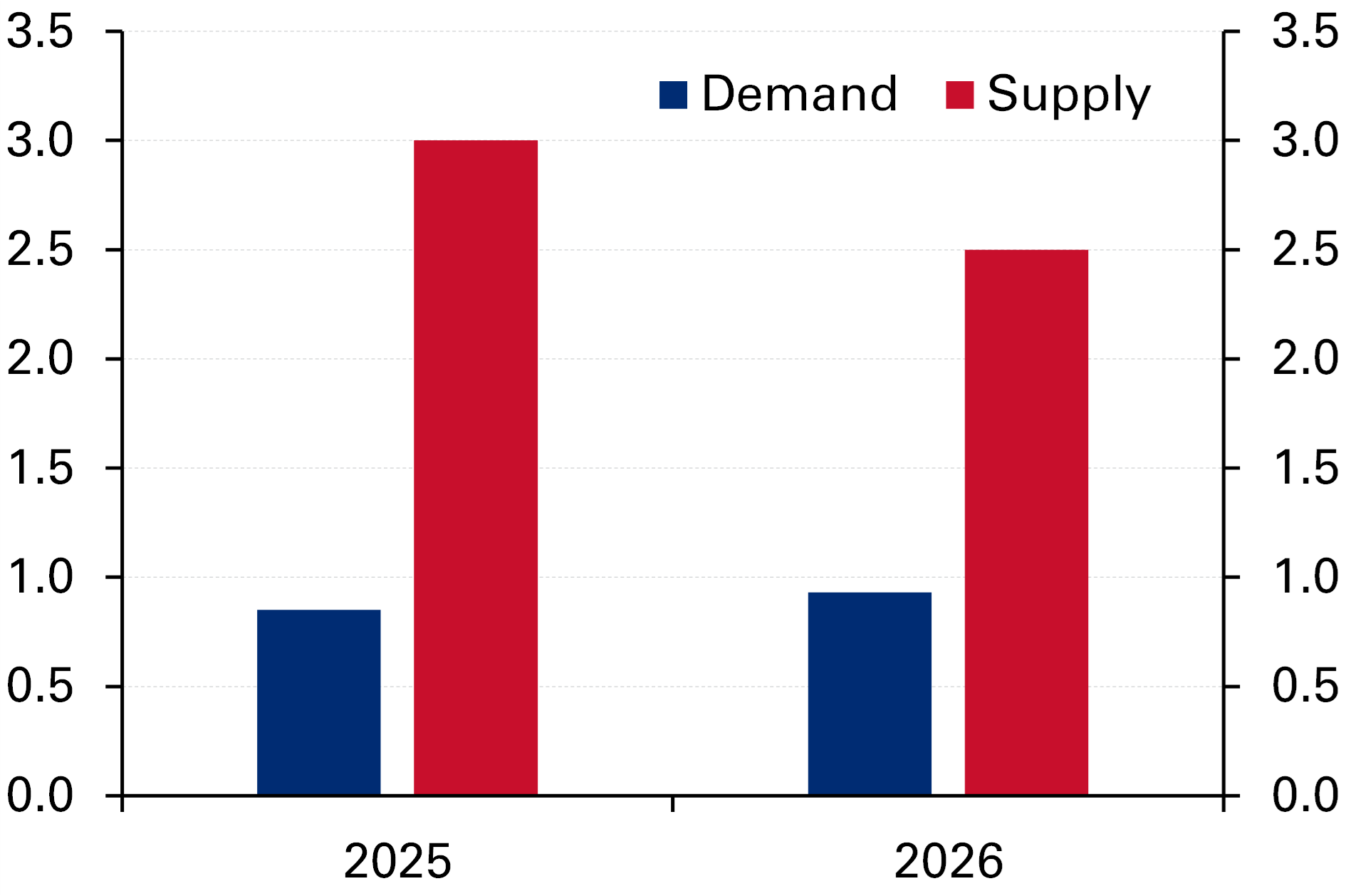
Oil: IEA sees improved oil demand growth in 2026 but a still-heavily oversupplied market. International energy watchdog the IEA has revised up its global oil demand growth forecast for 2026 to 930 kb/d from an estimated 850 kb/d in 2025. The upgrade reflects ‘normalization’ in the global economy after last year’s tariff-inspired slowdown and a slight uptick in economic activity motivated by lower oil prices. Non-OECD countries will once again account for the entirety of oil demand gains, which, at the product level, will largely be driven by petrochemicals amid a continued slowdown in gasoline consumption. On the supply side, an output increase of 2.5 mb/d is projected in 2026, slightly down on the 3.0 mb/d seen in 2025, with the drop reflecting lower anticipated non-OPEC+ supplies since OPEC+ is assumed to continue unwinding its supply cuts after pausing this quarter. Oil producers in the Americas (US, Canada, Brazil and Guyana) will still account for more than 50% of global oil supply growth, but down from almost 60% in 2025. In terms of market balances and implications for oil prices, the IEA maintains its view of a heavily oversupplied market in 2026, of as much as 3.7 mb/d on paper, which is expected to exert downward pressure on oil prices. In our view, an imbalance of this magnitude is excessive, taking the projected supply glut well into Covid-era territory, which we do not think is realistic given the much healthier state of global economic activity and the likelihood that actual supply gains in 2026 will fall short of anticipated increases on paper, whether due to geopolitics—sanctions and outages, for example—or producer capacity constraints among OPEC and non-OPEC producers alike. Futures markets are certainly not signaling downward price pressure that reflects this level of oversupply, with Brent’s forward curve only in gradual backwardation over the next twelve months. And beyond that, futures prices actually begin to rise. That said, observed global inventory levels have increased, by 1.3 mb/d on average in 2025, according to the IEA, and a significant portion as ‘oil on water’ storage. It will be worth watching the market reaction to more visible ‘on land’ increases, which could embed bearishness further and make prices more resistant to geopolitical risk factors. Brent was trading slightly higher this morning in Asian markets at $65.4/bbl (+0.2% d/d) at the time of writing, having risen 2% over the last two sessions.
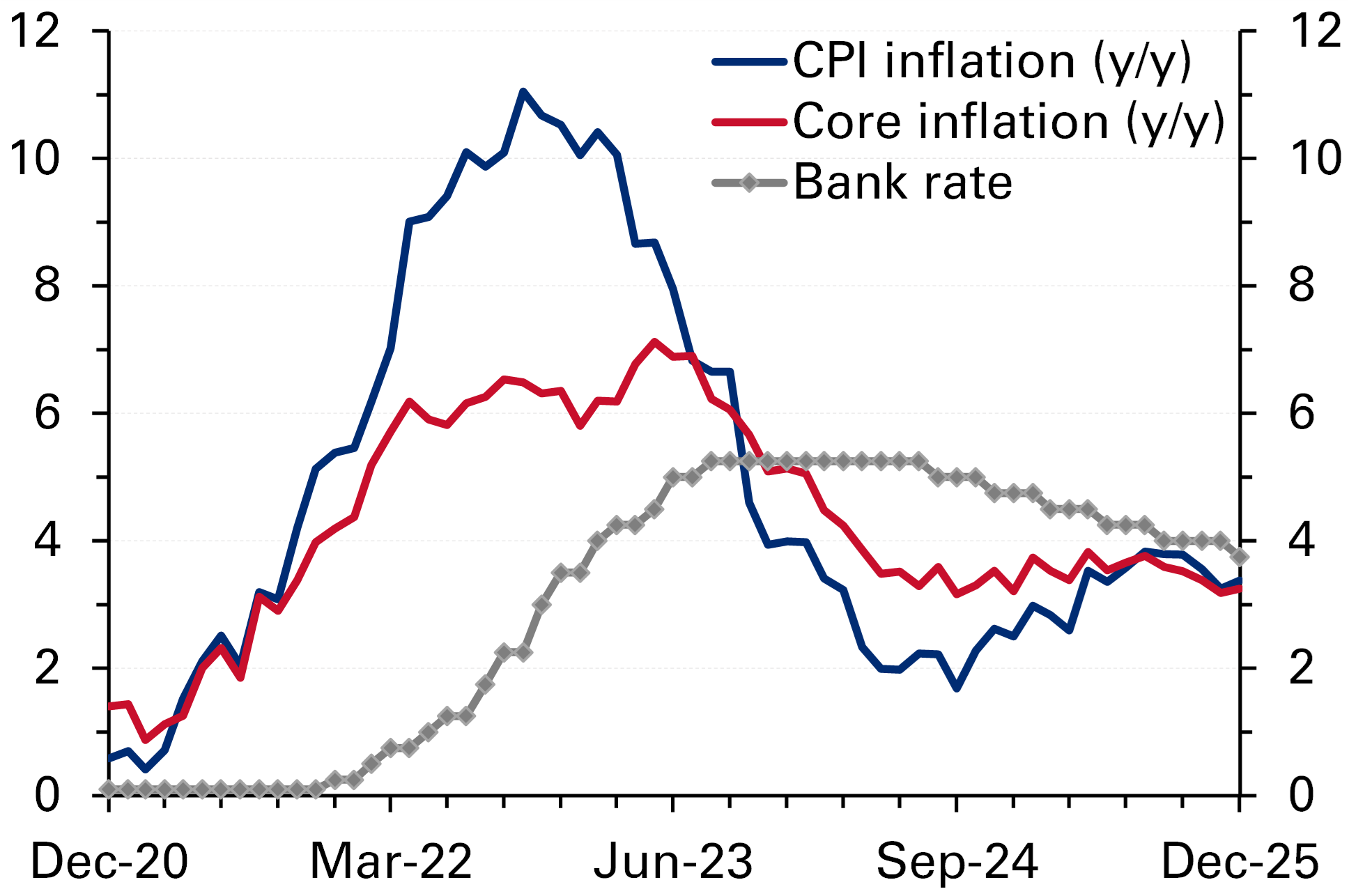
UK: Headline and services inflation rebound on temporary factors but still below BoE forecasts. Inflation increased to 3.4% y/y in December from 3.2% in November, led by higher tobacco prices following duty increases in late November, though less than the BoE’s forecast of 3.5%. Core inflation, however, was steady at 3.2%, matching the lowest since September 2021. While goods inflation rose to 2.2% from November’s 2.1%, services inflation also increased to 4.5% from 4.4%, mainly driven by a sharp jump in airfares, but it remained below the BoE’s 4.6% forecast. The ONS attributed the quick pick up in tobacco and airfare costs to a shift in the seasonality-related timing versus the previous year, and therefore the underlying inflation trend does not seem to have changed. Moreover, government welfare measures unveiled in the recent Autumn budget (such as a freeze on fuel duties and rail fares and cuts to household energy bills) will further help keep a lid on inflation starting April. This, along with ongoing weakness in the labor market and muted growth prospects should push the BoE to ease the monetary stance further in 2026, with the market pricing signaling one to two 25 bps cuts by end-2026.
Saudi Arabia: Record high international borrowing in January. Saudi Arabia has raised over $20 billion in international bonds so far in January 2026, the highest ever for the month as the government, major companies, and banks capitalize on favorable market conditions, strong global demand, and increased interest from Asian investors. The surge comes as banks face tightening liquidity, slower deposit growth, and higher capital requirements, factors which are pushing them toward external debt markets to fulfill the financing needs for Vision 2030 economic diversification investments. The government alone issued $11.5 billion in dollar bonds early in the month, while Saudi Electricity, Saudi Telecom, and several major banks each conducted sizable issuances. Earlier this month, the government announced plans to borrow $14–17 billion from international markets in 2026, but there is a history of exceeding these targets depending on budget outcomes.
Egypt: Suez Canal begins to show early signs of recovery in FY25/26. Suez Canal receipts increased by 18.5% y/y during the first half of FY25/26 (July–December), reaching around $2.1 billion, according to the Suez Canal Authority. Canal activity also showed a notable operational improvement, with the number of transiting vessels rising by 5.8% y/y, while net tonnage expanded by a stronger 16% y/y, reflecting a gradual normalization in shipping flows. These developments were highlighted during a meeting between the Suez Canal Authority and representatives from 20 major shipping lines and agencies, aimed at enhancing coordination on sailing plans and transit schedules for the coming period. The discussions were held against a backdrop of improving security conditions in the Bab El-Mandeb Strait and the Red Sea. Overall, the latest indicators point to a gradual recovery in Suez Canal activity and revenues, supported by the return of several shipping lines to the canal as regional conditions stabilize. If this trend continues, the canal could once again become a more reliable and sustainable source of foreign currency inflows for Egypt in the current fiscal year.