 +965 2292 4888


Daily Economic Update
29.01.2026
US: FOMC keeps interest rates unchanged; FOMC, Powell indicate that downside risks to the labor market have diminished. The FOMC kept the Fed Fund Target rate unchanged at the 3.5-3.75% range after cutting by 25 bps in each of the previous three meetings, seeing low job gains, a stabilizing unemployment rate and somewhat elevated inflation. The committee voted 10-2 in favor of a hold, with Governor Waller (a Fed chair candidate) and Governor Miran dissenting to vote for a 25-bps cut. Chair Powell noted that downside risks to employment and upside risks to inflation have diminished though they still exist, emphasizing stabilizing joblessness, with “a lot” of tariff passthrough already in the past and their impact limited to a one-time price increase. He indicated that updated estimates for core PCE inflation for December 2025 stand at 3% y/y (up from 2.8% in November) and that core PCE excluding the tariffs impact is only slightly above the Fed’s 2% target. He also highlighted that the economy entered 2026 on “a firm footing” and the growth outlook has “clearly improved” since the December meeting, that “should matter for labor demand and for employment.” Meanwhile, Powell didn’t comment on the recently initiated criminal investigation involving him or his plans to stay as a Fed Governor once his term as Fed Chair ends in May. We think that given Powell’s emphasis on a solid economic outlook, relatively better employment conditions and receding inflation risks, the Fed is keeping its options open for the next few meetings. The incoming data and the evolving outlook shall determine whether the next move will be a hold or a cut with Powell mentioning that a hike is not the base-case for any FOMC member. The futures market continues to signal two cuts this year, with the first in June.
US: Bessent pitches for a strong dollar, rules out intervention to boost other currencies; chances of another government shutdown rise. Treasury Secretary Bessent underlined that “the US always has a strong dollar policy,” and the administration was “absolutely not” planning to intervene in the FX market to boost other currencies. His remarks came after President Trump seemed unconcerned about a weaker dollar earlier this week and the New York Fed’s “rate check” with reference to the USD-JPY pair last Friday that led to an abrupt fall in the greenback over the last few days, with the DXY index hitting a four-year low yesterday morning. Meanwhile, the risks of another government shutdown this Saturday have risen as Democrat lawmakers hardened their stance on the funding for the Department of Homeland Securities over the killings by the Immigration and Customs Enforcement. The spending packages have already been approved in the House of Representatives and are now awaiting Senate consent, which appears unlikely as of now. The House is out for the remainder of the week, which means that the Senate needs to approve the spending packages as is with zero changes to avert a shutdown, which seems difficult. Congress had previously passed partial appropriation bills, which means even if the deadlock remains unresolved after the January 30 deadline, some functions of the US government will continue unlike last October-November.
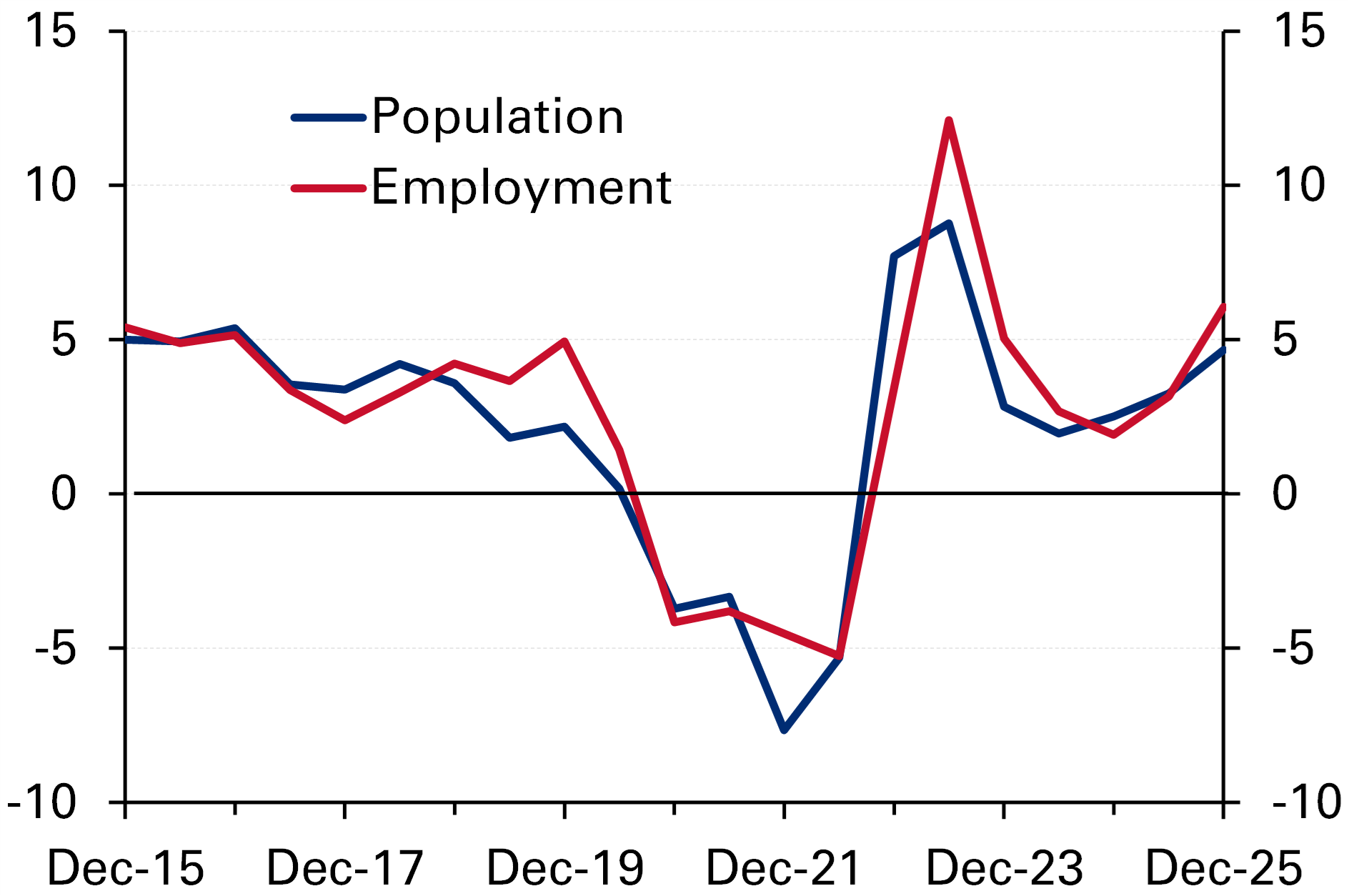
Kuwait: Population reached 5.2 million at end-2025 amid large increase in non-Kuwaiti residents. According to the latest biannual figures published by PACI, last year saw Kuwait’s population increase by 5% (+250k) to hit 5.2 million by the close of the year. The increase driven by a sharp rise in the number of non-Kuwaiti residents (+7.4% y/y to 3.6 million), which, as a share of the total population reached 70.2%. In contrast, the number of Kuwaiti nationals declined by 0.3% y/y to 1.56 million, the first end-year drop in available data going back several decades and largely due to a fall in the female demographic (-2.0%), likely more reflecting policy-related changes than an underlying structural demographic shift. In the labor market, employment rose 6.1% y/y, with the increase in non-Kuwaiti hires (+7.5%) offsetting a rare contraction (-1.9%) in Kuwaiti employment. The increase in non-Kuwaiti employment in the public sector reflects partly the reclassification of denaturalized citizens as non-Kuwaitis, aligning with the 1.4% y/y drop in the number of Kuwaitis working in the government sector. Meanwhile, the unemployment rate among Kuwaiti nationals ticked up slightly to 6.3%. Overall, the figures suggest that the economy is indeed back in expansion mode, drawing in labor, though caution will need to exercised in drawing emphatic conclusions given recent policy moves that have impacted the data.
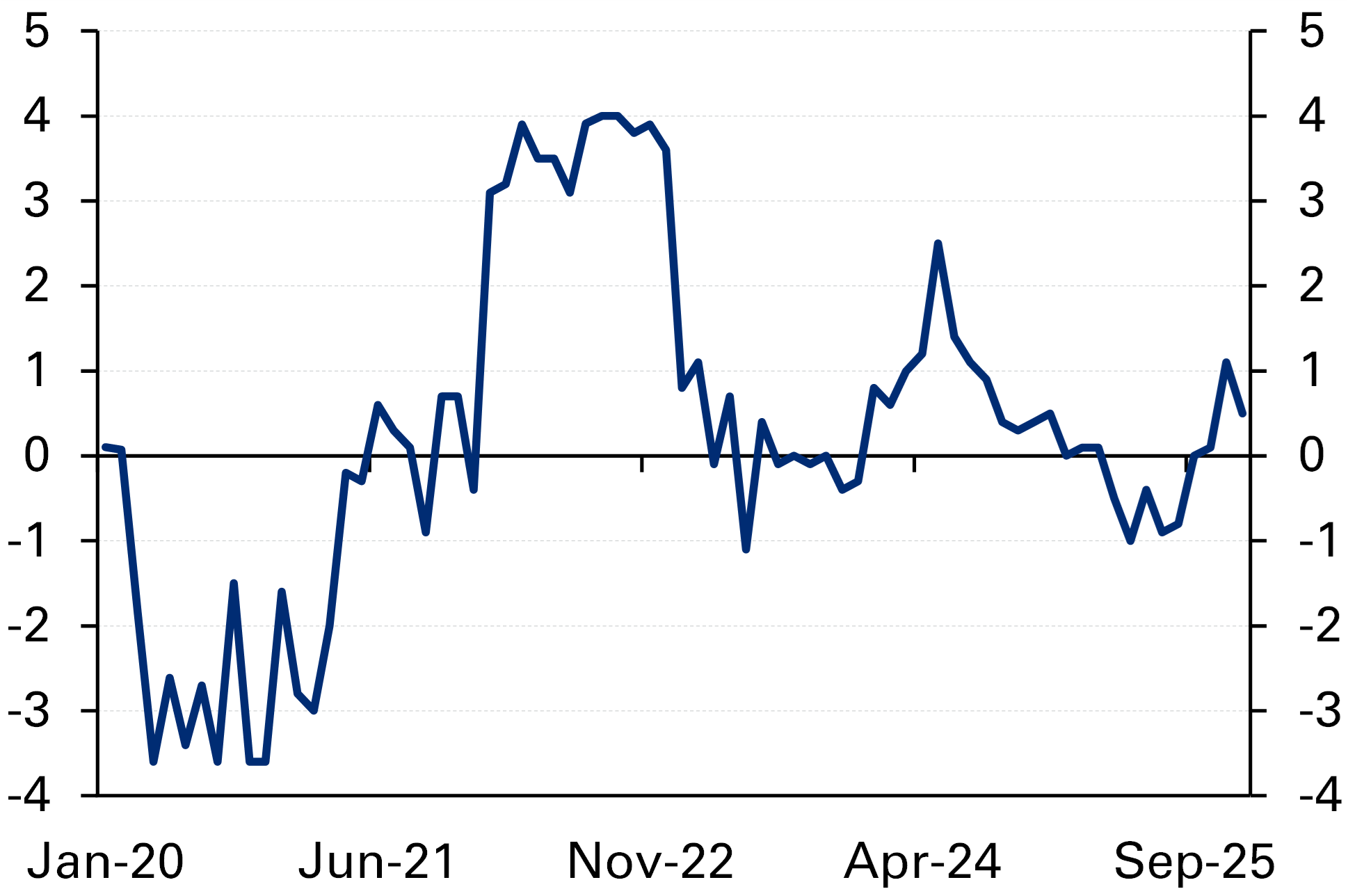
Bahrain: December inflation falls sharply on food and utility price declines. Bahrain’s annual inflation rate fell sharply in December to 0.5% y/y (-0.7% m/m) from 1.1% in November, on the back of deepening deflation in the food and non-alcoholic beverages (-1.2% y/y from -0.2% in November), clothing & footwear (-5.5% from 3.4%) and electricity, gas & other fuels (-4.9% from +9.6) categories. December’s inflation data appears not to have captured the hikes to fuel and natural gas prices the authorities implemented in late December under the new monthly pricing mechanism, as well as increases to electricity and water tariffs as part of broader fiscal reforms. To help mitigate the impact of higher living costs going forward, the government has approved an increase in financial support for low-income households through the “cost of living allowance”. The monthly support is set to rise to between BHD 75-150 in 2026 according to the family size. Bahrain’s average inflation rate in 2025 fell to -0.1% from 0.9% in 2024.