
 +965 2292 4888


Daily Economic Update
04.06.2026
Saudi Arabia: IMF sees slower growth in 2026 but expects fiscal pressures to ease. The International Monetary Fund (IMF) expects Saudi Arabia’s economic growth to slow in 2026, as the impact of the regional conflict and disruptions to shipping through the Strait of Hormuz weigh on both oil and non-oil activity. According to the IMF, the conflict has disrupted trade flows and raised transportation and shipping costs, creating headwinds for economic activity. However, the Fund emphasized that the Saudi economy has shown notable resilience, supported by strong economic fundamentals, diversified infrastructure, and the Kingdom’s ability to adapt quickly to geopolitical shocks. It now expects the economy to grow by around 2% in 2026 (from 4.5% in 2025), reflecting the economic impact of the regional war. Still, domestic demand is expected to remain supportive of non-oil growth, backed by stable public sector employment, continued government spending, and ongoing public-private investment projects. On the fiscal side, the IMF expects higher oil prices to help narrow Saudi Arabia’s budget deficit this year, partially offsetting the pressures from slower growth and elevated spending needs. Meanwhile, inflation is projected to average around 2.3%, although the outlook remains highly dependent on shipping conditions normalizing in the Strait of Hormuz over the coming months. The Fund warned that prolonged geopolitical tensions remain the key downside risk for Saudi Arabia and the wider region, particularly if the conflict escalates or lasts longer than expected. The assessment came following the IMF’s 2026 Article IV consultation mission to Riyadh, with the final report expected to be discussed by the IMF Executive Board in July.
Egypt: Egypt and China extend currency swap agreement for another three years. Egypt and China have renewed their currency swap agreement for an additional three years, according to a statement by the People’s Bank of China, in a move aimed at strengthening trade and reducing reliance on foreign currencies. Under the new agreement, the swap line was expanded to CNY30 billion (around $4.4 billion), up from CNY18 billion (around $3 billion) under the previous arrangement. The agreement can also be renewed again upon mutual consent between both countries. The move comes as part of broader efforts to increase the use of local currencies in international trade, particularly after Egypt joined the BRICS group in early 2024. Expanding trade settlement in local currencies could help reduce pressure on hard currency demand and facilitate smoother trade flows between the two countries. Trade relations between Egypt and China have continued to strengthen, with bilateral trade rising by 19.6% over the past year to around $20.8 billion, highlighting China’s growing importance as one of Egypt’s key economic partners.
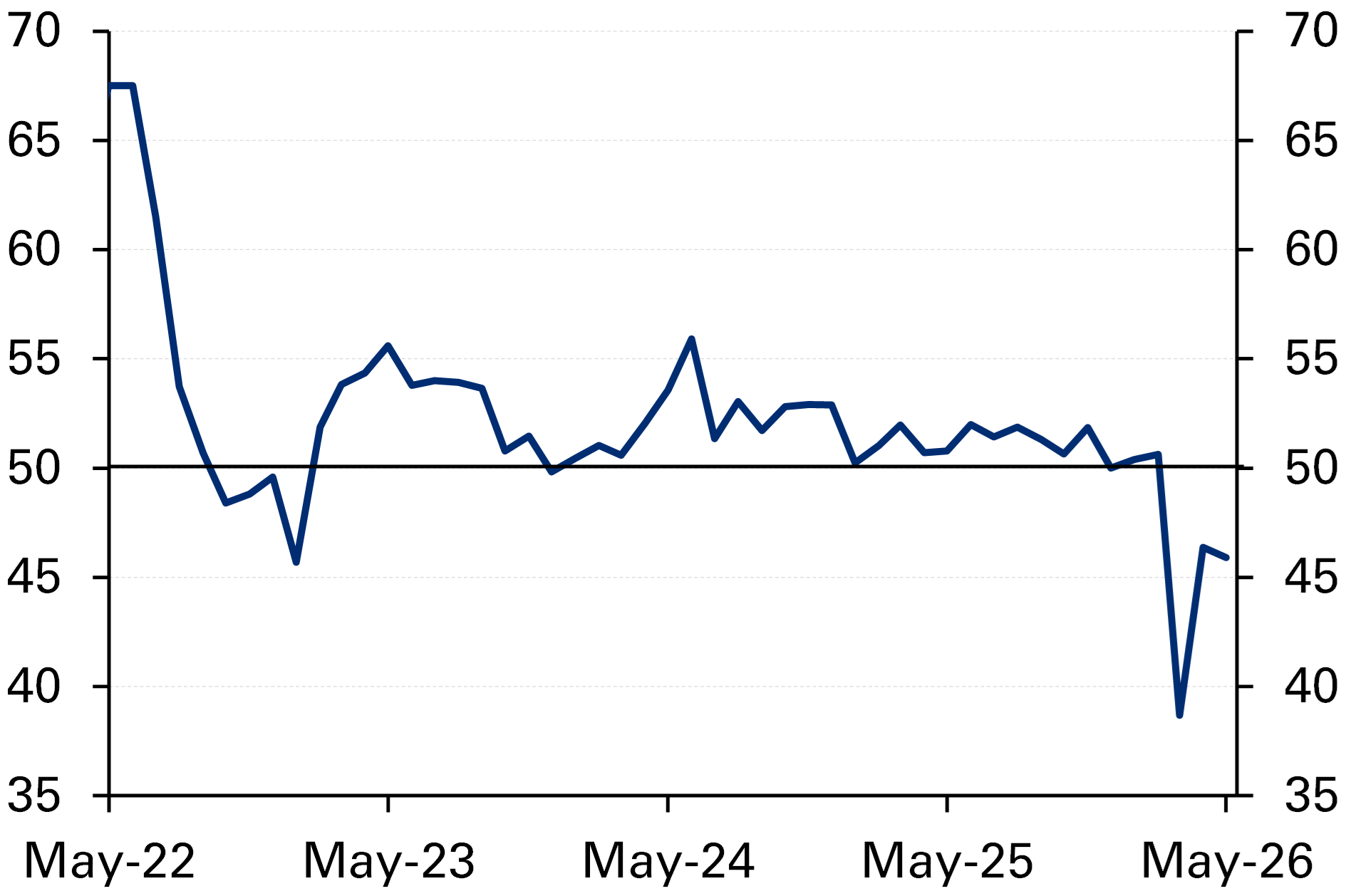
Qatar: Non-energy private sector PMI eases in May. The non-energy private sector activity PMI gauge fell to 45.9 in May from 46.4 in April, signaling continued pressure on business activity from the US-Iran conflict, with the decline driven by primarily by contractions in both output and new orders. While the fall in output was only marginally steeper than in the previous month, new business deteriorated more sharply as weaker demand conditions – particularly in tourism and real estate-related projects – continued to weigh on the private sector. Meanwhile, employment, which has supported the headline reading in recent months despite subdued business conditions, expanded at its slowest pace in nearly two years. The moderation in hiring contributed to softer wage pressures, although this was not enough to offset rising non-labor costs. Overall input costs increased for a fifth consecutive month, driven primarily by higher purchase prices, which rose at their fastest rate since February 2018. Firms passed part of these higher costs on to customers, with output charges increasing at their strongest pace since the World Cup-related surge in December 2022. Looking ahead, the cessation of hostilities helped improve business sentiment, with firms remaining cautiously optimistic about activity over the next 12 months. Nevertheless, lingering uncertainty surrounding the outlook kept the future expectations index only marginally above the 50 no-change level, indicating that confidence remains fragile.
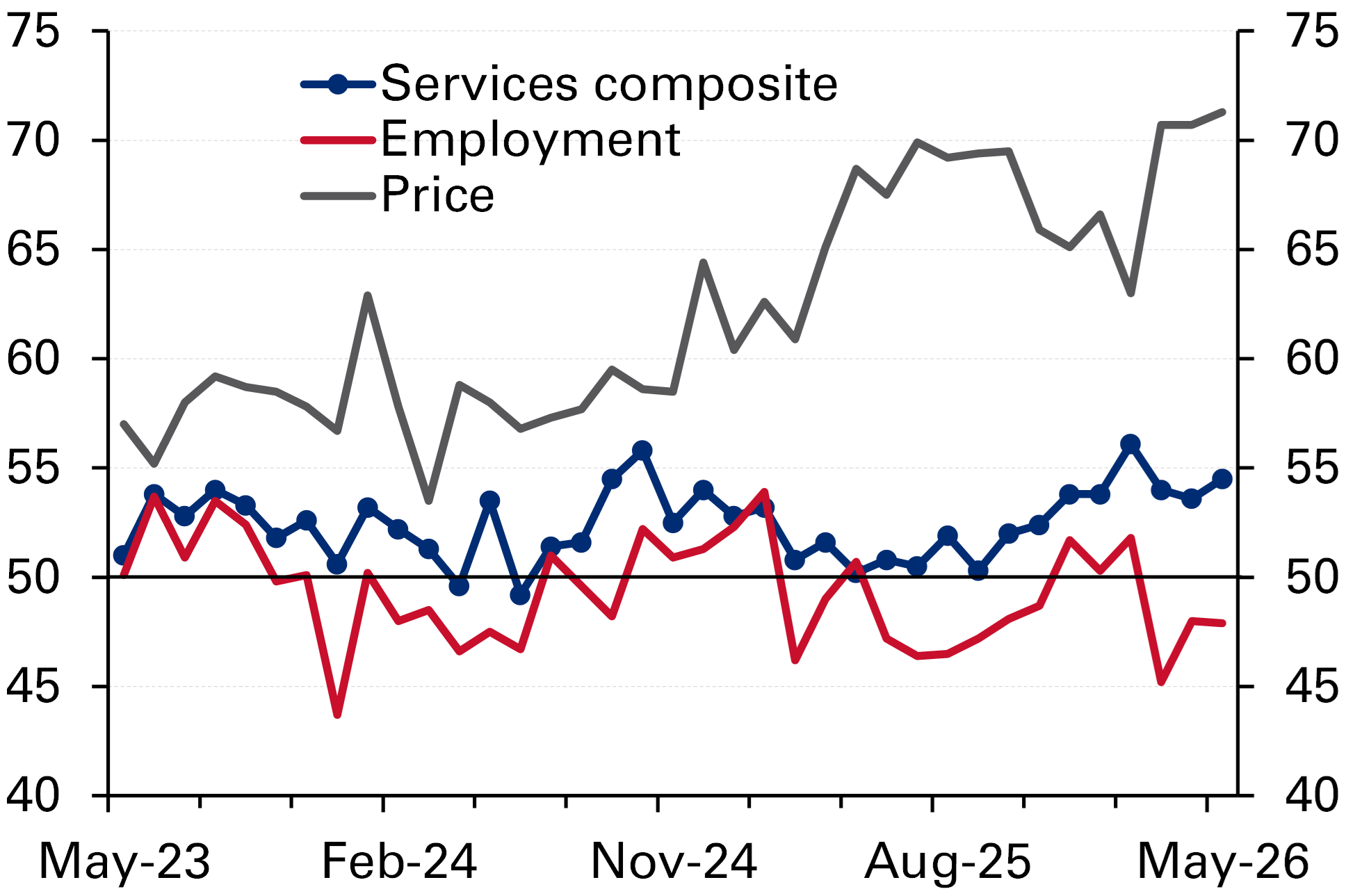
US: Services activity expands solidly in May, but price pressures quicken; private sector job growth accelerates. The ISM services PMI rose to a three-month high of 54.5 in May (53.6 in April) as growth quickened in both new orders (to 57.3 from 53.5) and business activity (to 57.7 from 55.9). However, employment shrank for the third straight month at 47.9 (48 in April). Moreover, in worrying signs of accelerating inflationary pressures, the prices paid gauge jumped to the highest level since August 2022 hitting 71.3 (70.7 in April) amid rising costs of petroleum-related goods and some spillover impact of higher gasoline prices, signaling that underlying inflation will likely remain significantly elevated in the coming months. Nonetheless, the latest services measure coupled with the previously reported solid manufacturing ISM PMI underscore that the US economy appears to be growing at a robust pace so far in Q2, absorbing shocks from higher oil prices and some supply-chain-related disruptions. Meanwhile, private sector payrolls based on ADP data rose by a higher-than-expected 122K in May, up from a 105K rise in April, the fastest monthly increase since January 2025, suggesting a continued improvement in the hiring backdrop. As a reminder, the official BLS non-farm payroll report will be published this Friday, with consensus estimates indicating solid 85K job growth in May. Separately, the Fed’s latest Biege Book (an anecdotal and qualitative survey of the current economic conditions, published eight times a year) showed that the Middle East war-related energy price spikes were driving inflation higher, “with spillovers into shipping, packaging, groceries and fertilizers,” as overall prices were rising at a "moderate to strong pace overall". Noting a broad “low-hire, low-fire environment”, the book added that “districts reported more frequent wage adjustments and cost-of-living increases” amid rising fuel prices. Finally, suggesting that some GOP lawmakers are getting nervous about the fallout from the US-Iran war ahead of the midterm elections in November, four Republican representatives joined all Democrats to pass a resolution in the House to stop the war. However, the Senate, where Republicans also have a majority, has repeatedly voted against any such move, and it seems unclear that the Senate would approve the resolution this time.