
 +965 2292 4888


Daily Economic Update
04.11.2026
US: Preliminary results indicate a Democratic sweep in the mid-term elections. Preliminary results of the congressional mid-term elections indicate a Democratic sweep in both the House and Senate. With regards to the more closely-watched Senate races, which should be decisive, Democratic candidates have already won a few and in lead in several others, boosting chances of their majority in the Senate. Showing the extent of the blue wave, Democrat Talarico was projected to snatch a Texas Senate seat from the GOP for the first time in nearly four decades. As more results come in, it is increasingly likely that Democrats will hold a majority in both chambers of Congress, which will raise frictions with the Trump administration, leading to more legislative gridlock over the next two years. We note that the party in the White House losing seats in the mid-terms is very common historically. In this case specifically, the affordability issue, the administration’s controversial policies (especially in terms of tariffs), and the unpopular war with Iran are likely key reasons for this voting outcome. The expectation is that legislative gridlock, including on budget/fiscal issues, will reduce any prospect of big-ticket deficit boosting measures such as higher spending or tax cuts. The early market reaction in trading this morning is yields on UST bonds falling slightly to reverse yesterday’s gains. While more fiscal restraint could push yields down, the Democratic sweep may increase the risk around the US debt ceiling issue (potentially in H2 2027), which may push yields higher. In terms of equities, S&P 500 futures are down by up to 1% at the time of writing, with the new congress potentially looking to exert more regulatory control of tech companies which could endanger market valuations. However, we note that historically, the US equity market tends to perform well post mid-term elections, irrespective of which party was the winner. Attention will now turn to the lame-duck period, extending until the new Congress is sworn-in in early January. During this period, the White House may aggressively try to push through its domestic agenda, with further risk of a restart in military operations against Iran.
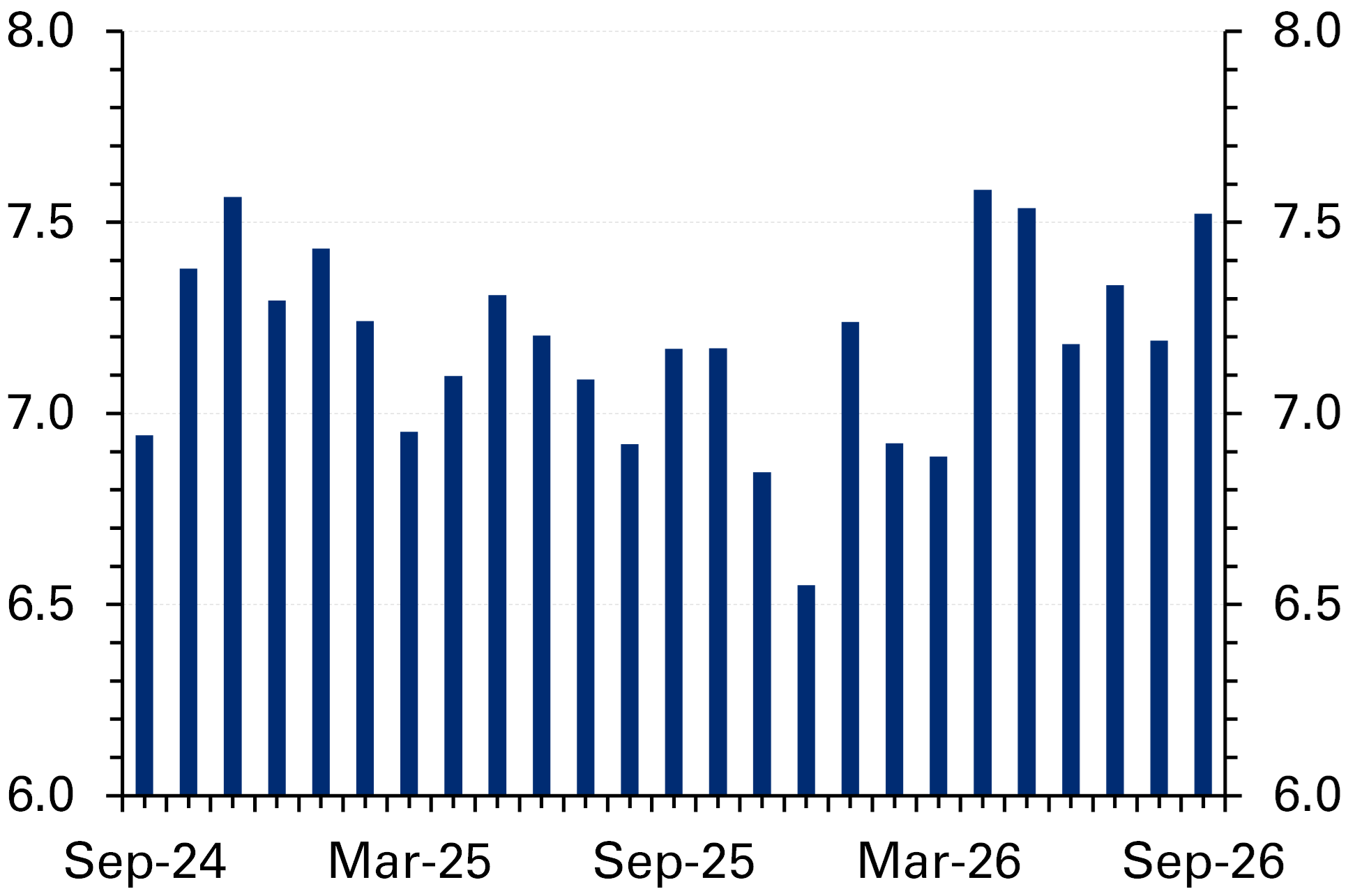
US: September JOLTS data strong as job openings rise more than forecast and layoffs moderate. Job openings in September increased to hit a four-month high of 7.52 million from August’s upwardly revised 7.19 million, staying near their highest level in over two years. Indicating improved labor market conditions, the hiring rate edged up for the second straight month (to 3.4% from 3.3%) and the layoff rate declined to 1% from 1.1% in August, reflecting the fewest layoffs since March 2025. Moreover, the quits rate also rose to match the strongest level since June 2025 at 2.1% (1.9% in August) signaling increased confidence among job switchers. The September JOLTS report provided further signs of an improving job market, recovering from the weakness seen in 2025. As a reminder, the October non-farm payroll data will be released this Friday and the consensus forecast points to 65K m/m job growth, up from just 29K in September, with a steady unemployment rate of 4.2%.
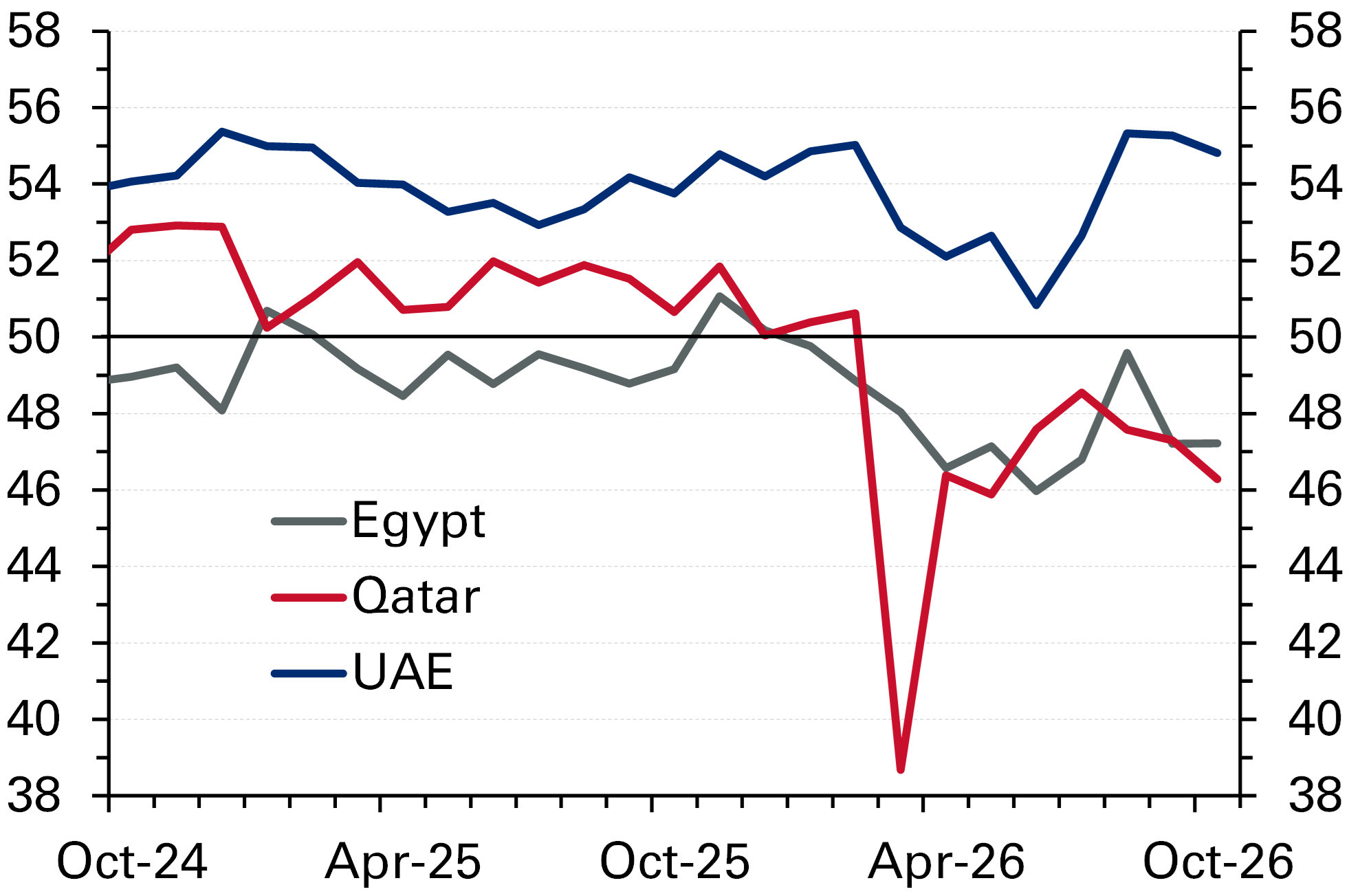
Egypt: Non-oil business activity remains in contraction for the tenth consecutive month. Egypt’s Purchasing Managers’ Index (PMI) was unchanged at 47.2 in October, signaling a contraction in non-oil private-sector activity for the tenth consecutive month. Output and new orders both declined at the fastest pace in four months, reflecting subdued demand amid market stagnation, rising prices and weaker purchasing power. The survey also pointed to softer external demand as the regional conflict continued to disrupt trade and supply chains. Meanwhile, supply-side pressures intensified. Firms reported longer delivery times, the sharpest deterioration since June, due to maritime disruptions, material shortages, and slower customs procedures. Input cost inflation also accelerated to the highest level since May, driven by higher import, energy and shipping costs, as well as a weaker EGP. Companies responded by raising selling prices at the fastest pace since June, suggesting that the recent slowdown in the inflation measure could prove difficult to sustain as higher costs are gradually passed on to consumers. Employment returned to contraction in October, while business confidence weakened further. Firms expressed concerns that regional conflicts, persistent inflation, and supply-chain disruptions would weigh on activity over the coming year. Overall, the PMI points to continued weakness in non-oil private-sector demand alongside mounting cost pressures, leaving the near-term outlook challenging and complicating the CBE’s efforts to contain inflation while supporting economic activity.
UAE: Non-oil economy maintains solid expansion in October despite rising cost pressures. The PMI continued to show solid private-sector growth, registering 54.8 in October, slightly lower than 55.3 in September. Growth was supported by robust gains in output and new orders while export orders rose at the fastest pace in two years. Purchasing activity increased at the sharpest rate in nine months as businesses sought to meet higher sales volumes, while supplier performance improved as firms increasingly relied on domestic vendors to secure inputs. Employment declined marginally for the third time in five months, indicating continued caution toward hiring. As a result, backlogs of work continued to accumulate as demand outpaced capacity. Cost pressures intensified significantly in October, with input price inflation accelerating to its highest level since June 2022 amid higher raw material, fuel, freight, maintenance, storage, and rental costs. Moreover, output prices rose at its fastest rate in the survey’s history, pointing to heightened inflation risks in the near term. Business confidence strengthened to its highest level since January, supported by expectations of sustained demand growth and hopes for improving regional economic conditions. In Dubai, the PMI rose to 54.6, slightly up from September’s 54.5 and logging an eight-month high in October, signaling a strong improvement in business conditions.
Qatar: Non-energy private sector PMI deteriorates in October; CPI inflation in August the highest since late 2022. Qatar's PMI fell to 46.3 in October from 47.3 in September, extending the sequence of contractionary non-oil private sector readings to eight months. October’s figure once again reflects a broad deterioration in business conditions, as declines in output and new orders were compounded by a fall in employment. Indeed, business activity remained under significant pressure, with output contracting at its fastest pace in seven months, while new orders declined for an eleventh consecutive month amid subdued demand and challenging market conditions. Weaker demand dynamics have now started to spill over into the labor market as firms reduced headcount for the first time since July 2024, citing lower business activity and staff resignations. Business sentiment also softened, with firms becoming slightly less optimistic about the 12-month outlook compared to the previous month’s survey. One positive aspect of the survey was a moderation in cost pressures, with input price inflation easing to a six-month low as both purchase prices and staffing costs rose at a slower pace. Nevertheless, input cost inflation remained elevated by historical standards and firms continued to pass these costs on to customers, pushing output price inflation to its highest level since December 2022. Official inflation data paint a similar picture. CPI inflation accelerated in August to 4.1% y/y, the highest reading since the World Cup-related surge in December 2022, driven primarily by food & beverage (+11% y/y) and recreation & culture (+10% y/y). Prices for housing and miscellaneous goods also increased, albeit at a softer pace. With PMI surveys indicating continued increases in output prices through September and October, inflationary pressures are likely to remain elevated in the near term, suggesting further upside in upcoming CPI readings.
Saudi Arabia: Non-oil revenue supports budget as oil receipts decline. Saudi Arabia recorded a budget deficit of SAR84.3 billion in Q3 2026, as a 23% y/y decline in oil revenues pulled total government receipts down by 4%, despite a 20% increase in non-oil revenue, according to the Ministry of Finance. Non-oil revenue reached SAR143 billion, accounting for 55% of total receipts. Meanwhile, government expenditure fell by 4% y/y to SAR343 billion. The cumulative budget deficit for the first nine months of 2026 reached SAR244 billion, or around 6.4% of pro-rated GDP according to our estimates.
Download Full Report >