
 +965 2292 4888


Daily Economic Update
14.05.2026
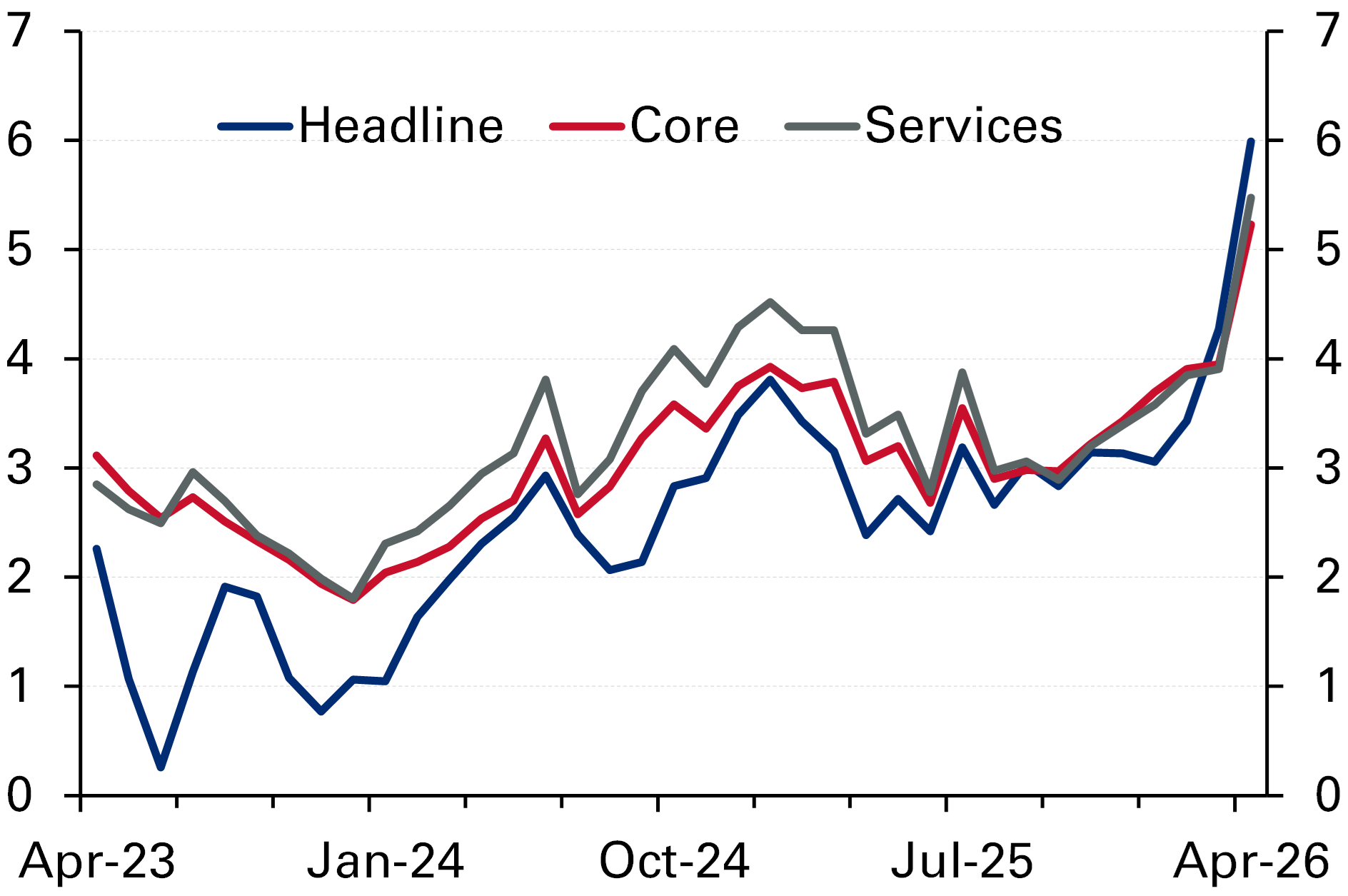
US: Surging PPI inflation in April; Senate confirms Kevin Warsh as Fed Chair on a party-line vote. PPI inflation in April surged more than forecast to hit the highest since December 2022 at 6% y/y from an upwardly-revised 4.3% in March, reflecting the sharp impact of high energy prices and ongoing Middle East war-related shipping disruptions. The core rate (excluding food and energy) climbed to 5.2% y/y from 4% in March, also the highest since December 2022. The spillover impact is also seen in wholesale services inflation, which spiked to 5.5% from 3.9%, a nearly three-and-a-half-year high. The jump in PPI inflation clearly signals that pipeline cost pressures are burgeoning rapidly and will likely keep CPI/PCE inflation elevated over the coming months. Meanwhile, the Senate voted and confirmed Kevin Warsh as the next Fed Chair, succeeding Powell, whose term ends this week. The vote was 54 to 45, i.e. almost completely along party lines, which is a negative start to Warsh’s Chairmanship and an indication that Democrats generally do not believe that Warsh can be independent from Trump’s influence in conducting monetary policy. Historically, the Senate vote for Fed Chairs has not been that divisive. In all cases, Warsh’s Fed stewardship is looking to be a challenging one as he is coming with a mandate to cut policy interest rates. However, given the backdrop of spiking inflation and a gradually improving labor market, it is extremely difficult for anyone at the FOMC to make the case for a rate cut in the short term.
US-China: Talks focus on stabilization as the high level summit gets underway. US and Chinese officials began talks in Beijing today, with meetings set to continue tomorrow, covering trade frictions, existing tariffs, technology restrictions, supply chain resilience, and also, the Strait of Hormuz situation. Early signals point to a deliberately constructive tone, with both leaders emphasizing the importance of stability and framing the relationship in terms of cooperation rather than confrontation. At the same time, the core issues may remain unchanged, with discussions likely centering on maintaining the current trade truce, avoiding further tariff escalation, and managing tensions in sensitive areas such as Taiwan and advanced technology. For China, with domestic demand remaining fragile, Beijing is likely to prioritize limiting external risks and preventing additional disruptions to exports, investment sentiment, or financial conditions. More broadly, the meetings are best seen as part of an effort to preserve stability in US-China relations rather than reshaping that bilateral relationship.
Eurozone: Industrial production weaker than expected in March. Industrial production rose by a lower-than-expected 0.2% m/m in March, following a downwardly-revised 0.2% increase in February. The increase remained uneven across sectors, with output rising in intermediate goods (+0.9%), capital goods (+1.1%), and durable consumer goods (+0.5%), while energy output declined by 1.5% and non-durable consumer goods contracted by a sharp 4.5%. On an annual basis, industrial production fell by 2.1% in March, a deeper contraction than in February (-0.8%), and below the 1.7% expected decrease. Meanwhile, the second estimate of Q1 GDP confirmed the first estimate’s 0.1% q/q growth.
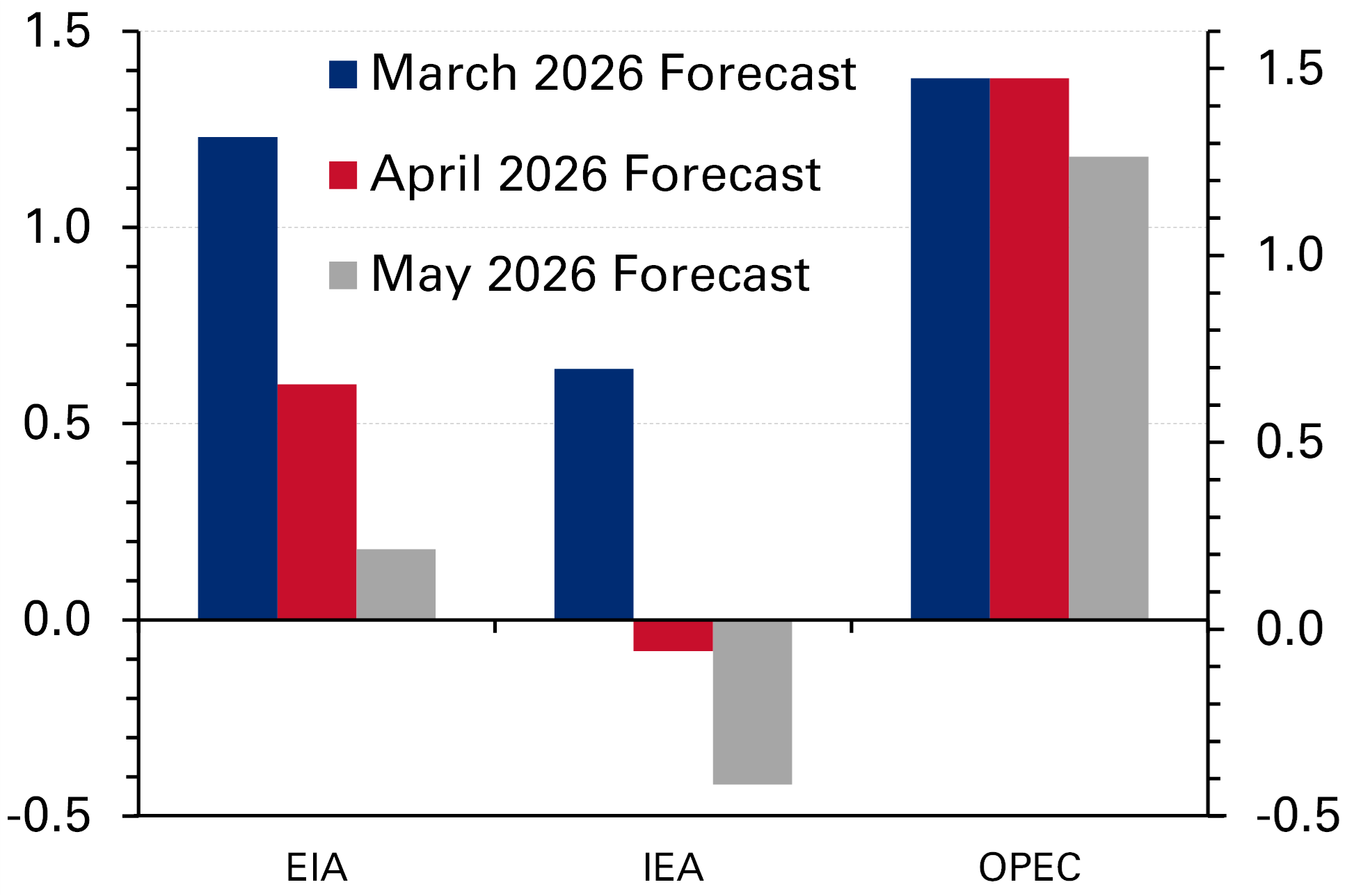
Oil: Prices steady ahead of Trump-Xi summit. Oil prices have remained largely range bound this week, with the market adopting a clear wait and see stance ahead of the Trump–Xi meeting in China, where Beijing is seen as having some potential leverage over Iran to facilitate a reopening of the Strait of Hormuz. Brent futures settled at $105.6/bbl yesterday (-2% d/d), as near-term direction continues to hinge on geopolitical developments. On the demand side, the IEA’s latest monthly report delivered another downgrade, now projecting oil demand to contract by 430 kb/d y/y to 104 mb/d in 2026, bringing the cumulative downward revision since pre-war forecasts to 1.1 mb/d. The weakness remains highly concentrated in the petrochemical and aviation sectors, reflected in reduced feedstock demand amid elevated prices and supply disruptions. While OPEC’s view remains comparatively more constructive, it also trimmed its demand outlook, lowering its forecast to 1.2 mb/d (200 kb/d m/m downward revision). Supply dynamics remain the dominant driver. Global oil supply is estimated to have fallen by a further 1.8 mb/d in April, bringing cumulative losses since February to 12.8 mb/d, reflecting the continued disruption to flows through Hormuz, according to the IEA. As a result, global oil inventory drawdowns have accelerated, with preliminary IEA estimates pointing to a 250 mb decline in global stocks in March and April. This trend has extended into May, with EIA weekly data showing total US inventory withdrawals of nearly 13 mb in the week ending May 6, including a record SPR drawdown of 8.6 mb. While US production increased by 130 kb/d to 13.7 mb/d, the adjustment was largely methodological and does little to offset the broader supply shortfall. OPEC data further underscore the scale of supply disruption. DoC production (including the UAE, which exited OPEC+ on May 1) declined by 1.7 mb/d m/m, led by sharp drops in Saudi Arabia (-958 kb/d to 6.8 mb/d), Kuwait (-561 kb/d to 600 kb/d), Iraq (-291 kb/d to 1.4 mb/d), and Iran (-211 kb/d to 2.85 mb/d), according to secondary sources data. Despite ongoing quota increases, much of the theoretical supply increase remains unrealized in physical terms, with barrels constrained by logistics rather than capacity. Overall, the market remains stuck between weakening demand expectations and severe supply disruptions, with inventories absorbing the shock. Near-term price direction will likely be dictated by geopolitical developments, particularly any progress stemming from the Trump–Xi meeting and the implications for maritime flows through Hormuz.
Saudi Arabia: Local debt moves further into global markets. Saudi Arabia’s local currency debt market is set to take a major step toward deeper global integration, as SAR-denominated government sukuk prepare to join two of the world’s most widely followed emerging market bond indices. Saudi government sukuk will be added to both the JPMorgan Government Bond Index-Emerging Markets (GBI-EM) and the Bloomberg EM Local Currency Government Index, in a move that is seen as a turning point for Saudi local debt markets. According to the index providers, Saudi sukuk will enter the JPMorgan index gradually starting from January 2027, with an expected weight of 2.52%. Inclusion in Bloomberg’s index is expected after the April 2027 rebalancing. The inclusion is expected to attract more than $10 billion in foreign inflows, according to the CEO of the Saudi Exchange. JPMorgan identified eight eligible Saudi sukuk issuances with a combined value of around $69 billion. Sukuk with remaining maturities of up to 15 years will qualify for inclusion in the GBI-EM index, which is tracked by approximately $233 billion in global investments. Beyond the expected inflows, the move carries broader strategic importance for Saudi Arabia. It signals a structural shift in how international investors view Saudi local debt, transforming it from a largely regional fixed-income asset into an increasingly mainstream component of global emerging market portfolios. The inclusion also supports Saudi Arabia’s broader efforts to deepen domestic capital markets, diversify funding sources, and strengthen the international positioning of its financial system under Vision 2030.
UAE: Habshan gas processing plant to restore 80% of capacity by end-2026. The attacks on the Habshan gas processing complex in April have reduced its operational capacity to about 60% from a pre-attack capability of 6.1 bcf/d, nearly matching the UAE’s total gas output and effectively constituting the backbone of the country’s gas system. The damage is expected to be fully repaired in 2027 with output expected to reach 80% capacity by end 2026. In parallel, ADNOC Gas’s Q1 net income declined by 8% q/q and 15% y/y to reach $1.1 billion, reflecting reduced export volumes and adverse market conditions linked to the Strait of Hormuz closure. Meanwhile, the UAE’s recent exit from OPEC+ signaled a structural shift toward maximizing oil production after a long-standing dissatisfaction with quota constraints and ambitious expansion plans of 5 mb/d by 2027 with the potential to reach 6 mb/d if required. Operational capacity had already been scaled rapidly, with 142 rigs deployed in 2025, exceeding earlier targets (127 rigs by 2030), and maintaining 98% rig availability despite regional disruptions, according to Reuters. Looking ahead, the hydrocarbon sector will remain constrained in the short term by infrastructure damage and export bottlenecks, affecting both oil and gas flows. However, the recovery in processing capacity and a possible normalization of maritime flows in the second half of 2026 would support a gradual rebound, benefiting also from elevated gas and oil prices. Over the medium term, oil production capacity (currently at 4.85 mb/d) would reach the 5 mb/d target with potential for further expansion, boosting associated gas output and aligning with the UAE’s “We the UAE 2031” strategy of oil capacity expansion and gas self sufficiency.
Egypt: IMF mission begins combined review as energy pricing reforms accelerate. A delegation from the IMF arrived in Cairo this week to begin the combined seventh and eighth reviews of Egypt’s $8 billion Extended Fund Facility (EFF) program, alongside the second review of the $1.3 billion Resilience and Sustainability Facility (RSF). The visit came earlier than previously expected and follows Egypt’s recent receipt of $2.6 billion from the fifth and sixth EFF reviews, in addition to $300 million under the RSF, bringing total IMF disbursements so far to approximately $5.2 billion. Ahead of the mission, the government submitted updated reform commitments aimed at demonstrating that key policy changes will continue beyond the IMF program itself. These reforms include the latest update to the State Ownership Policy document and the ongoing shift toward a more rules-based energy pricing mechanism. If the current review is successfully completed, Egypt is expected to receive an additional $3.3 billion in financing. At the same time, the government continued implementing energy pricing reforms, with the Electricity Regulatory Authority raising electricity tariffs for several commercial and service sectors, including the metro system, irrigation, water distribution companies, and businesses. The move aligns with broader IMF-backed efforts to gradually reduce energy subsidies and narrow the gap between production costs and retail prices. Under the government’s current fiscal plan, the energy subsidy bill is targeted to decline sharply from EGP75 billion in FY25/26 to EGP15.8 billion in FY26/27.