
 +965 2292 4888


Daily Economic Update
02.07.2026
US: Fed’s Warsh adopts same stance as in most recent Fed press conference, adding that “inflation risks have come down”. In a panel held yesterday during the ECB forum in Portugal, Chair Warsh largely adopted the same stance he had in the Fed’s post-meeting press conference two weeks ago but added that “expectations of inflation over the first four weeks of this period have come down, inflation risks have come down”. He re-iterated the commitment to deliver price stability but again without mentioning how the FOMC will deliver that, saying that “tactics, the strategy and the rest, that’s still to come”. He continued to provide no forward guidance, which is understandable. However, as before, Chair Warsh stretched that position by not giving any color on what is the Fed’s reaction function in general and not giving clear answers about general macroeconomic matters such as, for example, whether the rise in inflation is temporary or not, whether AI is currently inflationary, and the outlook for the US economy. On the data front, the ISM manufacturing PMI fell to 53.3 in June, down from 54.0 in May, below market expectations (54.0), but remaining near a four-year high. The prices paid sub-index fell to 73.0 in June (82.1 in May), sharply below market expectations although remaining much higher than pre-war levels. Finally, the US decided against a long-term renewal of its trade agreement with Canada and Mexico (USMCA), which will stay in force for now but will be subject to annual reviews. This is bound to increase uncertainty for North American companies.
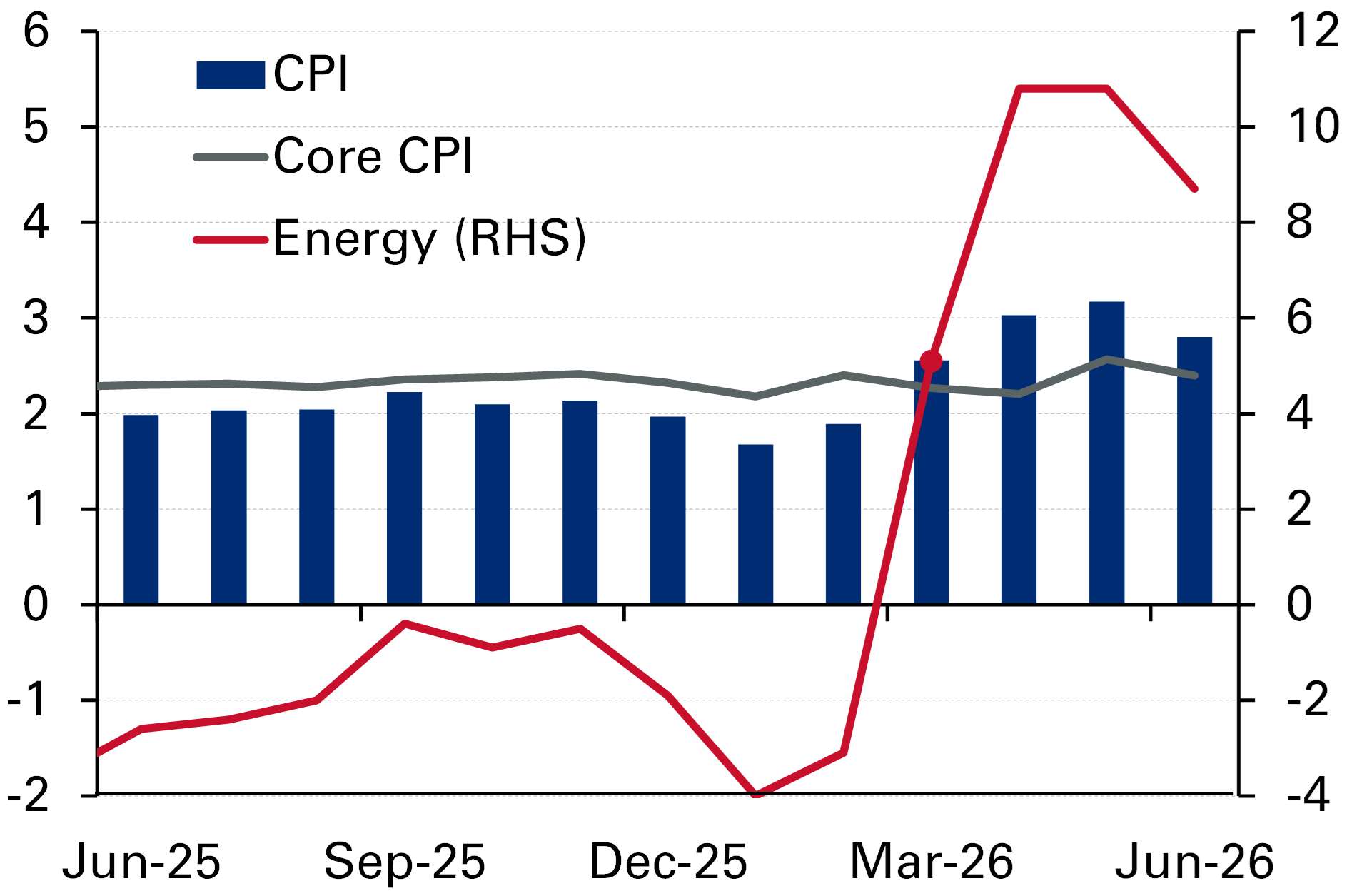
Eurozone: Inflation eases in June, coming in below expectations; Lagarde sees inflation and growth risks more balanced than few weeks ago. Eurozone flash inflation softened in June, with the headline CPI rate slowing to 2.8% y/y from 3.2% in May and coming in below expectations of 3.0%. Core inflation also softened to 2.4% y/y from 2.6% in May, suggesting an improvement in underlying inflation dynamics. The moderation was broad-based across key components. Energy inflation slowed notably to 8.7% y/y in June from 10.8% in May while services inflation eased to 3.2% from 3.5% and food, alcohol and tobacco inflation moderated to 1.6% from 1.9%. The June data points to a welcome moderation in inflation after four consecutive months of acceleration, although both headline and core rates remain above the ECB's 2% target. For Q2 as a whole, headline inflation averaged 3% y/y, below the ECB’s forecast for the quarter, while core inflation averaged 2.4%, in-line with the ECB’s projections. Finally, ECB President Lagarde, during the ECB forum in Portugal, mentioned that, driven by the recent steep drop in energy prices, “risks by the way that we have to the upside on inflation and to the downside of growth are probably more broadly balanced than they were a few weeks ago”.
UK: Nationwide house price index flat in June following May’s relatively sharp decline. The Nationwide house price index was unchanged m/m in June, following a relatively steep 0.6% decline in May. On an annual basis, house price growth increased to 2.2% in June (+1.7% in May), but missed expectations of +2.4%. As we have noted before, the near-term outlook for the UK residential property market continues to be broadly muted given an ongoing weak job market, with generally falling employment and slowing wage growth, and elevated interest rates. However, the lower-than-expected inflation print recently and the sharp reversal in energy prices have decreased the odds of rate hikes by the BoE and lowered market interest rates, which will support the property market if sustained.
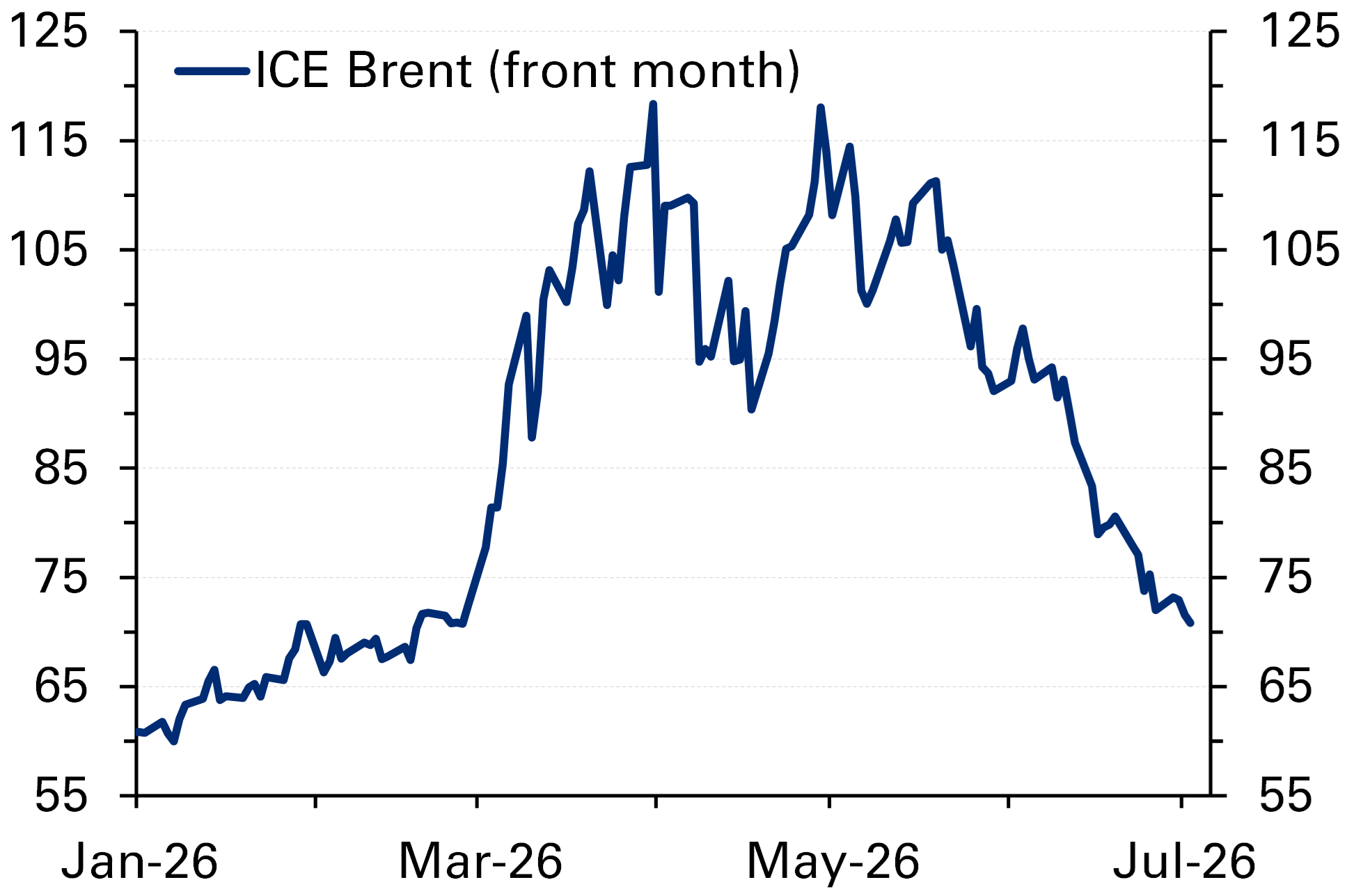
Oil: July opens with prices on the back foot after steepest decline in six years in June. Oil prices are ranging lower two days into July, with Brent futures on track for a third consecutive day of losses, dropping to $70.8/bbl this morning in Asian trading as markets take relief from signs that tanker traffic through the Strait of Hormuz is increasing and as US-Iran negotiations in Doha get underway. Brent closed June at $72.9/bbl, dropping almost 21% m/m and 38.4% q/q, the largest monthly and quarterly declines, respectively, since the oil market collapse during the early stages of the Covid-19 pandemic in 2020. The drop has pushed Brent back below pre-war levels, effectively removing the geopolitical risk premium that had been embedded in prices following the closure of the Strait of Hormuz at the onset of the US-Iran conflict. The main catalyst has been conflict de-escalation between the US and Iran, with both countries ceasing hostilities in April and subsequently signing a peace MoU in mid-June that has laid the groundwork for the gradual reopening of the Strait. At the same time, demand-side developments have added to bearish pressures, with both China and Japan sharply reducing crude oil imports during Q2, according to the IEA. Supply conditions have also become increasingly bearish. Vessel traffic through the Strait of Hormuz has begun to recover, reaching close to 40 transits by the end of June, a near threefold of average volumes during the height of the conflict, with supplies topping 10 mb/d more recently, around half the pre-war volume, according to a US estimate. This comes alongside record US crude production (13.9 mb/d), according to the EIA’s monthly data for April, and elevated UAE crude and condensate export volumes in late June (3.7 mb/d), according to Vortexa. As a result, the market balance appears to be shifting back into surplus. Overall, the fading geopolitical risk premium, recovery in Hormuz transit volumes, strong non-OPEC supply growth, higher OPEC+ production ceilings, and expectations for lower oil demand growth this year collectively point to an increasingly oversupplied market, suggesting downside risks to crude prices are intensifying.
Saudi Arabia: Net foreign assets ease, credit growth continues to slow in May. Net foreign assets (NFAs) in Saudi Arabia’s banking sector declined slightly in May, falling to SAR 1.5 trillion from SAR 1.54 trillion in April, according to the Saudi Central Bank (SAMA). The decline reflected a modest deterioration in both the central bank’s and commercial banks’ foreign asset positions. SAMA’s NFAs fell to SAR 1.74 trillion, while commercial banks’ net foreign asset deficit widened to SAR 239.1 billion. Bank credit expanded, but continued on its now 13-month slowing growth trajectory, easing to 7.1% y/y in May from 8% y/y in April. Credit growth to the private sector moderated to 6.7% y/y from 7.3% the previous month. Meanwhile, the housing market showed signs of slowing, with bank-financed residential mortgages falling 30.9% m/m to SAR 4.4 billion, as the number of new mortgage contracts declined from 9,600 in April to 6,500 in May. Trade financing also weakened, with letters of credit used to finance private sector imports declining 33.1% y/y (-23.7% m/m) to SAR 9.7 billion, reflecting softer import activity during the month. On the liquidity side, broad money supply (M3) continued to expand, rising 8.9% y/y to SAR 3.37 trillion, supported mainly by demand deposits and time & savings deposits. While foreign assets softened modestly in May, Saudi Arabia’s banking sector continues to benefit from solid domestic liquidity and respectable credit growth. However, weaker mortgage activity and lower trade financing suggest that slower economic activity is beginning to weigh on parts of the private sector.