
 +965 2292 4888


Daily Economic Update
03.06.2026
Kuwait: Non-oil private sector contraction eases in May as PMI edges higher. The PMI gauge of non-oil private sector activity inched up in May to 47.2, up from 46.3 in April, marking a three-month high, yet remaining in contraction territory as the regional conflict continues to weigh on business conditions. The rates of decline in both output and new orders softened notably, improving from April’s weaker reading and signaling a gradual normalization in demand conditions, with firms citing advertising efforts and promotional offers as supporting factors. New export orders, however, remained under pressure, declining at a rapid pace amid disruptions to export activity. With supply chains still affected, firms’ input costs increased on the back of higher purchase prices, although this was partly offset by lower staffing costs. Nevertheless, rising input cost pressures continued to filter through to prices charged, which recorded a fifteen-month streak of growth, though the rate of increase was unchanged from April. Higher costs contributed to a further decline in purchasing activity, with the pace of contraction being the strongest since April 2020. Meanwhile, supplier delivery times shortened for the first time in three months, helped by muted demand for inputs, allowing vendors to meet delivery schedules more efficiently. Firms’ sentiment remained slightly downbeat, with the 12-month ahead outlook remaining just barely in negative territory, signaling businesses’ hopes that a normalization in the business environment is forthcoming.
Saudi Arabia: Non-oil activity improves in May for the second consecutive month despite ongoing regional unrest. Saudi business activity improved for the second straight month in May, with the non-oil economy moving further into expansion territory, the latest PMI showed. May’s headline reading of 52.8 signaled a faster rate of growth compared to April (51.5) and March (48.8), when non-oil activity contracted following the outbreak of hostilities in the Gulf – the first time that’s happened since the Covid-19 pandemic in 2020. Output surged, new orders ticked up and employment expanded, though firms continued to report declines in new export orders, albeit at a slower rate than April, amid ongoing shipping, logistical and external demand constraints due to the regional conflict. That said, supplier delivery times improved for the first time since February, indicating that supply chain blockages were easing somewhat. This was at least helping to slow the rise in business costs, in terms of purchase prices, and moderate the knock-on effect on output prices and inflation. Overall business sentiment improved and firms remained upbeat about the future.
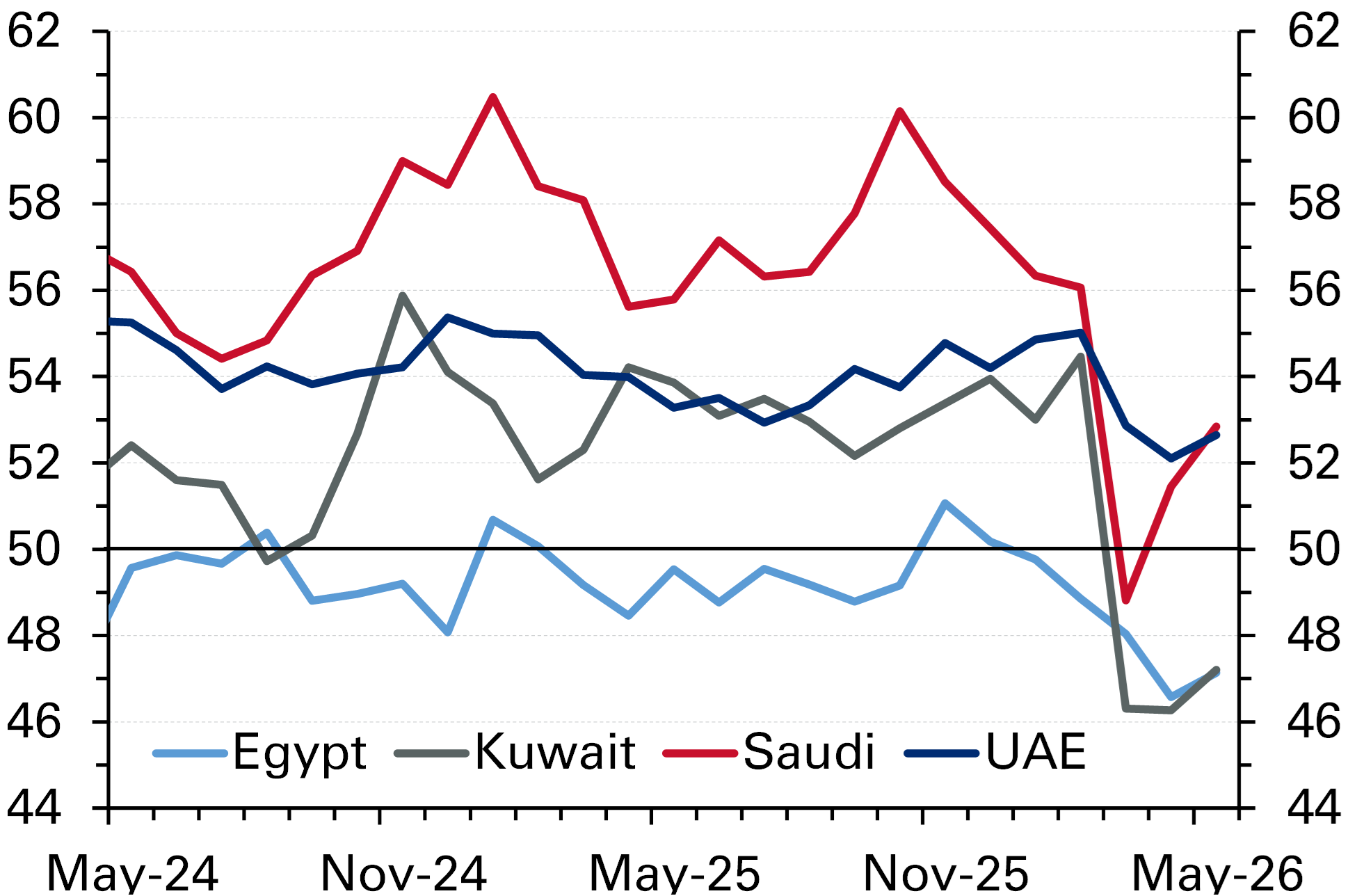
UAE: PMI edges up for first time since crisis began while output prices decline. The PMI gauge of non-oil private sector activity edged up to 52.6 in May from 52.1 in April – the first increase since the regional conflict began. This leaves the index in expansion territory where it has been since 2021, albeit below both its pre-conflict February level of 55 and its long-run average. Among the key sub-components, the output balance remained solid and broadly unchanged from April, new orders expanded slightly but are well off pre-conflict levels of around 60, while new export orders rebounded from April’s low but stayed in contraction. The employment balance remained close to 50 and has edged only slightly lower since the conflict began. Perhaps the most striking shift was in the output price balance, which plunged to below 50 having jumped in March and April and potentially signaling that the initial inflationary impulse from the crisis may be fading and competitive pressures are reasserting themselves. This is despite the input cost balance remaining elevated in the mid-50s, albeit falling slightly in May. Overall, the survey shows that the UAE non-oil economy although still under pressure is weathering the current crisis better than might have been anticipated and remains in expansion mode. A number of factors likely contribute to this resilience, including alternative trade routes to the Strait of Hormuz, expansive domestic infrastructure, government support measures for businesses and very strong growth momentum heading into the conflict, with the non-oil economy reportedly expanding a robust 6.8% in 2025. Related to the above, the Dubai-specific PMI ticked up slightly to 52.0 in May from 51.6 in April, with the components showing similar trends to the country-wide index.
Egypt: Non-oil private sector remains under pressure as inflation weighs on business activity.Egypt’s non-oil private sector remained under pressure in May, with the PMI improving slightly to 47.1 from 46.6 in April, but staying in contraction territory for the fifth consecutive month. The latest readings suggest that economic activity in the second quarter is likely growing at a slower pace compared to the stronger momentum seen at the end of 2025. Demand conditions remained weak, as new orders declined for a fifth straight month, with businesses citing elevated inflation and weaker customer spending. While overall output continued to contract, the pace of decline eased slightly compared to April. Wholesale, retail, and services sectors remained the most affected, while manufacturing and construction showed mild improvement after previous weakness. At the same time, cost pressures intensified sharply, reaching their highest levels in years. Businesses reported higher diesel and electricity prices, currency weakness, and rising wage costs, with wage inflation hitting its strongest level since 2018. In response, firms raised selling prices significantly to protect margins. Supply chain pressures also intensified, with delivery times recording their longest delays in nearly four years, while companies accelerated job cuts amid softer sales and higher costs. Despite this, firms increased inventories at the fastest pace in almost three years, likely in anticipation of further price increases. On a more positive note, business sentiment improved noticeably to its highest level since August 2024, supported by hopes of better economic conditions and a more stable exchange rate, although inflation concerns remain a key challenge moving forward.
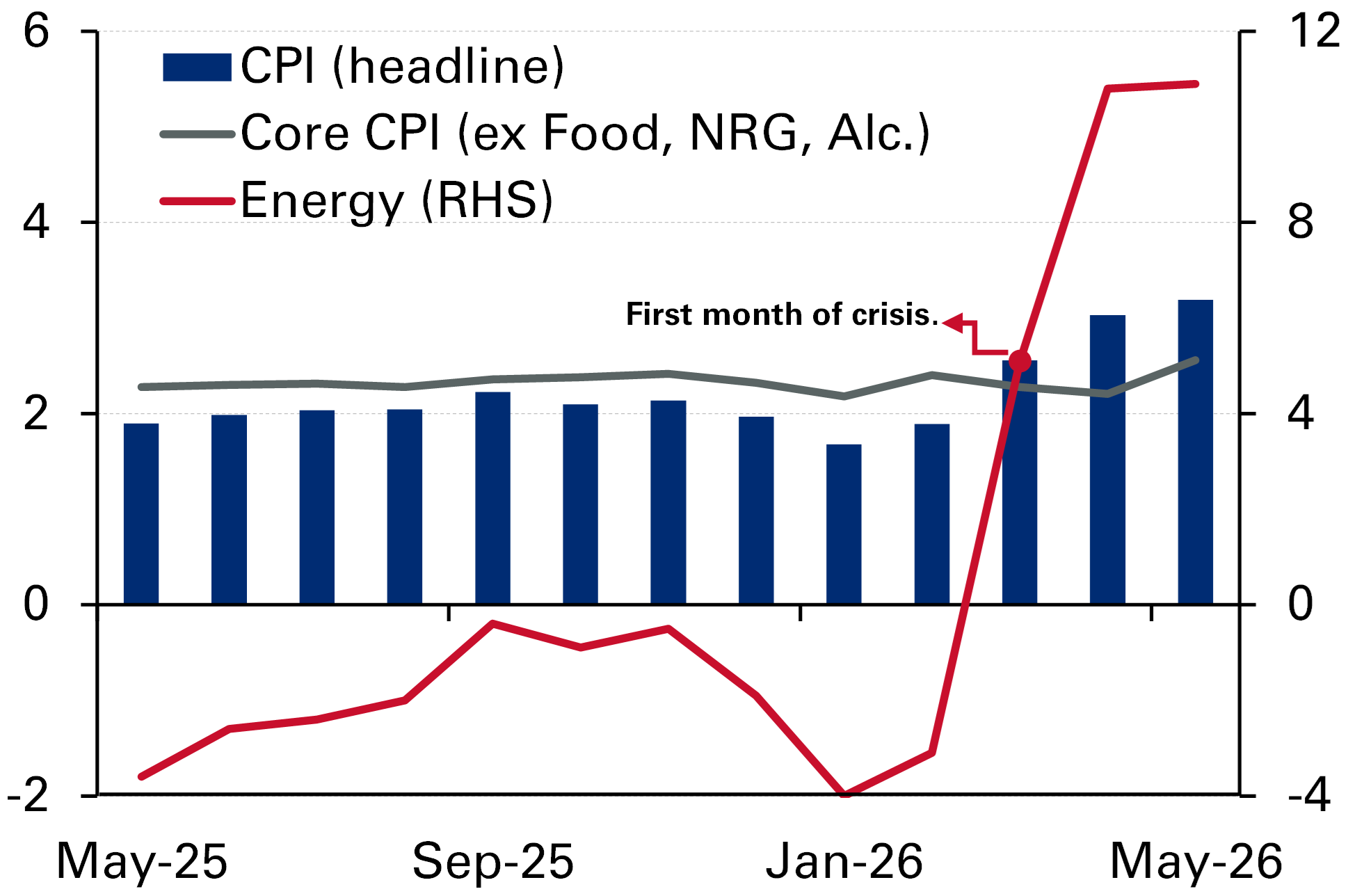
Eurozone: Headline inflation rises to 3.2% in May as core inflation climbs to the highest in over a year. Eurozone inflation picked up again in May, with the headline CPI rising by 3.2% y/y (3.0% in April, and up from 1.9% in February), coming in-line with expectations. The higher inflation was broad-based across services, non-energy industrial goods, and energy. Energy prices rose by 10.9% y/y (10.8% in April) with core inflation increasing to a higher-than-expected 2.5% y/y (2.2% in April), the highest since April 2025, and suggesting that energy costs are likely beginning to feed more broadly through the price structure. The closely-watched services inflation jumped to 3.5% y/y (3.0% in April) while non-energy industrial goods inflation inched up to 0.9% y/y (from 0.8%). That said, inflation will remain sensitive to energy market developments, given the unresolved situation in the Strait of Hormuz, which is also causing supply-chain disruptions. Against this backdrop, the market is pricing in, with near certainty, a 25bps interest rate hike at the upcoming ECB meeting next week.
US: Job openings rise to a two-year high; in an expected move, the US plans 10-12.5% tariffs on 60 countries. In more signs of an improving labor market, job openings (JOLTS data) in April beat forecasts to hit a two-year high of 7.62 million up from 6.89 million in March. The layoff rate also edged down to 1.1% from 1.2%, but offsetting the optimism somewhat, the hiring rate dropped to 3.2% from March’s nearly two-year high of 3.5%. The quits rate also moderated to 1.9% from 2% in March to match the lowest level since the pandemic. Overall, the latest JOLTS report further signals that a steady improvement in labor market conditions has been taking place in recent months, recovering from the slowdown in 2025, which, given rising inflation, should tilt the Fed’s stance towards combating price pressures. In fact, the recent commentary from several Fed officials also points to higher inflation risks following the Middle East war. Cleveland Fed President Beth Hammack (an FOMC voting member) yesterday highlighted her concern “about the growing risks of persistently elevated inflation than the risks to full employment and also that monetary policy may not be sufficiently restrictive to bring inflation down to 2%." The futures market currently signals an over 50% probability of a 25bps Fed rate hike by the end of 2026. Separately, in a bid to recreate the tariff wall after the Supreme Court in February invalidated reciprocal tariffs, the US Trade Representative proposed 10-12.5% duties under section 301 on 60 countries (covering almost all the US’s major trade partners) related to an investigation about forced labor practices. These levies would go into effect only after a conclusion of public hearings on the matter before a panel that are set to begin on July 7. Unsurprisingly, such developments further underscore the Trump administration’s resolve to keep tariff rates similar to the pre-Supreme Court decision levels.