
 +965 2292 4888


Daily Economic Update
06.01.2026
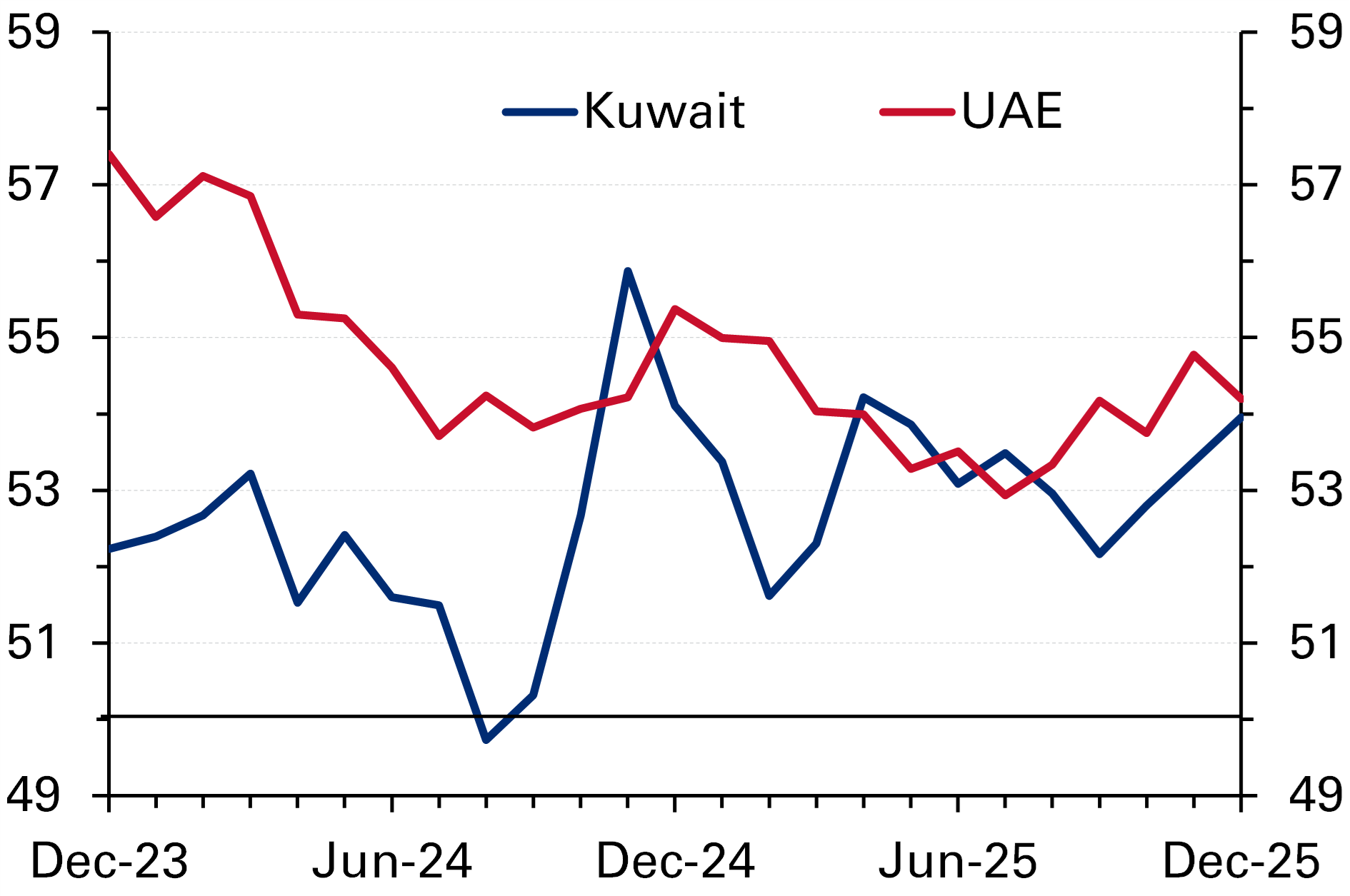
Kuwait: PMI gauge ends 2025 on a positive note, taking the annual average to the highest on record. Kuwait’s non-oil private sector PMI climbed to 54 in December from 53.4 in November, signaling a continued improvement in business conditions. Both the output and new orders sub-indices registered their fastest increase in seven months, supported by firms’ marketing activities and the introduction of new products. Employment growth hit its second highest pace on record during the month, though remained modest overall. Meanwhile, inflationary pressures increased amid rising demand, with input costs rising sharply and translating into modestly higher output prices. For the year overall, the PMI averaged 53.1, the highest on record, supporting our estimate of improved and decent non-oil GDP growth last year. Moreover, the PMI shows momentum reaccelerated towards year-end, reinforcing the positive prospects for 2026, as reflected in the marked improvement in business sentiment last month.
UAE: PMI reading moderates in December on softer output and new orders. The PMI eased in December to 54.2, down from a nine-month high of 54.8 in the previous month. The expansion in output and new orders remained solid on improving market conditions and strong domestic demand, but slightly moderated from its eleven-month high seen in November. Meanwhile, input costs rose at the fastest pace in fifteen months, driven by a strong increase in wages, raw material prices, as well as higher costs for transport and maintenance, which pushed companies to raise their output prices for the sixth straight month while adopting a cautious approach on employment, despite the strong increase in the backlogs of work. The outlook for the coming year remained optimistic, though easing slightly due to rising worries about cost pressures. The PMI reading for Dubai saw a similar trend with its reading slowing slightly to 54.3 in December from 54.5 in November, but still supported by the strong expansion in output that saw its sharpest increase since March 2024.
Egypt: Finance ministry lays out a medium-term roadmap to rein in debt and unlock private sector-led growth. The Ministry of Finance has unveiled its 2026–2030 medium-term fiscal strategy, marking a shift from crisis-driven policy making toward a phase of consolidation and more balanced growth. The plan targets average real GDP growth of 5–6% over the period, anchored by stronger private investment, non-oil exports, and a gradual easing in inflation and interest rates. On the fiscal side, the strategy aims to steadily raise revenues to 16.5% of GDP in the coming fiscal year, climbing to 17.4% by FY2029/30, largely supported by higher tax revenues that are expected to reach 15.2% of GDP by the end of the period. Meanwhile, the pace of public spending growth is set to slightly moderate. Together, these measures are expected to narrow the overall budget deficit to 4.9% of GDP starting next fiscal year, down from around 7% currently, while reducing the general government debt to 65.4% of GDP from around 79%. Growth is projected to rebound to 5.3% next fiscal year and accelerate to 6.2% by FY2029/30, supported by an expanding industrial base, rising private investment, stronger manufacturing and tourism activity, and new large-scale projects along the Red Sea and Mediterranean coasts. The strategy also assumes a decline in government debt yields, with average returns falling to 17% next fiscal year and to around 12% by the end of the period, alongside a further slowdown in inflation toward 7.5%. On debt management, the ministry plans to lengthen average maturities to 4.5–5 years, diversify financing through sukuk and retail bonds, introduce longer tenor and floating rate local instruments, and enhance secondary market liquidity via buybacks and swaps. Overall, the strategy signals a clearer commitment to fiscal sustainability while creating space for private-sector led growth.
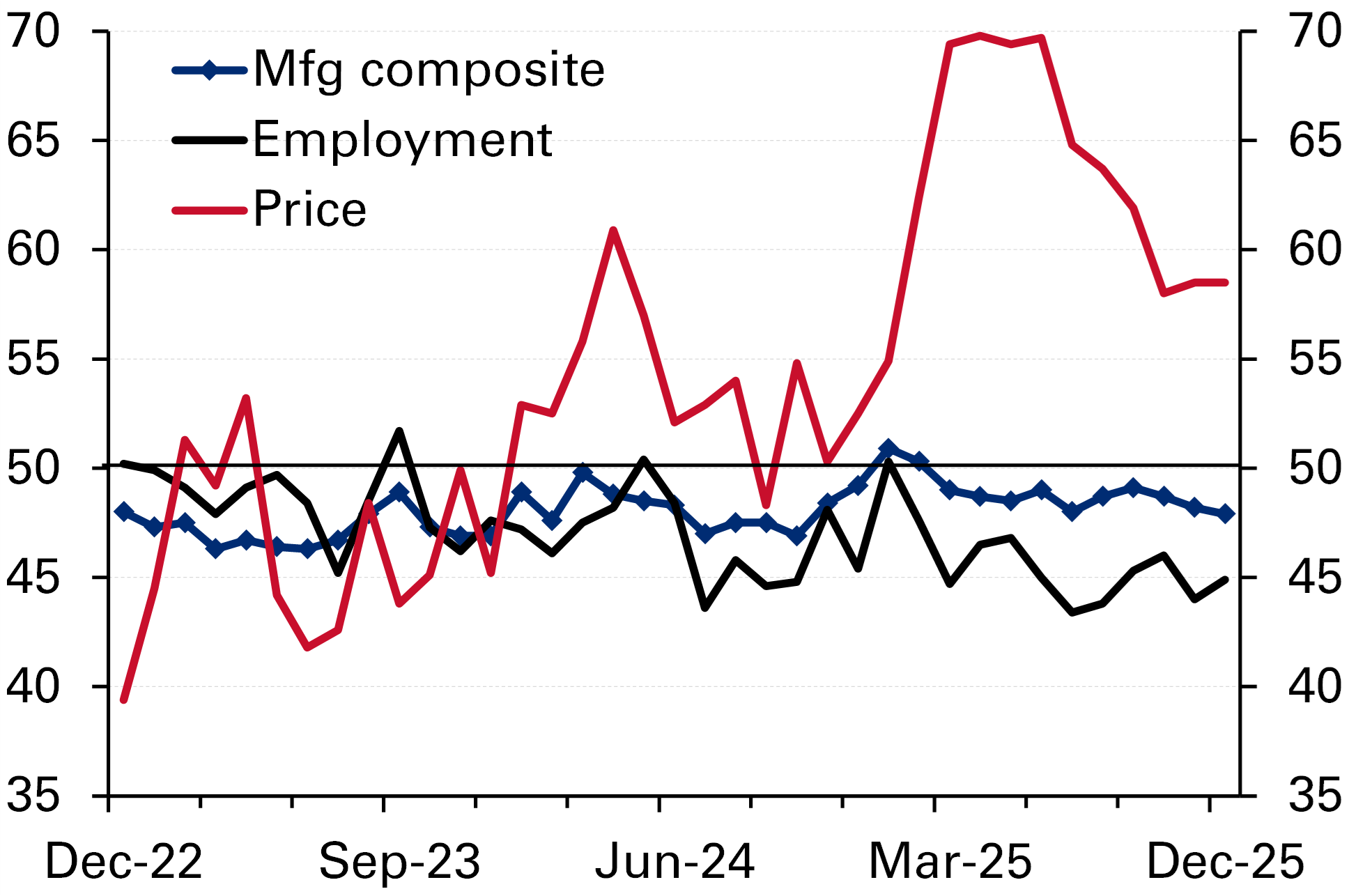
US: ISM manufacturing PMI falls deeper into contraction, to a 14-month low. The ISM manufacturing PMI fell to a 14-month low of 47.9 in December from 48.2 in November, extending the downturn to 10 straight months. New orders declined for a fourth consecutive month (47.7) while the expansion in production eased its pace to 51 from 51.4. The gauge of input prices was steady but elevated at 58.5, though down from the recent peak of 69.8 seen in April 2025. This gauge averaged 63.4 in 2025 and 53.7 in pre-tariff 2024. Firms trimmed employment for 11 straight months albeit at a slightly softer rate than in November (44.9 versus 44). Overall manufacturing activity continues to be weak, with import tariffs keeping price pressures elevated, while customer demand remains subdued, impacting sentiment and jobs.
UK: Consumer credit increases by the most in two years but mortgage activity mixed. UK consumer credit rose by £2.1 billion in November from an upwardly-revised £1.7 billion in October, the highest in two years, led by credit card borrowings. However, mortgage data was more mixed with net approvals (an indicator of future borrowing) falling slightly to a five-month low of 64.5K from October’s 65K but net disbursals increasing to £4.5 billion from £4.2 billion in October. The annual growth rate in mortgage lending at 3.3% (3.2% in October) was the highest in 34 months, while the effective interest rate charged on newly drawn mortgages rose for the first time since February to 4.2%, slightly up from 4.17% in October. We note that elevated interest rates, slowing pay growth, weak employment conditions and near record-high property prices have worsened affordability for home buyers and will likely pressure housing market activity over the coming months.